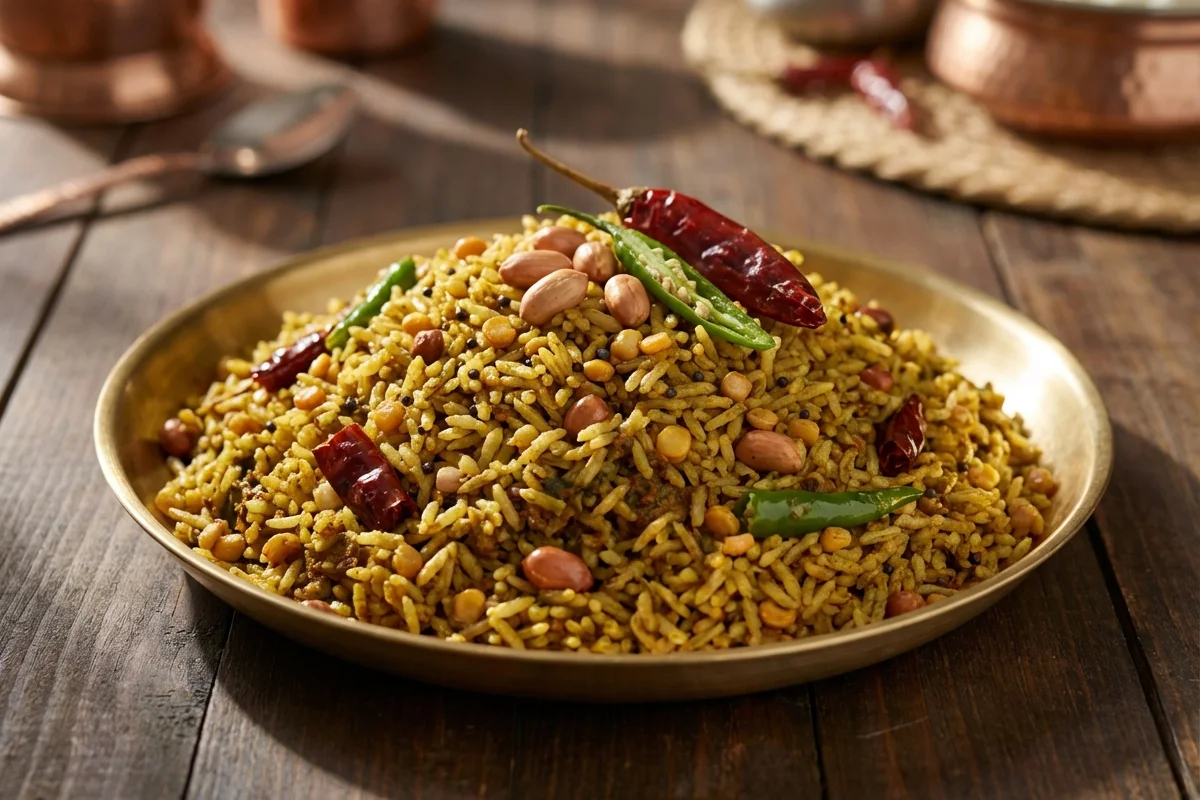
Gongura Pulihora
Tangy gongura leaves cooked down with spices and folded into fluffy rice make this Andhra favorite bright, savory, and deeply comforting. Peanuts, chilies, and a simple tempering give every spoonful plenty of texture and flavor.
For 4 servings
- prep · ~20 min
Rinse and soak the rice.
Wash the rice until the water runs mostly clear, then soak it in fresh water for 20 minutes. Drain before cooking.
TIPSoaking helps the grains cook evenly and stay separate. - boil · ~25 min
Cook the rice and cool it.
1.Bring 2 cups water to a boil in a pot.2.Add the drained rice and 1 pinch of the salt.3.Cover and cook on low heat until the rice is just done and the water is absorbed, 12 to 15 minutes.4.Spread the cooked rice on a wide plate and let it cool so the grains stay separate.TIPDo not overcook the rice or the pulihora will turn sticky. - saute · ~8 min
Cook the gongura leaves.
1.Heat 1 tsp of the oil in a pan over medium heat.2.Add the chopped gongura leaves and cook until fully wilted and most of the moisture dries up, 6 to 8 minutes.3.Stir in the turmeric powder and cook until the leaves turn soft and pulpy.4.Take off the heat and set aside.TIPCook the leaves until their raw sharpness mellows but do not brown them. - temper · ~5 min
Make the tempering.
1.Heat the remaining oil in a wide pan over medium heat.2.Add the peanuts and cook until lightly golden.3.Add mustard seeds and let them splutter.4.Add cumin seeds, chana dal, urad dal, dried red chili, green chili, curry leaves, and asafoetida.5.Cook until the dals turn lightly golden and fragrant.TIPKeep the heat medium so the lentils crisp up without burning. - mix · ~2 min
Mix the gongura base.
Add the cooked gongura leaves to the tempering and stir well. Add the remaining salt and cook for 1 to 2 minutes so the flavors come together.
- assemble · ~3 min
Fold in the rice.
Add the cooled rice to the pan in batches and gently mix until every grain is coated with the gongura mixture. Turn off the heat once evenly mixed.
TIPUse a light hand while mixing so the rice does not break. - rest · ~10 min
Let the pulihora rest for 10 minutes.
- serve
Serve the gongura pulihora.
Serve warm or at room temperature as part of a meal.
What to keep in mind.
7 tips from the recipe — small details that make a real difference to the final dish.
- 1Cool the rice completely on a wide plate before mixing, or the gongura paste will turn it mushy.
- 2Cook the gongura until most moisture evaporates; a wet leaf mixture makes the pulihora clump.
- 3Fry peanuts first and remove them briefly if they brown too fast, then add back before mixing.
- 4Let mustard seeds fully splutter before adding dals so the tempering tastes nutty, not raw.
- 5Mix the rice in batches with a flat spatula to coat evenly without breaking the grains.
- 6Resting for 10 minutes is important; the sour gongura and tempering settle into the rice as it sits.
- 7This travels well for lunchboxes because the tangy gongura keeps the rice flavorful even at room temperature.
Adapt it for your goals.
Low-oil
Use less oil and dry-roast the peanuts separately; you still get crunch and tang with a lighter finish.
spicierSpicier
Add extra green chilies or one more dried red chili if you want a sharper Andhra-style heat.
brown riceBrown-rice
Swap in cooked brown rice for a nuttier, heartier pulihora with more fiber and bite.
no peanutNo-peanut
Skip peanuts for an allergy-friendly version; increase chana dal and urad dal for some crunch.
Why this is on our healthy list.
Leafy Green Goodness
Gongura leaves add plant nutrients and natural tartness, making the rice more flavorful without heavy sauces.
Balanced Texture From Legumes
Chana dal, urad dal, and peanuts contribute protein, crunch, and staying power to an otherwise simple rice dish.
Moderate Spice, Big Flavor
Chilies, curry leaves, mustard, cumin, and asafoetida build strong flavor so the dish tastes satisfying with modest oil.
Frequently asked questions
Yes. Day-old rice works very well because the grains stay separate and mix easily without turning soft.



.webp)