
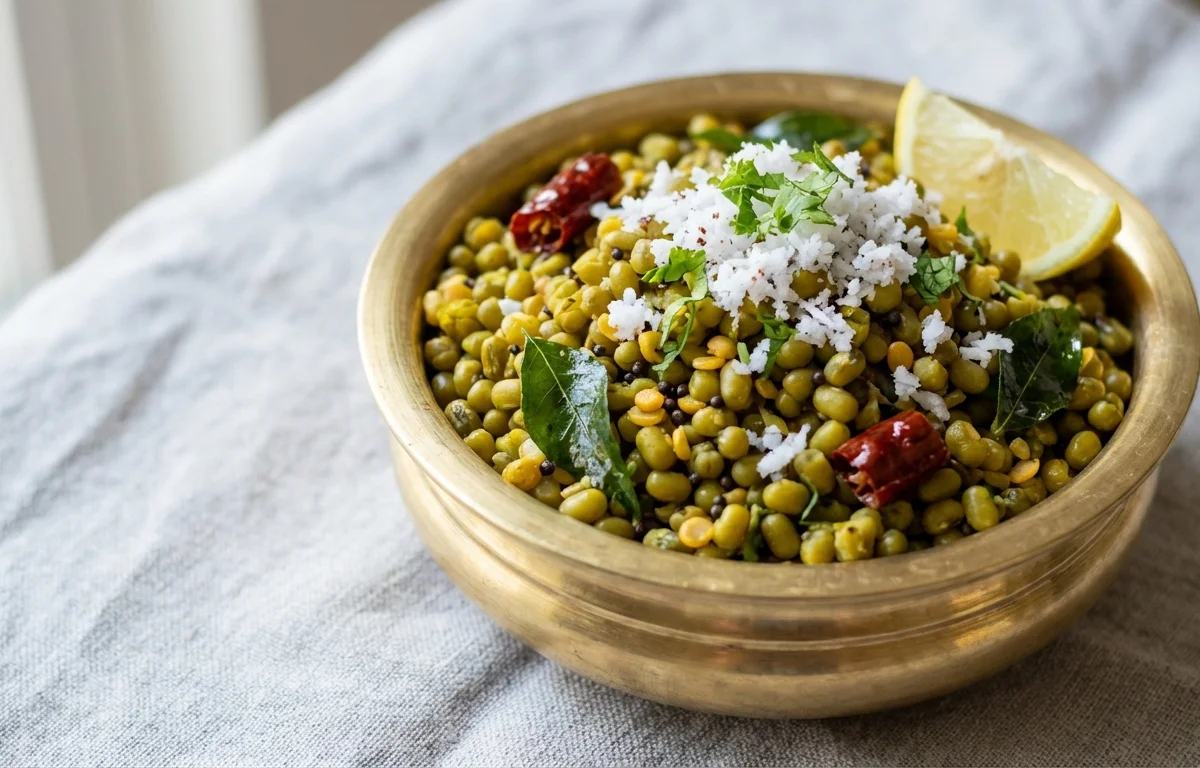
Hesaru Kalu Usli
A warm, comforting stir-fry featuring tender sprouted green gram tossed with fresh coconut, green chilies, and a fragrant mustard seed tempering. This light yet protein-packed Karnataka-style dish is perfect as a side or a wholesome afternoon snack.
For 4 servings
- prep · ~10 min
Prep the sprouts.
Rinse the sprouted green gram well. If the sprouts are thick and hard, steam or boil them with a quarter cup of water until just tender but still holding their shape. Drain any excess water and set aside.
- temper · ~3 min
Make the tempering.
1.Heat oil in a kadai over medium heat.2.Add mustard seeds and let them splutter.3.Add cumin seeds, asafoetida, and curry leaves. Sauté until fragrant.4.Add slit green chilies and grated ginger. Sauté for 30 seconds.TIPKeep the heat at medium so the spices bloom without burning. - mix · ~4 min
Combine sprouts with tempering.
Add the steamed sprouts to the pan. Sprinkle salt and gently toss everything together. Cover and cook on low heat for 3-4 minutes so the flavors meld. The texture should be soft yet grainy, with no excess water.
- mix · ~1 min
Finish with coconut and lemon.
Turn off the heat. Fold in the freshly grated coconut and chopped coriander leaves. Squeeze lemon juice over the top and give it a final gentle mix.
- serve
Serve warm.
Transfer to a serving bowl. Enjoy warm as a side dish with rice and sambar, or simply on its own as a high-protein snack.
What to keep in mind.
5 tips from the recipe — small details that make a real difference to the final dish.
- 1Sprout the green gram at home for fresher texture and better digestibility.
- 2Steam the sprouts until just tender; overcooking makes them mushy.
- 3Let mustard seeds splutter fully before adding other spices for maximum aroma.
- 4Use freshly grated coconut instead of desiccated for a moist, authentic finish.
- 5Add lemon juice only after turning off the heat to preserve its bright acidity.
Adapt it for your goals.
Low-oil
Reduce oil to 1 teaspoon and use a non-stick pan; the coconut moisture will keep the dish from drying out.
high proteinHigh-protein
Add a handful of roasted peanuts or crumbled paneer in step 3 for extra protein and crunch.
veganVegan
This dish is naturally vegan when using oil; just ensure your asafoetida is gluten-free if desired.
no coconutNo-coconut
Skip the fresh coconut and finish with a teaspoon of roasted sesame seeds for a nutty, South Indian alternative.
Why this is on our healthy list.
Rich in Plant Protein
Sprouted green gram provides a complete source of plant-based protein, supporting muscle repair and satiety.
High in Dietary Fiber
The sprouts retain their natural fiber, aiding digestion and promoting a feeling of fullness.
Good Source of Folate and Iron
Green gram is naturally rich in folate and iron, important for red blood cell production and energy metabolism.
Low in Fat and Calories
With only 2 teaspoons of oil and no heavy creams, this stir-fry is a light, nutrient-dense snack.
Frequently asked questions
Yes, but rinse them well and steam only briefly—canned sprouts are already soft and may turn mushy if cooked too long.


