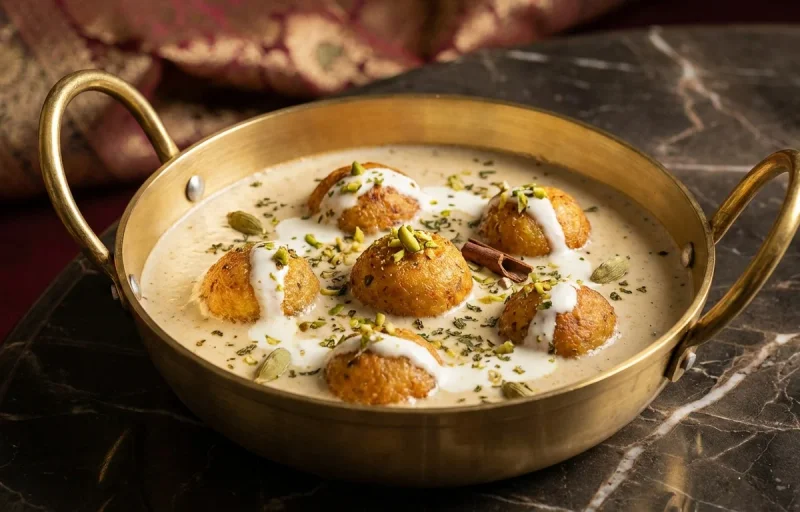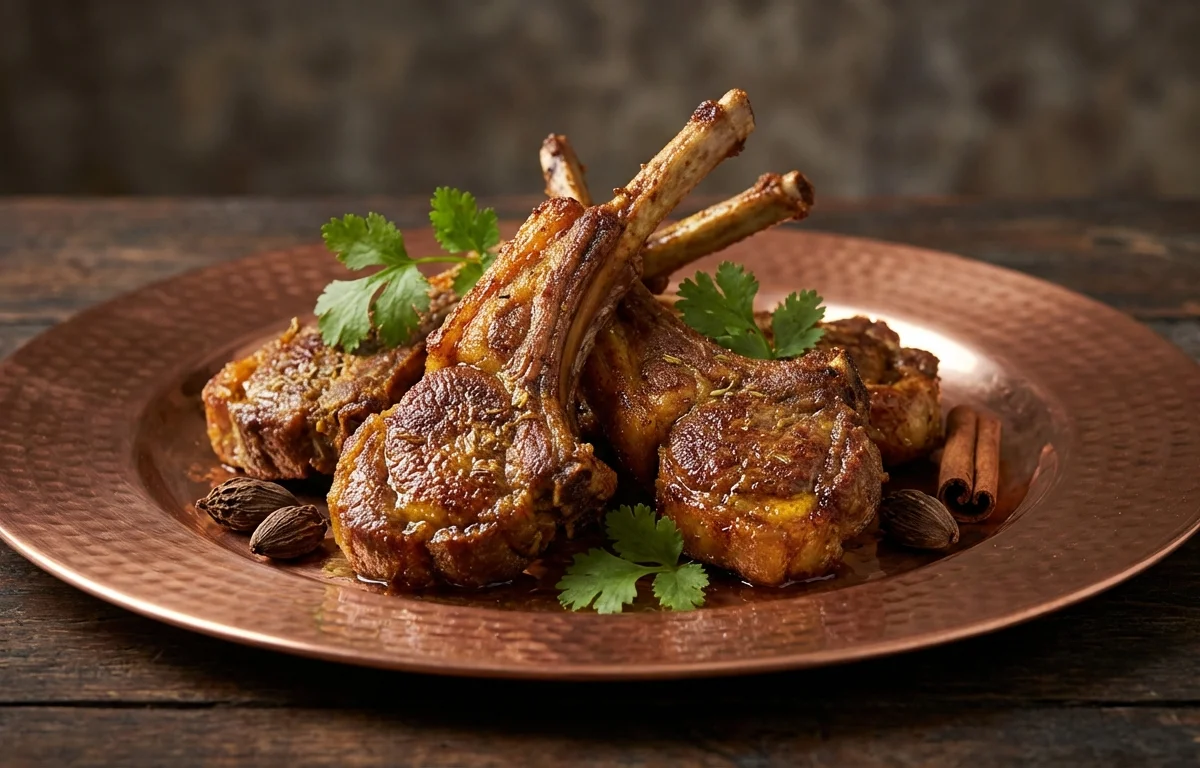
Kababargah
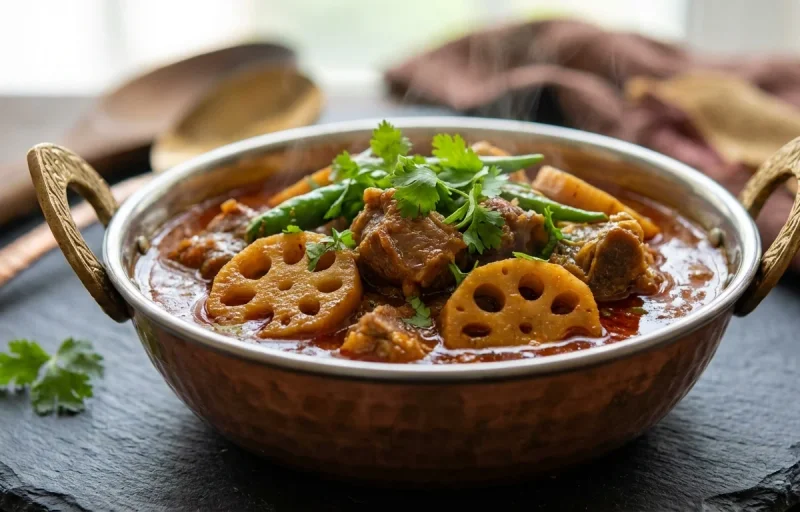
Kababargah is a Kashmiri style lamb rib dish where the meat is first gently cooked with milk and warm spices, then fried until the edges turn crisp and golden. Rich, fragrant, and special-occasion worthy, it is deeply savory with a delicate spice finish.
For 8 servings
- prep · ~5 min
Prepare the lamb ribs.
Rinse the lamb ribs and pat them dry. If needed, trim any loose excess fat while keeping the rib pieces intact.
- boil · ~35 min
Cook the ribs with milk and spices.
1.Place the lamb ribs in a wide pan with milk and water.2.Add fennel powder, dry ginger powder, green cardamom, cloves, cinnamon, black pepper, and salt.3.Bring to a gentle boil over medium heat.4.Lower the heat, cover partly, and cook until the ribs are tender and most of the liquid is reduced.TIPKeep the heat gentle so the milk does not catch at the bottom. - rest · ~5 min
Cool the ribs slightly.
Lift the ribs out carefully and let them rest on a plate for a few minutes so they firm up before frying.
- fry · ~10 min
Fry the ribs in ghee.
1.Heat ghee in a heavy pan over medium heat.2.Place the cooked ribs in a single layer.3.Fry, turning gently, until both sides are golden brown and lightly crisp at the edges.4.Remove the ribs and let any extra ghee drip back into the pan.TIPDo not crowd the pan or the ribs will steam instead of crisping. - serve
Serve the Kababargah hot.
What to keep in mind.
7 tips from the recipe — small details that make a real difference to the final dish.
- 1Use a wide, heavy pan so the milk reduces evenly and the ribs cook in a single layer.
- 2Keep the simmer gentle; a hard boil can split the milk and toughen the lamb.
- 3Cook until the ribs are tender but not falling apart, or they may break while frying.
- 4Let the boiled ribs cool briefly before frying so the surface firms up and browns better.
- 5Fry in batches if needed; crowded ribs trap steam and won't develop crisp edges.
- 6Turn the ribs gently with tongs to keep the spice-coated surface intact.
- 7You can boil the ribs a day ahead, chill them, and fry just before serving for easier handling.
Adapt it for your goals.
Low-oil
Shallow-fry with less ghee in a nonstick pan, turning often; you still get browned edges with a lighter finish.
spicierSpicier
Add a pinch of Kashmiri red chili powder to the simmering liquid for gentle heat and a deeper red hue.
mutton ribsMutton-ribs
Use larger mutton ribs for a meatier version, but simmer longer until fully tender before frying.
oven finishedOven-finished
After simmering, brush the ribs with ghee and roast at high heat to crisp them instead of pan-frying.
Why this is on our healthy list.
Protein-Rich Main Dish
Lamb ribs provide substantial protein, making this a satisfying centerpiece dish for a festive meal.
Digestive Spice Profile
Fennel and dry ginger are traditional warming spices that add aroma while keeping the seasoning focused and balanced.
Calcium From Milk
The milk-based simmering liquid contributes dairy richness along with nutrients naturally present in milk.
Frequently asked questions
Yes, but they cook faster and are leaner, so reduce the simmering time and fry briefly to avoid drying them out.