Kadali Bhanda Rai
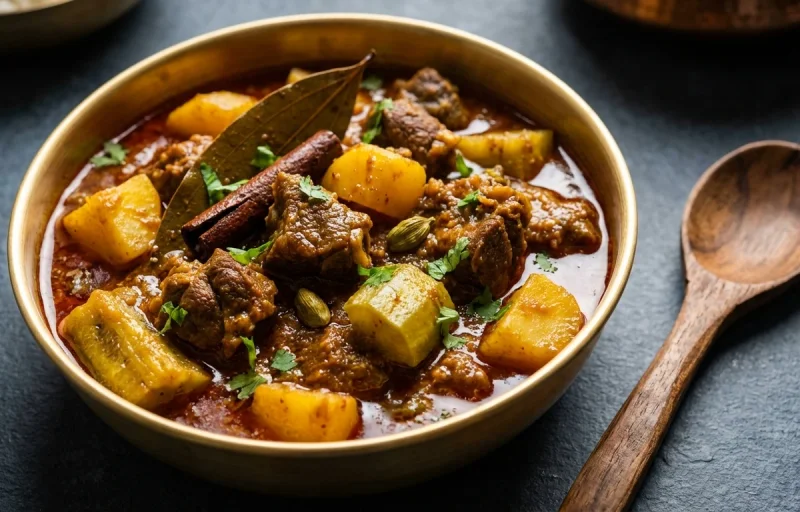
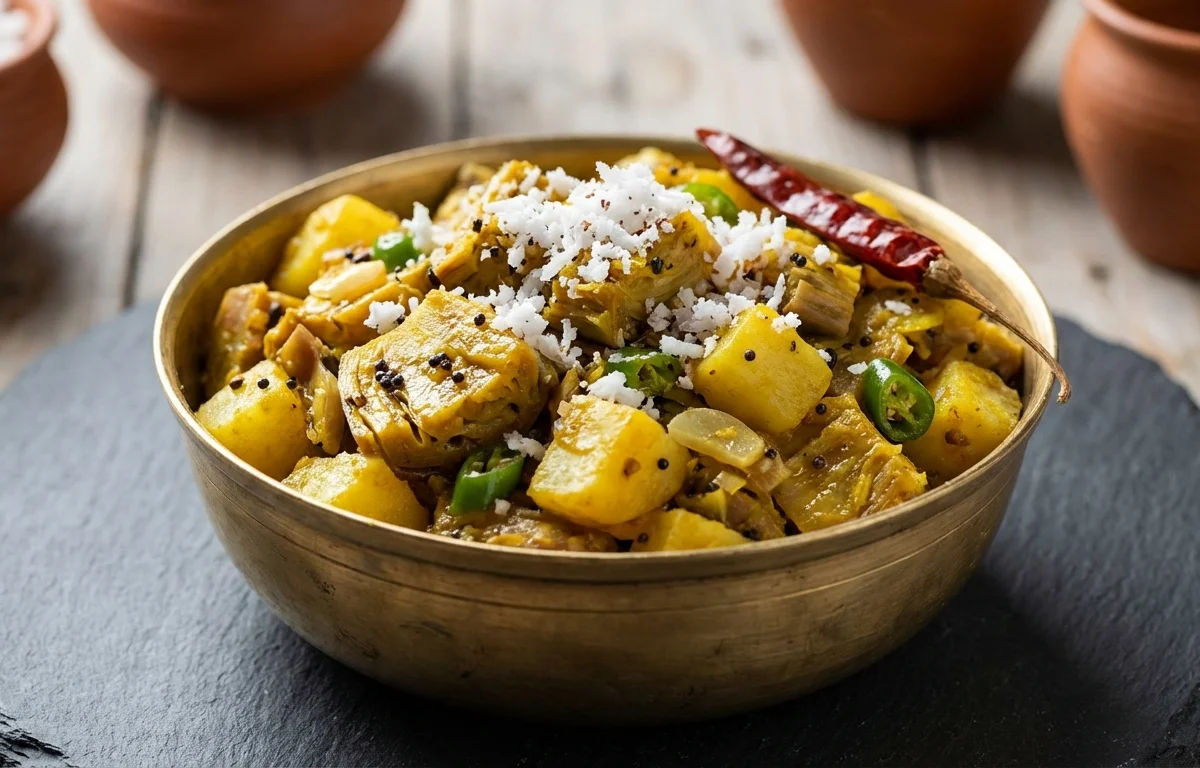
A simple and light curry from the Odia kitchen, featuring the delicate crunch of banana stem cooked in a yogurt-based gravy. Mildly spiced with ginger and cumin, it's a soothing dish that pairs wonderfully with steamed rice for a comforting meal.
For 4 servings
- prep
Clean and prep the banana stem.
Peel the outer layers of the banana stem and cut the tender core into small pieces. While chopping, remove any fibrous threads that appear. Immediately soak the pieces in water mixed with a pinch of turmeric to prevent discoloration.
TIPUse yogurt or buttermilk water instead of plain water for soaking to keep the color even brighter. - boil · ~8 min
Boil the banana stem.
Drain the soaked banana stem and transfer to a pan. Add water and a pinch of salt. Boil for about 7-8 minutes until the pieces are tender. Drain and set aside.
- mix
Prepare the yogurt mixture.
In a bowl, whisk the yogurt with a little water until smooth. Set aside.
- temper · ~1 min
Make the tempering.
1.Heat ghee in a pan over medium heat until shimmering.2.Add cumin seeds, mustard seeds, dry red chili, and asafoetida.3.Let the mustard seeds splutter and cumin sizzle until fragrant (30 seconds). - saute · ~1 min
Sauté the aromatics.
Add slit green chilies and grated ginger to the tempering. Sauté for about 30 seconds until the raw smell goes away.
- simmer · ~6 min
Cook the banana stem in gravy.
1.Add the boiled banana stem pieces to the pan and stir gently.2.Sprinkle turmeric powder and salt to taste. Sauté for a minute.3.Pour in the whisked yogurt and water mixture. Stir well.4.Simmer on low heat for 5-6 minutes, stirring occasionally.TIPKeep the heat low after adding yogurt to prevent it from curdling. - simmer
Finish cooking.
Once the gravy thickens slightly and the flavors meld, check the seasoning. Remove from heat.
- serve
Serve hot with steamed rice.
Transfer the Kadali Bhanda Rai to a serving bowl. Drizzle a little raw ghee on top as a finishing touch, if desired.
What to keep in mind.
7 tips from the recipe — small details that make a real difference to the final dish.
- 1Choose banana stems that are pale green and firm with no browning for the best texture.
- 2Soak chopped banana stem in buttermilk or yogurt water after prep to keep it bright and reduce astringency.
- 3Boil the banana stem just until tender-crisp—overcooking makes it mushy and stringy.
- 4Whisk the yogurt until perfectly smooth before adding to the pan to ensure a lump-free gravy.
- 5Always simmer on low heat after adding yogurt to prevent curdling and splitting.
- 6Taste and adjust salt only at the end, as yogurt can vary in saltiness.
- 7For a deeper flavor, let the cooked rai rest for 10 minutes before serving so the spices meld.
Adapt it for your goals.
Vegan
Replace yogurt with full-fat coconut milk or thick cashew cream (whisked smooth) and use coconut oil instead of ghee for a creamy, dairy-free version.
protein boostProtein boost
Add a handful of boiled chana dal or moong dal along with the banana stem for extra plant-based protein and a heartier meal.
spicierSpicier
Increase green chilies to 4-5 and add 1/2 tsp red chili powder to the tempering for those who prefer a fiery kick.
Why this is on our healthy list.
Supports Digestion
Banana stem is rich in fiber and acts as a natural diuretic, aiding digestion and helping flush excess fluids from the body.
Probiotic-Rich
The yogurt-based gravy provides live probiotics that support gut health and improve nutrient absorption.
Low in Calories
This light curry is naturally low in calories and fat, making it a guilt-free addition to a balanced meal.
Anti-Inflammatory Spices
Turmeric, ginger, and asafoetida are known for their anti-inflammatory properties, which may help reduce joint discomfort.
Frequently asked questions
Yes, but thaw it completely and squeeze out excess water before boiling, as frozen stems release more moisture and can make the gravy watery.