Kalva Suke
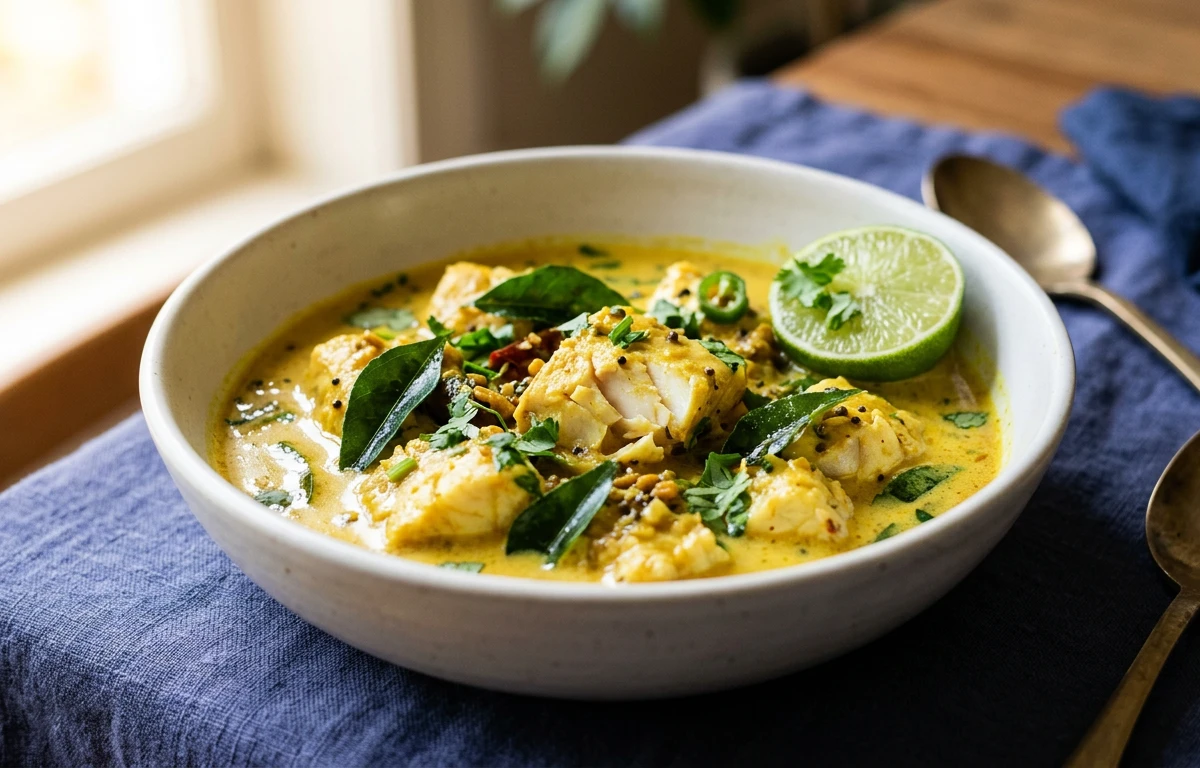
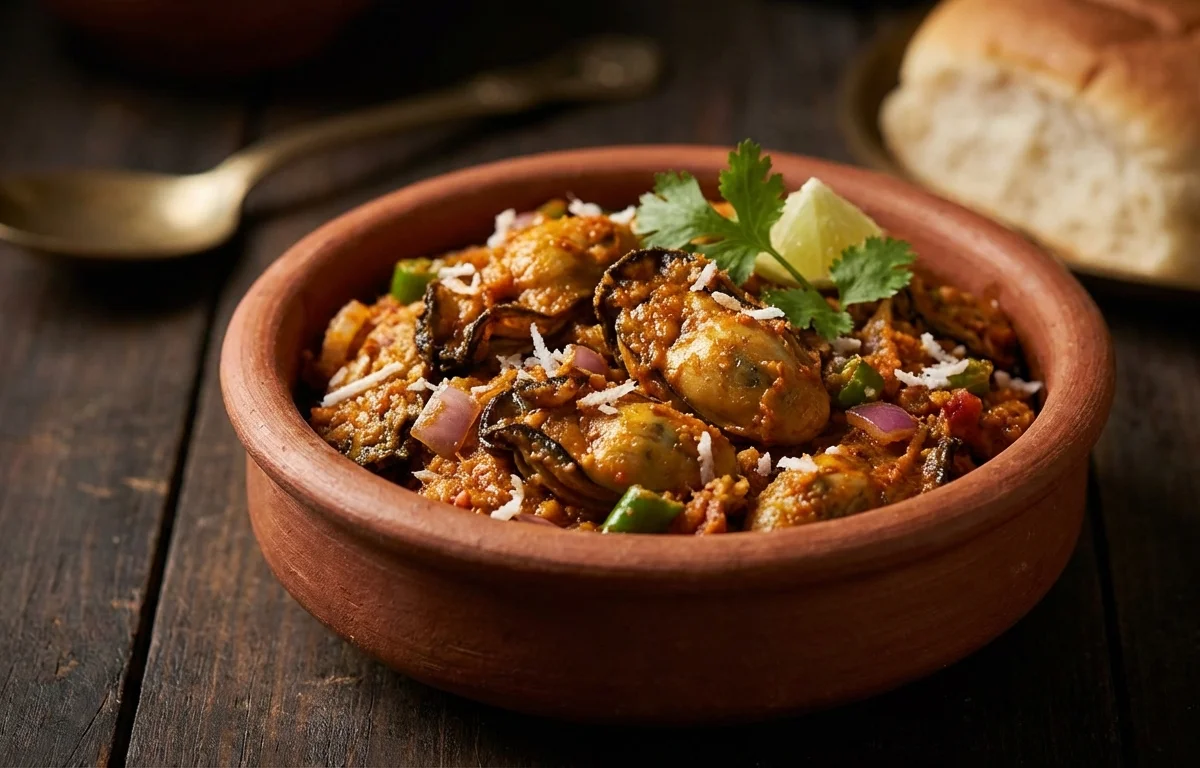
Kalva Suke is a coastal shellfish stir-fry from western India, where tender clams are cooked with onion, coconut, and warming spices until the masala clings to every bite. It is savory, gently spiced, and best served hot with rice or bhakri.
For 4 servings
- prep · ~20 min
Clean and soak the clams.
1.Rinse the clams under running water several times.2.Soak them in fresh water for 20 minutes so any grit settles out.3.Lift the clams out, discard the sandy water, and rinse once more.TIPDiscard any clams that are cracked or stay open after tapping. - boil · ~5 min
Open the clams.
Place the clams in a pot with 0.25 cup water and bring to a boil. Cover and cook for 4 to 5 minutes, just until the shells open. Cool slightly, remove one shell from each clam if you like, and keep the clam liquor in the pot.
- saute · ~10 min
Cook the onion masala.
1.Heat oil in a wide pan over medium heat.2.Add cumin seeds and let them sizzle for 20 seconds.3.Add onion, green chili, ginger, and garlic, then cook until the onion turns light golden, 5 to 6 minutes.4.Add tomato and cook until soft, 3 minutes.5.Stir in turmeric powder, red chili powder, coriander powder, and salt.TIPKeep the heat medium so the spices toast gently and do not burn. - simmer · ~5 min
Add coconut and build the suke.
Add the grated coconut and cook for 2 minutes until lightly aromatic. Pour in the reserved clam liquor, the remaining 0.25 cup water, and add the kokum. Simmer for 2 to 3 minutes so the masala comes together.
- simmer · ~4 min
Cook the clams in the masala.
Add the opened clams and toss well so they are coated in the coconut masala. Cook for 3 to 4 minutes until the liquid reduces and the mixture turns semi-dry.
TIPDo not overcook the clams or they will turn chewy. - garnish
Finish with coriander leaves.
- serve
Serve hot with rice or bhakri.
What to keep in mind.
7 tips from the recipe — small details that make a real difference to the final dish.
- 1Strain the reserved clam liquor through a fine sieve or cloth so no hidden grit gets into the masala.
- 2Add salt carefully, since the clams and their liquor already bring natural salinity to the dish.
- 3Cook the onions only to light golden; darker browning can overpower the sweet clam flavor.
- 4Once the clams go into the masala, toss just until coated and heated through to keep them tender.
- 5Let the kokum simmer briefly in the liquor so its sourness fully infuses the coconut masala.
- 6For a truer semi-dry suke texture, use a wide pan so excess moisture evaporates quickly without overcooking the clams.
- 7This tastes best fresh, but if reheating leftovers, do it gently on low heat for just a minute or two.
Adapt it for your goals.
Spicier-goan
Increase green chili and red chili powder for a hotter coastal-style suke that still stays balanced with coconut.
more coconuttyMore-coconutty
Add a little extra grated coconut for a fuller, sweeter masala and a slightly thicker semi-dry finish.
boneless styleBoneless-style
Remove both shells from the opened clams before adding them back, making the dish easier to eat with rice.
mussels versionMussels-version
Use mussels instead of clams with the same masala for a similar coastal shellfish stir-fry with a meatier bite.
Why this is on our healthy list.
Mineral-Rich Shellfish
Clams provide protein and naturally occurring minerals, making this a nourishing seafood dish.
Digestive Spice Base
Ginger, garlic, cumin, and coriander are commonly used to add warmth and support easier digestion in rich seafood dishes.
Whole Coconut Goodness
Fresh grated coconut adds texture, satisfying richness, and plant compounds rather than relying on heavy cream.
Frequently asked questions
Throw away any clams that are cracked or stay open when tapped before cooking, and discard any that do not open after steaming.