
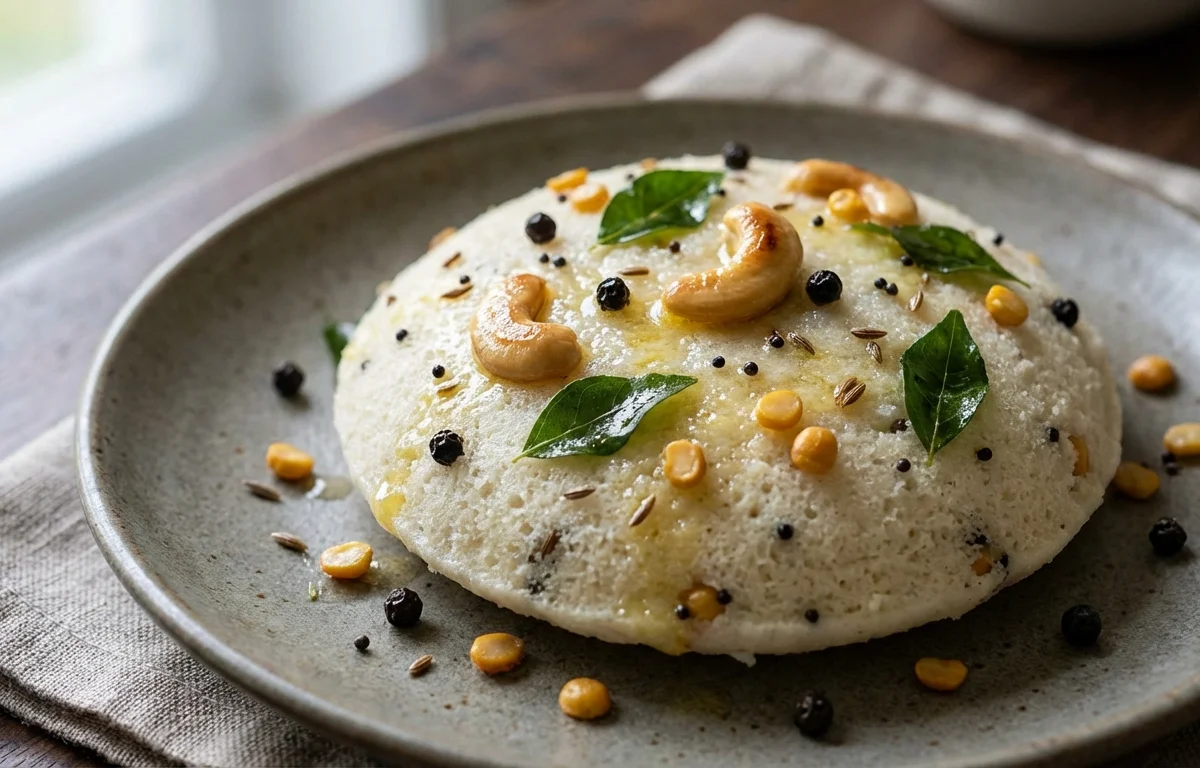
Kanchipuram Idli
Fragrant temple-style idlis from Tamil Nadu, made with a lightly spiced fermented batter and steamed until soft yet hearty. The pepper, cumin, ginger, and curry leaves give each bite a warm, savory depth.
For 8 servings
- prep · ~240 min
Soak the rice and dal.
1.Wash the idli rice well and soak it in water for 4 hours.2.Wash the urad dal and soak it with fenugreek seeds for 4 hours.3.Drain both separately before grinding.TIPKeep the soaking water fresh and clean for a better fermented batter. - mix · ~20 min
Grind the batter.
1.Grind the urad dal and fenugreek seeds with water to a light, fluffy batter.2.Grind the rice with water to a slightly coarse batter.3.Mix both batters in a large bowl until well combined.4.Add salt and mix with your hand for 1 minute.TIPDo not grind the rice too smooth; the light grainy texture gives Kanchipuram idli its character. - rest · ~480 min
Ferment the batter.
Cover the bowl and leave the batter in a warm place for 8 hours, or until risen and airy.
- temper · ~2 min
Make the spiced ghee.
1.Heat ghee in a small pan over medium heat.2.Add cumin seeds and crushed black peppercorns and let them sizzle for 20 seconds.3.Add chopped ginger, green chili, curry leaves, and asafoetida.4.Cook for 30 seconds until fragrant, then take off the heat.TIPUse medium heat so the spices bloom without burning. - mix · ~1 min
Fold the seasoning into the batter.
Pour the warm spiced ghee into the fermented batter and mix gently until evenly distributed.
- prep · ~1 min
Grease the idli molds.
Grease the idli plates lightly with ghee so the idlis release cleanly after steaming.
- assemble · ~2 min
Fill the molds with batter.
Pour the batter into the greased molds, filling each one almost to the top.
- steam · ~15 min
Steam the idlis.
Place the filled molds in a steamer and steam for 12 to 15 minutes, until the tops are set and a skewer comes out clean.
TIPDo not open the steamer in the first 10 minutes or the idlis may turn dense. - rest · ~2 min
Let the idlis rest briefly.
Turn off the heat and rest the idlis for 2 minutes before unmolding.
- serve · ~1 min
Unmold and serve the idlis hot.
Remove the idlis gently with a spoon and serve warm as part of a meal.
What to keep in mind.
6 tips from the recipe — small details that make a real difference to the final dish.
- 1Grind the rice slightly coarse, not silky smooth, so the idlis keep their classic Kanchipuram bite.
- 2Mix the fermented batter with your hand before resting; the warmth helps fermentation start evenly.
- 3Let the tempering cool just slightly before adding so it perfumes the batter without knocking out too much air.
- 4Fill the molds almost to the top, since this batter rises less dramatically than plain soft idli batter.
- 5Rest the steamed idlis for 2 minutes before unmolding to prevent the spiced surface from tearing.
- 6If making ahead, refrigerate steamed idlis and re-steam for a few minutes rather than microwaving, which can toughen them.
Adapt it for your goals.
Millet
Replace part of the idli rice with little millet or foxtail millet for a nuttier taste and a more whole-grain feel.
low gheeLow-ghee
Use less ghee in the tempering and grease molds with a thin film only; good if you want the same spice profile with a lighter finish.
extra pepperExtra-pepper
Increase the crushed black pepper slightly for a more robust, temple-style heat that pairs especially well with coconut chutney.
banana leaf steamedBanana-leaf-steamed
Line the molds or a tray with banana leaf before steaming to add a subtle aroma and more festive presentation.
Why this is on our healthy list.
Fermented and Easier to Digest
The soaked and fermented rice-dal batter is traditionally valued for being lighter on the stomach than an unfermented batter.
Protein from Urad Dal
Urad dal adds plant protein and makes the idlis more sustaining than a rice-only steamed cake.
Digestive Spice Support
Ginger, cumin, pepper, curry leaves, and asafoetida bring aroma while also being classic digestive spices in South Indian cooking.
Frequently asked questions
Usually the urad dal was not whipped light enough, the batter did not ferment fully, or the steamer was opened too early during cooking.


