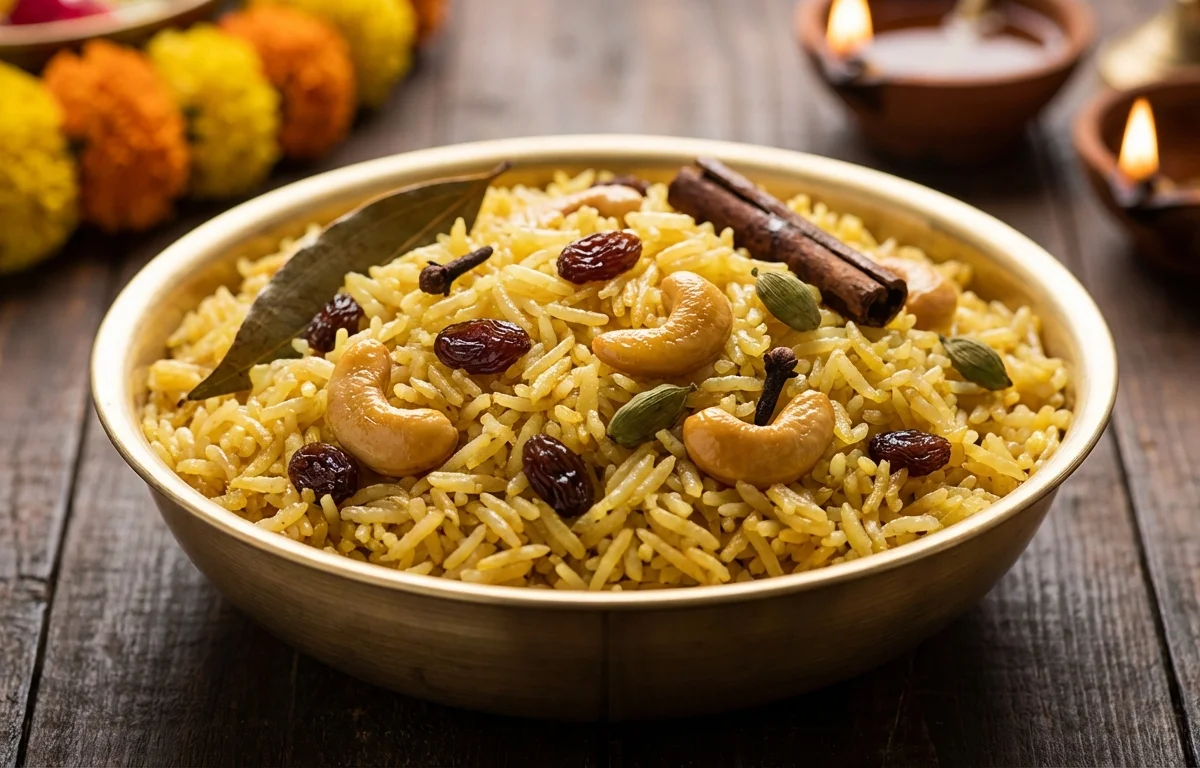
Kanika
Kanika is a lightly sweet, fragrant rice dish from Odisha made with ghee, whole spices, raisins, and a touch of sugar. It cooks up fluffy and aromatic, making it a lovely festive rice to serve alongside a simple curry or dalma.
For 4 servings
- prep · ~20 min
Wash and soak the rice.
Rinse the basmati rice gently until the water runs mostly clear. Soak it in water for 20 minutes, then drain well before cooking.
- saute · ~2 min
Fry the cashews and raisins.
Heat 1 tablespoon ghee in a heavy pan over medium heat. Add the cashews and raisins, fry until the cashews turn light golden and the raisins puff up, then remove them to a plate.
- temper · ~1 min
Cook the whole spices in ghee.
Add the remaining ghee to the same pan. Add bay leaf, cinnamon, green cardamom, and cloves, and cook for 30 seconds until fragrant.
TIPKeep the heat medium so the spices bloom without burning. - saute · ~3 min
Coat the rice in the spiced ghee.
Add the drained rice to the pan and stir gently for 2 to 3 minutes so each grain gets coated with ghee and spices.
- boil · ~5 min
Add water, sugar, and salt.
Pour in the hot water, then add sugar and salt. Stir once gently and bring the rice to a boil.
- steam · ~15 min
Cover and cook the rice.
Lower the heat, cover the pan tightly, and cook for 12 to 15 minutes until the rice is tender and the water is absorbed.
- rest · ~5 min
Rest the rice off the heat.
Turn off the heat and let the rice rest, covered, for 5 minutes so the grains finish setting.
- garnish
Fold in the fried cashews and raisins.
Open the pan, fluff the rice gently with a fork or spoon, and fold in the fried cashews and raisins without breaking the grains.
- serve
Serve the kanika warm.
What to keep in mind.
7 tips from the recipe — small details that make a real difference to the final dish.
- 1Drain the soaked basmati thoroughly so the grains toast in ghee instead of steaming in the pan.
- 2Fry the raisins only until they puff; if they darken, they turn chewy and slightly bitter.
- 3Use hot water in step 5 to keep the rice cooking evenly and prevent the ghee from seizing.
- 4After adding water, stir just once; too much stirring can break the grains and make Kanika clumpy.
- 5Keep the pan tightly covered on low heat so the rice absorbs the sweet spiced liquid without scorching.
- 6Resting the rice for 5 minutes is key for fluffy grains, so don't skip opening the lid too early.
- 7Leftovers reheat best with a teaspoon of water and a covered pan on low heat to restore softness.
Adapt it for your goals.
Low-sweet
Reduce the sugar slightly for a more savory-leaning Kanika that pairs especially well with mildly spiced dalma or vegetable curries.
jaggeryJaggery
Swap sugar for grated jaggery for a deeper, warmer sweetness; dissolve it in the hot water before adding so it mixes evenly.
nut freeNut-free
Skip the cashews and use extra raisins if needed for a simpler version suitable for those avoiding tree nuts.
veganVegan
Replace ghee with a neutral oil or coconut oil; the dish will be less rich but still aromatic from the whole spices.
Why this is on our healthy list.
Energy-Giving Rice Dish
Basmati rice provides easily digestible carbohydrates, making Kanika a gentle, comforting side for festive or everyday meals.
Healthy Fats from Ghee and Cashews
The ghee and cashews add richness and satiety, while cashews also contribute some plant-based fats and minerals.
Antioxidant-Rich Spices
Cinnamon, cloves, cardamom, and bay leaf bring aroma along with beneficial plant compounds used traditionally in spiced rice dishes.
Frequently asked questions
Usually the rice was not drained well, got stirred too much after adding water, or cooked with too much moisture. Resting it covered also helps the grains firm up.