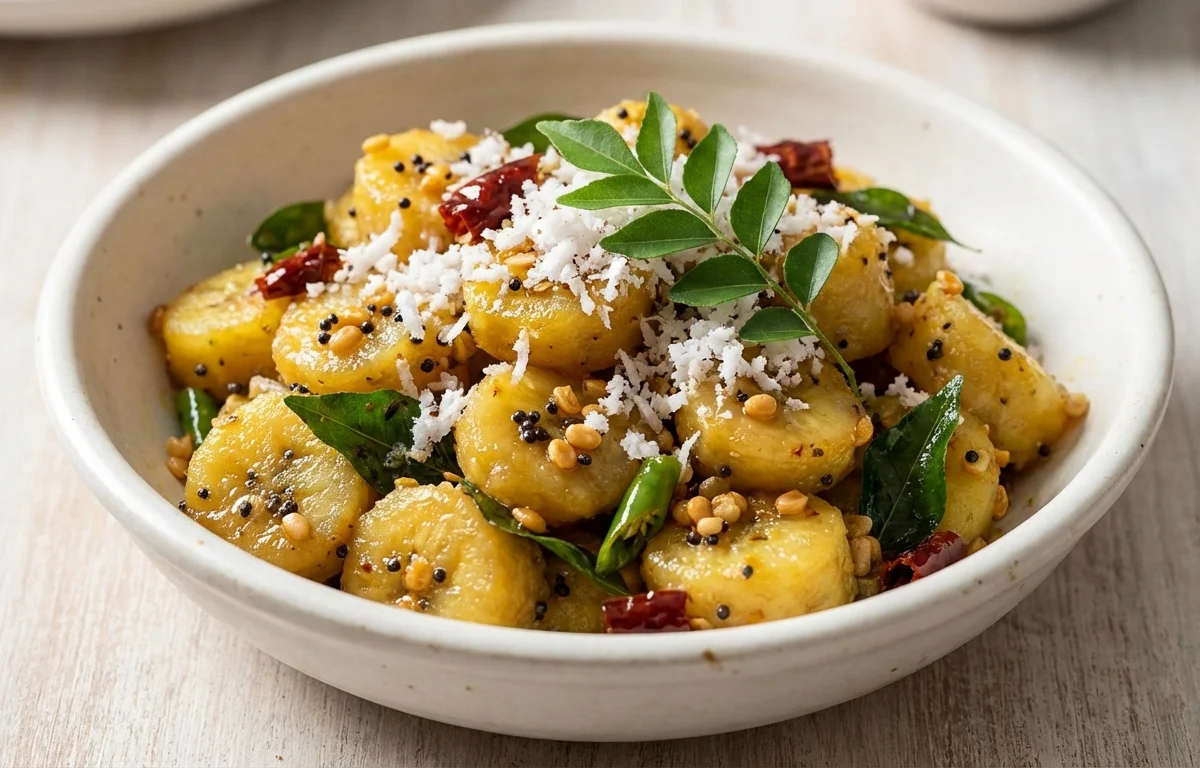
Kele Upkari
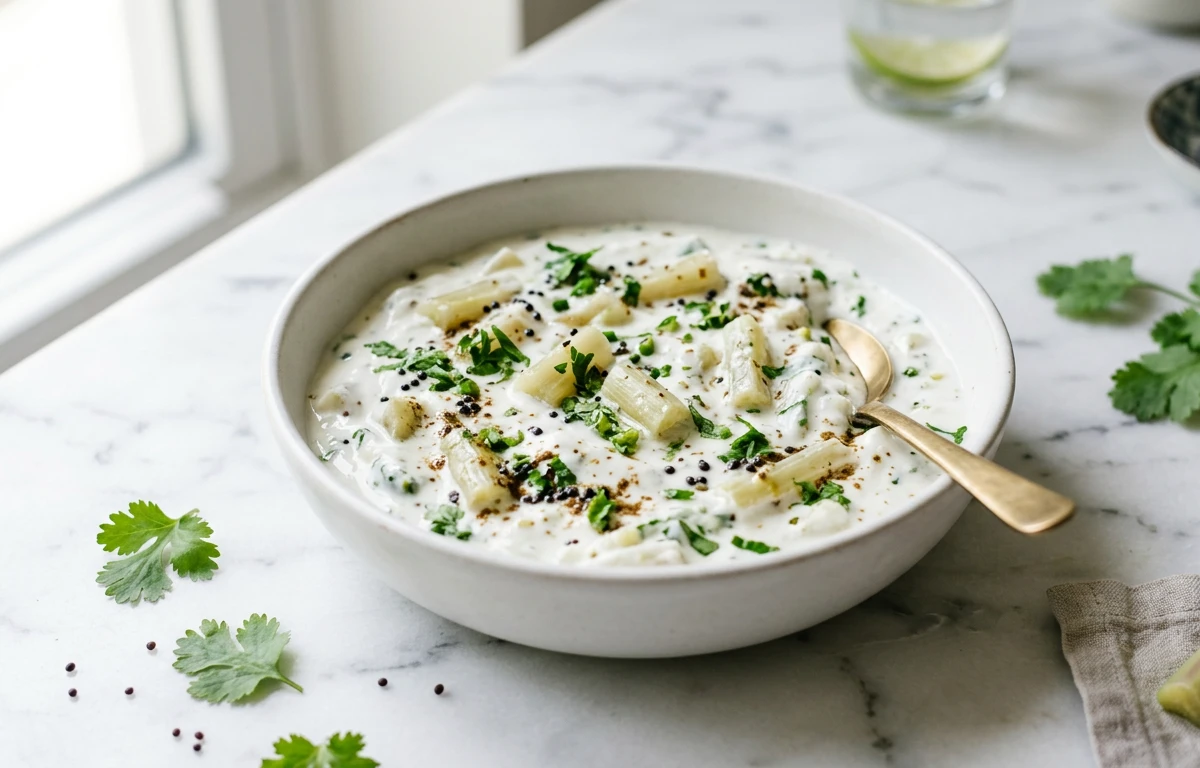
Kele Upkari is a simple coastal Karnataka stir-fry made with raw banana, coconut, and a gentle tempering of mustard and curry leaves. It is lightly spiced, comforting, and pairs beautifully with dal rice or rasam.
For 4 servings
- prep · ~5 min
Peel and cut the raw banana.
Peel the raw banana and cut it into small even cubes so it cooks quickly and stays neat in the stir-fry.
- boil · ~10 min
Cook the raw banana until just tender.
1.Add the raw banana, water, turmeric powder, and salt to a pan.2.Bring it to a gentle boil over medium heat.3.Cook until the pieces are just tender and hold their shape, about 8 to 10 minutes.4.Keep any little bit of remaining moisture in the pan; do not mash the banana.TIPCook only until tender. Overcooking makes the pieces break while mixing. - temper · ~2 min
Make the tempering.
1.Heat oil in a pan over medium heat.2.Add mustard seeds and let them splutter.3.Add urad dal and cook until lightly golden.4.Add dried red chili and curry leaves and cook for a few seconds until fragrant.TIPLower the heat before adding curry leaves so they crackle without burning. - saute · ~3 min
Mix the banana with the tempering.
Add the cooked raw banana to the pan and toss gently so the tempering coats all the pieces. Cook for 2 to 3 minutes, stirring lightly, until any excess moisture dries up.
- garnish · ~1 min
Add the grated coconut.
Sprinkle the grated coconut over the upkari and mix gently for 30 seconds so it warms through without losing its fresh taste.
- serve
Serve the Kele Upkari warm.
What to keep in mind.
8 tips from the recipe — small details that make a real difference to the final dish.
- 1Cut the raw banana into even small cubes so they cook uniformly and stay intact while tossing.
- 2Add the peeled banana pieces straight into water if prepping ahead to help prevent darkening.
- 3Boil only until fork-tender; the cubes should hold sharp edges and not look fluffy or crumbly.
- 4Let the mustard seeds fully splutter before adding urad dal, or the tempering will taste flat.
- 5Cook the urad dal just to light golden for a nutty crunch; too dark will turn bitter.
- 6If there is excess water after boiling, dry it off gently before adding coconut so the upkari stays fluffy, not soggy.
- 7Mix the grated coconut at the very end and heat briefly so it keeps its sweet, fresh coastal flavor.
- 8Leftovers keep well refrigerated for a day; reheat gently in a pan rather than microwaving to avoid mushy banana.
Adapt it for your goals.
Spicier
Add an extra dried red chili or a pinch of red chili powder for a hotter version that pairs especially well with plain rice and dal.
no coconutNo-coconut
Skip the grated coconut for a plainer, drier everyday upkari that stores a bit better and suits those avoiding coconut.
jainJain
This dish is already close to Jain-style; just ensure the oil and other ingredients fit your household practice, since it uses no onion or garlic.
coconut oilCoconut-oil
Use coconut oil for the tempering to give the upkari a more pronounced coastal Karnataka aroma and richer finish.
Why this is on our healthy list.
Fiber-Rich Vegetable Side
Raw banana adds satisfying bulk and fiber, making this simple stir-fry filling alongside rice, dal, or rasam.
Moderate in Oil
The recipe uses only a small tempering of oil, so the dish stays light while still delivering classic South Indian flavor.
Plant-Based Ingredients
Made from raw banana, coconut, spices, and lentils, this is a wholesome vegan side built from minimally processed ingredients.
Supports Variety in Meals
Curry leaves, turmeric, urad dal, and coconut bring diverse plant ingredients to the plate instead of relying on heavy sauces.
Frequently asked questions
For this upkari, peeling is preferred because the recipe is meant to be soft, mild, and evenly coated with coconut and tempering.