
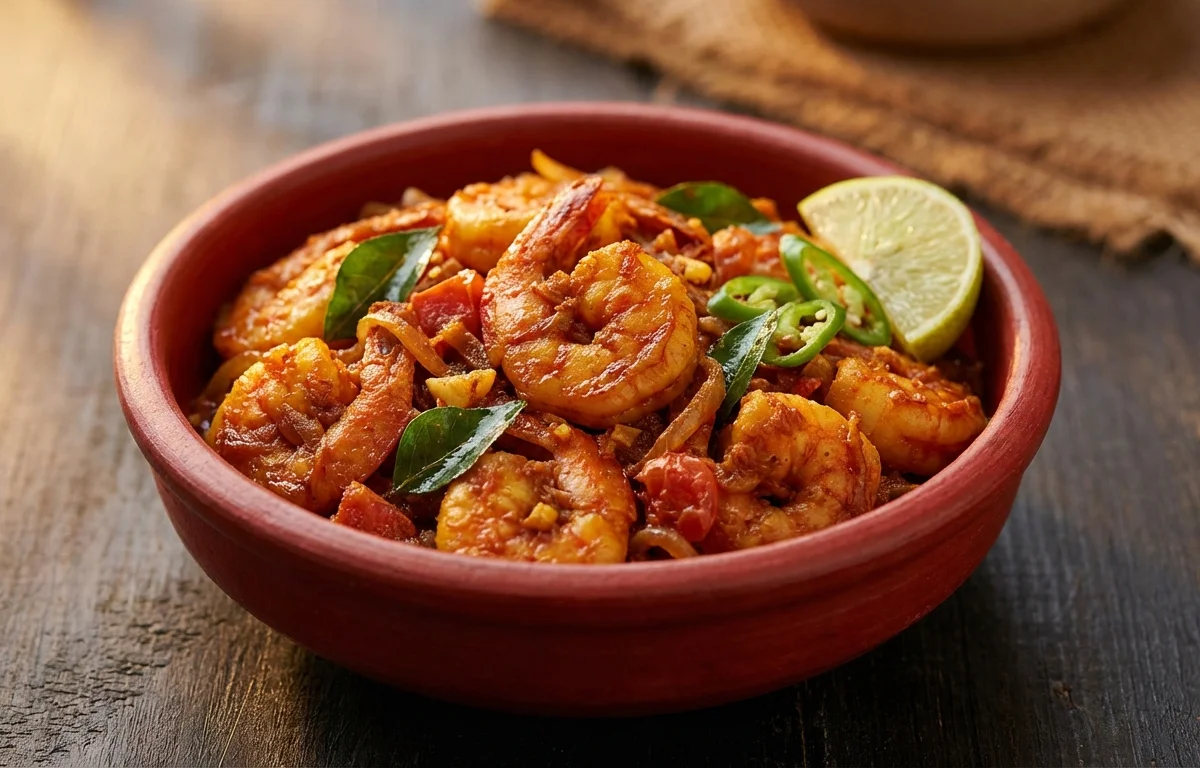
Kerala Prawn Roast
This Kerala-style prawn roast is bold, spicy, and deeply savory, with juicy prawns coated in a dark masala of onion, ginger, garlic, curry leaves, and black pepper. It is a small but punchy seafood dish that pairs beautifully with rice, appam, or chapati.
For 4 servings
- prep · ~10 min
Marinate the prawns.
1.Place the cleaned prawns in a bowl.2.Add turmeric powder, red chili powder, half of the black pepper, half of the salt, and lemon juice.3.Mix well and set aside for 10 minutes.TIPA short marinade is enough for prawns. Longer marinating can make them release more water in the pan. - saute · ~7 min
Cook the onion base.
1.Heat coconut oil in a wide pan over medium heat.2.Add onion, ginger, garlic, green chili, and curry leaves.3.Cook until the onions turn soft and lightly golden, stirring often.TIPUse medium heat so the onions brown slowly without burning. This gives the roast its deep flavor. - saute · ~6 min
Build the masala.
1.Add tomato and cook until soft and pulpy.2.Add coriander powder, remaining black pepper, garam masala, and remaining salt.3.Cook the masala until it looks thick and glossy. - saute · ~7 min
Roast the prawns in the masala.
1.Add the marinated prawns to the pan and mix well with the masala.2.Cook on medium heat for 3 to 4 minutes until the prawns start turning opaque.3.Add water and stir to coat everything evenly.4.Cook uncovered until the masala clings to the prawns and the oil starts to show at the edges.TIPDo not overcook the prawns. Once they curl and turn opaque, they are done. - garnish
Finish with a few extra curry leaves and toss well.
- serve
Serve hot with rice, appam, or chapati.
What to keep in mind.
7 tips from the recipe — small details that make a real difference to the final dish.
- 1Pat the prawns dry before marinating so the spices cling well and the roast stays thick, not watery.
- 2Slice the onions thinly and cook them until lightly golden; this is what gives the masala its deep roasted color.
- 3Use a wide pan so the prawns roast in the masala instead of steaming on top of each other.
- 4Add the 2 tablespoons of water only after the prawns begin to turn opaque, so the masala loosens without diluting flavor.
- 5Stop cooking as soon as the prawns curl into a loose C; tightly curled prawns are usually overcooked.
- 6Fresh curry leaves fried in the coconut oil at the start make the dish noticeably more aromatic than adding them only at the end.
- 7This roast tastes even better after a short 15-minute rest, when the peppery masala settles onto the prawns.
Adapt it for your goals.
Extra-peppery
Increase the crushed black pepper and reduce the red chili slightly for a sharper, more traditional pepper-forward roast.
dry roastDry-roast
Skip the added water and cook on low after adding prawns for a darker, drier masala that pairs especially well with chapati.
less spicyLess-spicy
Use fewer green chilies and a little less chili powder while keeping the pepper and curry leaves for flavor without too much heat.
squid versionSquid-version
Replace prawns with cleaned squid rings, but cook just until tender so the same masala gives a different Kerala seafood roast.
Why this is on our healthy list.
Protein-Rich Seafood Dish
Prawns provide lean protein, making this roast a satisfying option that pairs well with simple rice or flatbreads.
Spice-Based Flavoring
Ginger, garlic, black pepper, turmeric, and curry leaves build strong flavor without needing heavy cream or butter.
Moderate Oil Preparation
The dish gets its roasted texture and aroma from a small amount of coconut oil rather than deep-frying the seafood.
Frequently asked questions
Yes. Thaw them completely, drain well, and pat them dry before marinating so the masala does not turn watery.


.webp)
.webp)