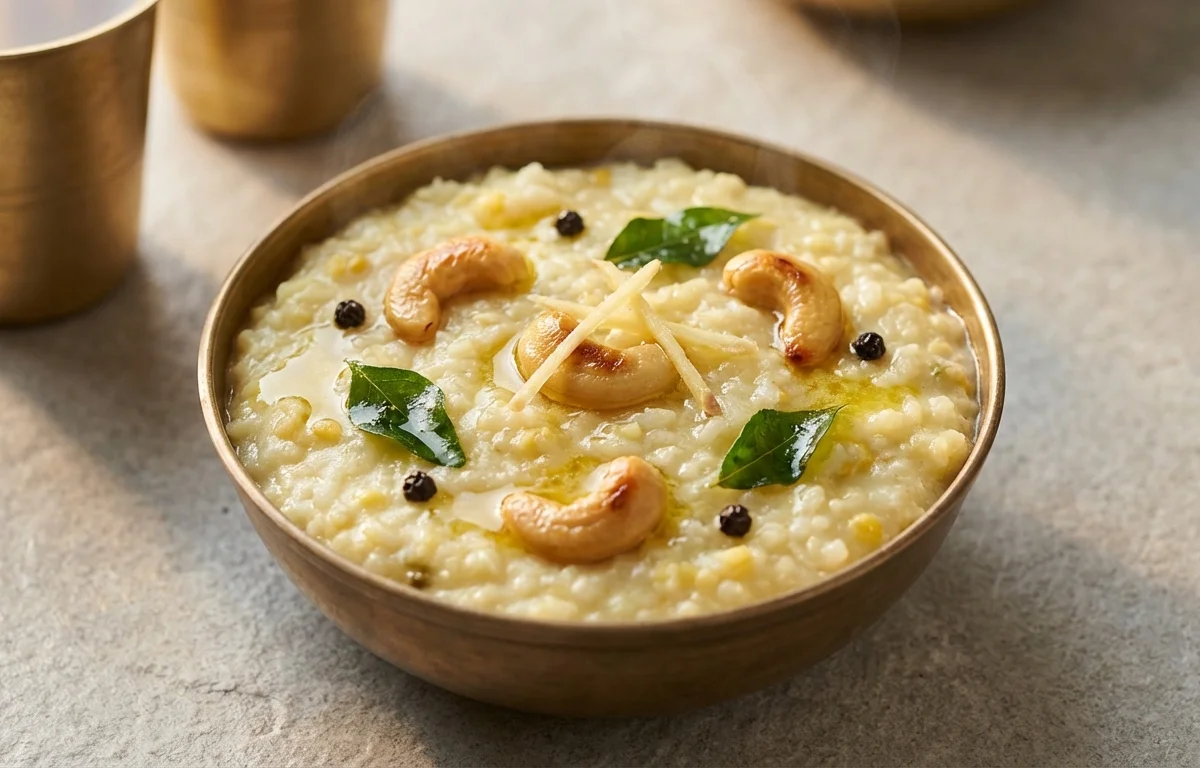
Khara Pongal
Warm, comforting rice and moong dal cooked until soft and creamy, then finished with a fragrant ghee tempering of black pepper, cumin, ginger, curry leaves, and cashews. This South Indian classic is simple, soothing, and deeply satisfying.
For 4 servings
- prep · ~3 min
Rinse the rice and moong dal.
Wash the raw rice and moong dal together in a few changes of water until the water runs mostly clear. Drain well.
- pressure cook · ~20 min
Pressure cook the rice and dal.
1.Add the rinsed raw rice and moong dal to a pressure cooker.2.Pour in water and add salt.3.Mix once, close the cooker, and cook for 4 whistles on medium heat.4.Let the pressure drop naturally before opening.TIPCook it a little softer than regular rice for the creamy, spoonable texture that makes pongal special. - mix · ~2 min
Mash the cooked pongal lightly.
Open the cooker and stir the cooked rice and dal well until soft and creamy. Lightly mash with the back of a ladle if needed.
- temper · ~3 min
Make the ghee tempering.
1.Heat ghee in a small pan over medium heat.2.Add cashews and fry until lightly golden.3.Add cumin seeds, crushed black peppercorns, chopped ginger, curry leaves, and asafoetida.4.Cook for 20 to 30 seconds until fragrant.TIPKeep the heat medium so the spices bloom in the ghee without turning bitter. - assemble · ~1 min
Mix the tempering into the pongal.
Pour the hot tempering over the cooked pongal and mix well so the ghee and spices are evenly spread through the dish.
- serve
Serve the Khara Pongal hot.
What to keep in mind.
6 tips from the recipe — small details that make a real difference to the final dish.
- 1For the best pongal texture, cook the rice and moong dal slightly softer than you would for plain rice.
- 2Lightly crush the black peppercorns instead of powdering them so you get warm bursts of pepper without muddying the dish.
- 3Fry the cashews first in ghee and remove them early if they brown too fast; they should be golden, not deep brown.
- 4Add the tempering while it is still sizzling hot so the ghee carries the cumin, ginger, and curry leaf aroma through the pongal.
- 5If the pongal thickens as it sits, loosen it with a splash of hot water and stir well before serving.
- 6Natural pressure release helps the rice and dal finish softening and keeps the mixture creamy rather than grainy.
Adapt it for your goals.
Ven-pongal-style
Increase the black pepper and cumin slightly for a more temple-style, boldly spiced pongal with extra warmth.
low gheeLow-ghee
Reduce the ghee and use just enough for the tempering if you want a lighter version while keeping the key aroma.
milletMillet
Replace the rice with little millet or foxtail millet for a nuttier taste and a change from the classic grain base.
no cashewNo-cashew
Skip the cashews if needed for simplicity or nut avoidance; the dish will still be aromatic and comforting.
Why this is on our healthy list.
Protein from Moong Dal
Moong dal adds plant protein and makes the dish more satisfying than plain rice alone.
Gentle, Comforting Meal
The soft-cooked rice and dal texture is easy to eat and often chosen as a soothing, simple savory meal.
Digestive Spice Support
Ginger, cumin, black pepper, and asafoetida are traditional ingredients used for warmth and digestive comfort.
Frequently asked questions
It likely needs a bit more water or more cooking. Pongal should be softer than regular rice, then stirred or lightly mashed until creamy.