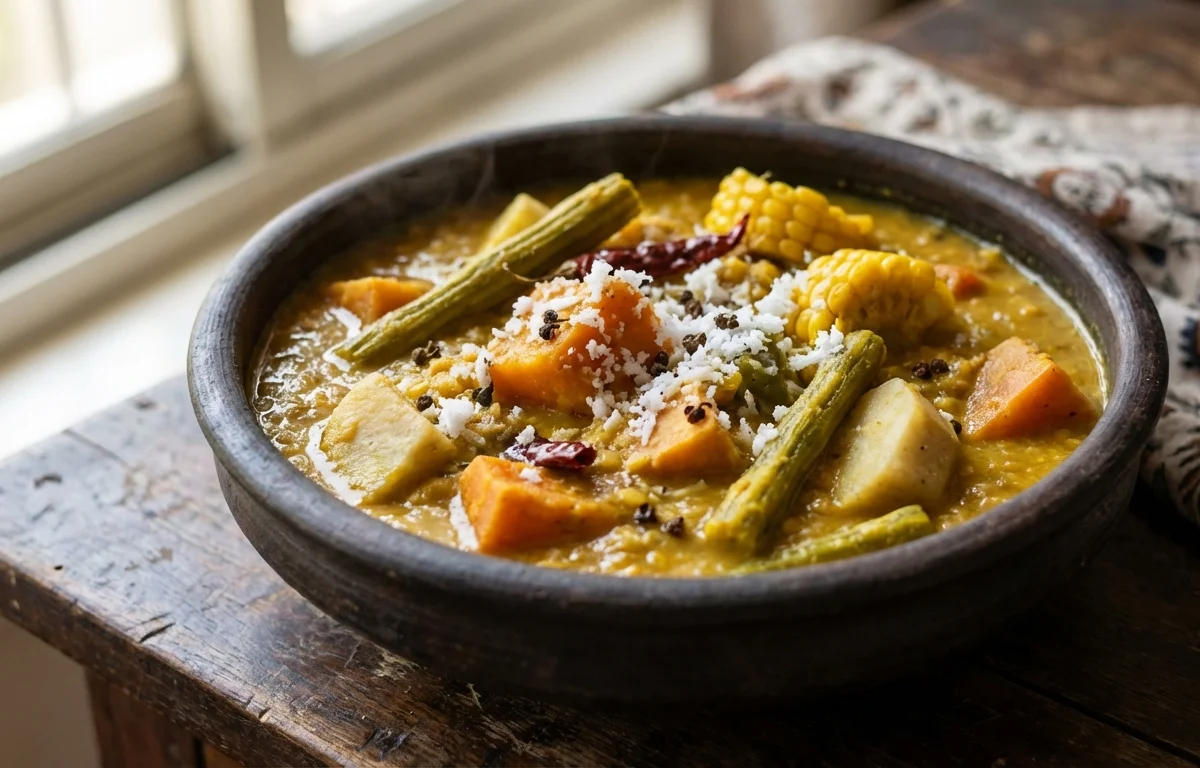
Khatkhate
Khatkhate is a comforting Goan vegetable stew made with mixed local vegetables, black chana, and a fresh coconut spice paste. Lightly seasoned and gently cooked, it is hearty, earthy, and especially lovely with rice.
For 4 servings
- pressure cook · ~30 min
Cook the black chana.
1.Drain the soaked black chana and place it in a pressure cooker.2.Add 1.5 cups water and cook until soft but holding shape, about 20 minutes after the first whistle.3.Let the pressure release naturally and keep the chana with its cooking liquid.TIPSoak the chana well or it stays firm while the vegetables turn too soft. - prep · ~15 min
Prepare the vegetables and coconut paste.
1.Cube the potato, raw banana, pumpkin, eggplant, and yam into medium pieces.2.Cut the drumstick into short pieces.3.Grind the fresh coconut, dried red chili, cumin seeds, and turmeric powder with 0.5 cup water to a smooth paste. - boil · ~15 min
Cook the vegetables.
Add the potato, raw banana, pumpkin, drumstick, eggplant, and yam to a pot with the remaining water. Cover and cook over medium heat until the vegetables are just tender and still holding their shape.
TIPAdd eggplant on top if your pot runs hot, so it cooks gently and does not break down too early. - mix · ~3 min
Add the chana, coconut paste, and salt.
Gently add the cooked black chana with its liquid, the ground coconut paste, and salt to the pot. Mix carefully so the vegetables stay intact.
- simmer · ~9 min
Simmer the khatkhate gently.
Cook uncovered on low heat until the raw smell of the coconut paste disappears and the stew turns lightly creamy, about 8 to 10 minutes. Stir once or twice very gently.
TIPKeep the heat low after adding the coconut paste to prevent splitting and sticking. - rest · ~5 min
Rest the khatkhate for 5 minutes.
- serve
Serve hot with rice.
What to keep in mind.
7 tips from the recipe — small details that make a real difference to the final dish.
- 1Cut the root vegetables slightly larger than the pumpkin and eggplant so everything finishes tender at the same time.
- 2Cook the black chana until fully soft before combining; undercooked chana will stay chewy even after the final simmer.
- 3Grind the coconut paste quite smooth so the stew turns lightly creamy rather than grainy.
- 4After adding the coconut paste, keep the simmer very gentle and stir minimally to avoid breaking the vegetables.
- 5Resting the khatkhate for 5 minutes helps the coconut, cumin, and chana broth settle into a rounder flavor.
- 6If making ahead, reheat on low heat with a splash of water; a hard boil can make the coconut paste separate.
- 7Drumstick pieces are best served in short lengths so diners can easily scrape out the soft flesh at the table.
Adapt it for your goals.
No-onion-no-garlic
This recipe already suits a no-onion, no-garlic style, making it ideal for simple festive or satvik-style meals.
milderMilder
Reduce the dried red chilies to 1 or 2 for a gentler heat while keeping the coconut and cumin flavors prominent.
seasonal vegetableSeasonal-vegetable
Swap in local gourds or sweet potato for one of the listed vegetables to adapt the stew to what is freshest.
thicker stewThicker-stew
Use slightly less water or a little extra coconut for a fuller, more spoon-coating khatkhate that pairs well with plain rice.
Why this is on our healthy list.
Fiber-Rich Mix
Black chana and the variety of vegetables together make this stew filling and rich in plant fiber for steady, satisfying meals.
Plant-Based Protein
Black chana adds a good plant-protein element, making the dish more substantial than a vegetable-only stew.
Vegetable Diversity
Potato, raw banana, pumpkin, drumstick, eggplant, and yam provide a broad range of nutrients from different plant sources.
Minimal Added Fat
The richness comes mainly from fresh coconut rather than heavy frying, keeping the preparation simple and wholesome.
Frequently asked questions
You can, but the flavor and texture will be different. Black chana is firmer and earthier, which suits khatkhate better than regular canned chickpeas.