
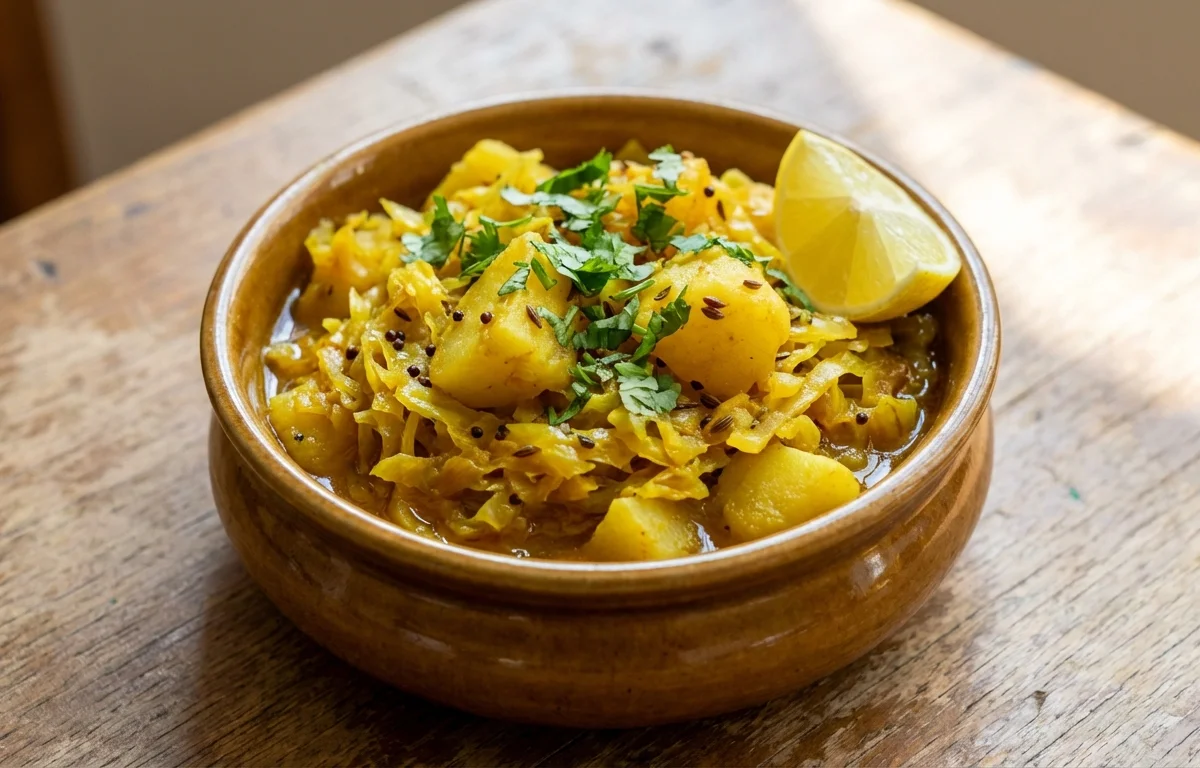
Kobi Bateta nu Shaak
A simple Gujarati cabbage and potato sabzi that cooks down into a gently spiced, lightly sweet dish with soft potatoes and tender cabbage. It is an everyday favorite that pairs beautifully with roti, dal, and plain rice.
For 4 servings
- prep · ~10 min
Prep the vegetables.
1.Shred the cabbage finely so it cooks quickly and evenly.2.Peel the potato and cut it into small cubes.3.Chop the green chili and grate the ginger. - temper · ~2 min
Make the tempering.
1.Heat oil in a wide pan over medium heat.2.Add mustard seeds and let them splutter.3.Add cumin seeds and asafoetida.4.Add green chili and ginger, then cook for 30 seconds until fragrant.TIPKeep the heat medium so the spices bloom without burning. - saute · ~3 min
Cook the potatoes.
Add the potato cubes and stir for 2 to 3 minutes so they get lightly coated in the tempered oil and spices.
- saute · ~4 min
Add the cabbage and spices.
1.Add the shredded cabbage and mix well with the potatoes.2.Add turmeric powder, red chili powder, coriander powder, salt, and sugar.3.Stir for 2 minutes until the cabbage starts to soften. - simmer · ~12 min
Cover and cook the shaak.
Sprinkle in the water, cover the pan, and cook on low heat for 10 to 12 minutes. Stir once or twice until the potatoes are tender and the cabbage is soft but not mushy.
TIPUse only a little water. This shaak should stay semi-dry, not watery. - garnish
Finish with lemon juice and cilantro.
Turn off the heat and mix in the lemon juice and chopped cilantro for a fresh finish.
- serve
Serve hot with roti or dal rice.
What to keep in mind.
7 tips from the recipe — small details that make a real difference to the final dish.
- 1Cut the potatoes into small, even cubes so they finish cooking in the same time as the cabbage.
- 2Use a wide pan rather than a deep pot so excess moisture evaporates and the shaak stays semi-dry.
- 3After adding the cabbage, don’t add extra water unless needed; cabbage releases plenty of moisture as it cooks.
- 4Stir only once or twice while covered, or the potatoes can break and the cabbage can turn mushy.
- 5Add the lemon juice only after switching off the heat to keep its brightness and prevent bitterness.
- 6If your cabbage is very fresh and juicy, cook uncovered for the last 1 to 2 minutes to dry the shaak slightly.
- 7This sabzi tastes even better after 15 minutes of resting, when the sweet, tangy, and spiced flavors settle.
Adapt it for your goals.
Low-oil
Reduce the oil slightly and use a well-covered pan; the cabbage will still soften from its own moisture while keeping the dish lighter.
no onion no garlicNo-onion-no-garlic
This version already fits a simple no-onion, no-garlic style, making it ideal for everyday fasting-adjacent or satvik-style meals.
spicierSpicier
Add an extra green chili or a little more red chili powder if you want more heat against the mild sweetness of cabbage and sugar.
peas addedPeas-added
Stir in a handful of green peas with the cabbage for extra sweetness, color, and a slightly heartier sabzi.
Why this is on our healthy list.
Vegetable-Rich Everyday Sabzi
Cabbage makes this dish rich in vegetables while potatoes add satisfying body, making it filling without being heavy.
Digestive Spice Support
Ginger, cumin, asafoetida, and mustard seeds are traditional spices often used to make simple vegetable dishes easier to digest.
Lightly Cooked, Not Greasy
The shaak uses modest oil and very little water, so the vegetables cook gently without becoming oily or overly rich.
Frequently asked questions
Usually the pan was too crowded or too much water was added. Cabbage releases a lot of moisture, so use only a little water and cook uncovered briefly at the end if needed.



.webp)
.webp)
.webp)