Konkani Mutton Curry
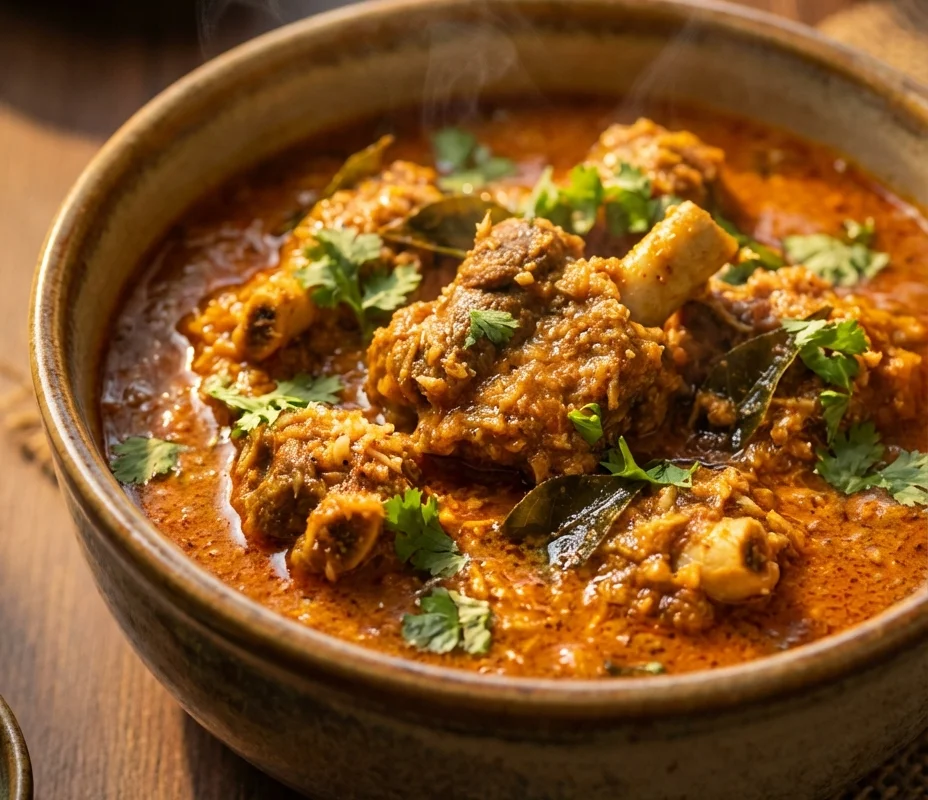
This coastal-style mutton curry is rich with fresh coconut, roasted spices, and a gentle tang from tamarind. The gravy turns deep, aromatic, and full-bodied as the meat cooks until tender and beautifully coated.
For 4 servings
- prep · ~15 min
Soak the tamarind and get the curry ingredients ready.
1.Soak tamarind in a little warm water for 15 minutes.2.Slice the onions and chop the tomatoes.3.Rinse the mutton pieces and keep them ready. - roast · ~5 min
Roast the coconut and whole spices.
1.Heat a pan over medium heat.2.Add grated coconut, dry red chili, coriander seeds, cumin seeds, and black peppercorns.3.Roast until the coconut turns light brown and smells nutty, about 4 to 5 minutes.4.Take the pan off the heat and let the mixture cool slightly.TIPKeep the heat medium and stir often so the coconut browns evenly without burning. - mix · ~3 min
Grind the masala paste.
Blend the roasted coconut mixture with garlic, ginger, soaked tamarind, turmeric powder, and a little water to make a smooth, thick paste.
- saute · ~10 min
Cook the onions and tomatoes.
1.Heat oil in a pressure cooker over medium heat.2.Add sliced onions and cook until lightly golden, about 6 minutes.3.Add chopped tomatoes and cook until soft and pulpy, about 4 minutes. - saute · ~7 min
Coat the mutton with the masala.
Add the mutton pieces and sauté for 4 to 5 minutes. Stir in the ground masala paste and cook until the raw smell fades and the meat is well coated.
- pressure cook · ~25 min
Pressure cook the curry until the mutton is tender.
Add salt and water, then mix well. Cover and pressure cook on medium heat for 20 to 25 minutes, until the mutton is tender.
TIPIf the mutton is older or firmer, cook a little longer and add a splash more water if needed. - simmer · ~7 min
Simmer the curry to finish.
Open the cooker after the pressure drops. Simmer the curry uncovered for 5 to 7 minutes to thicken the gravy and balance the flavors.
- garnish
Garnish with cilantro.
- serve
Serve the curry hot.
Serve Konkani Mutton Curry hot with rice, neer dosa, or chapati.
What to keep in mind.
7 tips from the recipe — small details that make a real difference to the final dish.
- 1Roast the coconut only to light brown; too dark will make the curry bitter.
- 2Blend the masala very smooth so the gravy turns silky rather than grainy.
- 3Sauté the ground masala until the raw tamarind-garlic smell disappears before pressure cooking.
- 4Bone-in mutton gives the gravy more body and a deeper meaty flavor.
- 5After pressure cooking, simmer uncovered until a thin layer of oil rises at the edges.
- 6This curry tastes even better after a few hours of resting, once the coconut-spice paste settles into the meat.
- 7If reheating the next day, add a splash of hot water because coconut-based gravies thicken as they stand.
Adapt it for your goals.
Low-oil
Dry-roast the coconut and spices thoroughly and reduce the oil for sautéing; the curry still stays rich from the coconut paste.
spicierSpicier
Increase the dried red chilies or add a few extra peppercorns for a hotter, more robust Goan-style heat.
bonelessBoneless
Use boneless mutton for easier serving, but simmer a bit less and expect a slightly lighter gravy.
stovetop slow cookedStovetop-slow-cooked
Cook in a heavy pot instead of a pressure cooker for a slower, deeper reduction if you have extra time.
Why this is on our healthy list.
Protein-Rich Main Dish
Mutton makes this curry filling and satisfying, with substantial protein in each serving.
Spice-Forward Cooking
Coriander, cumin, pepper, ginger, garlic, and turmeric add aroma and depth without needing heavy cream.
Naturally Thickened Gravy
Fresh coconut gives body and richness to the curry, so the sauce thickens without refined thickeners.
Frequently asked questions
Yes. Cook it covered in a heavy pot on low heat until the mutton is tender, adding water as needed; it will take much longer than pressure cooking.