Kootu
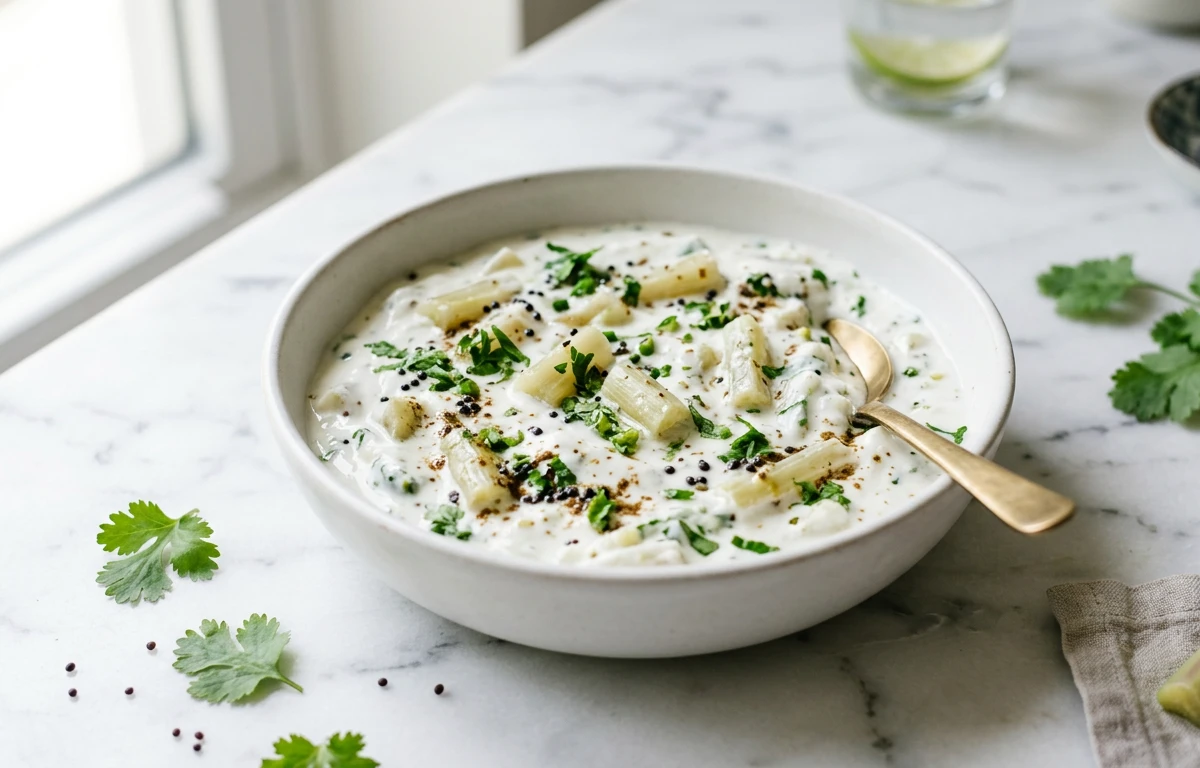
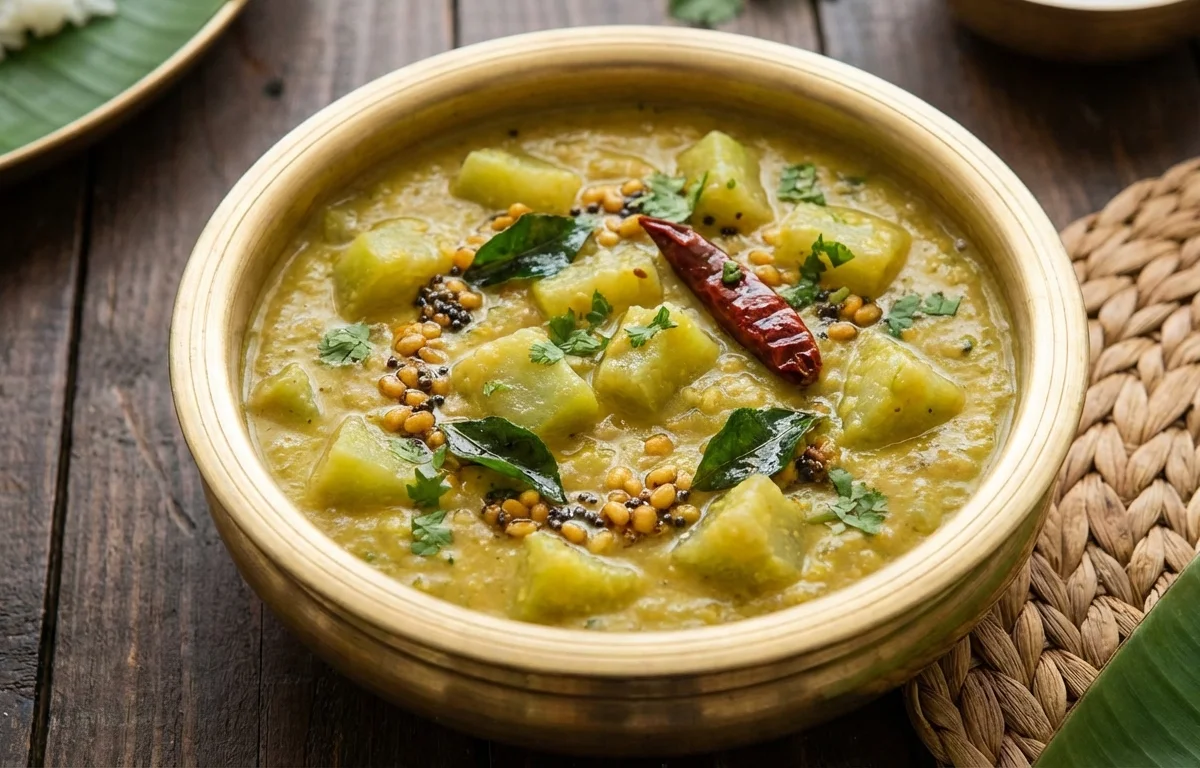
A homestyle South Indian kootu made with moong dal, bottle gourd, coconut, and mild spices. It is soft, comforting, and lightly seasoned, making it a lovely partner for rice, rasam, or sambar in an everyday meal.
For 4 servings
- prep · ~8 min
Prepare the dal and vegetables.
1.Wash the moong dal well until the water runs mostly clear.2.Peel the bottle gourd and cut it into small even cubes.3.Split the green chili and keep the grated coconut ready. - mix · ~3 min
Grind the coconut paste.
Blend the grated coconut, cumin seeds, and green chili with a little water to make a smooth, thick paste.
TIPKeep the paste thick so the kootu stays full-bodied and not watery. - pressure cook · ~12 min
Cook the dal until soft.
Add moong dal, turmeric powder, and 1.5 cups water to a pressure cooker. Cook until the dal is soft and mashable.
- boil · ~10 min
Cook the bottle gourd.
Place the bottle gourd in a pan with the remaining water and cook until tender but not mushy. Add the salt once the vegetable is nearly done.
- simmer · ~5 min
Combine and simmer the kootu.
1.Lightly mash the cooked dal and add it to the cooked bottle gourd.2.Stir in the coconut paste and mix well.3.Simmer gently for 4 to 5 minutes until the kootu thickens and smells fragrant.TIPDo not boil hard after adding the coconut paste or the fresh flavor will dull. - temper · ~2 min
Make the tempering.
1.Heat coconut oil in a small pan over medium heat.2.Add mustard seeds and let them splutter.3.Add urad dal and cook until lightly golden.4.Add curry leaves and fry for a few seconds. - assemble · ~1 min
Pour the tempering over the kootu.
Add the hot tempering to the simmering kootu and stir gently to combine.
- serve
Serve hot with rice.
What to keep in mind.
7 tips from the recipe — small details that make a real difference to the final dish.
- 1Cut the bottle gourd into small even cubes so it turns tender at the same time and blends well with the soft dal.
- 2Add salt only when the bottle gourd is nearly cooked; adding it too early can slow softening slightly.
- 3Mash the moong dal lightly, not fully smooth, so the kootu stays creamy but still has some body.
- 4Keep the coconut-cumin paste thick while grinding; a thin paste can make the kootu loose and flat-tasting.
- 5After adding the coconut paste, simmer gently and avoid a rolling boil or the fresh coconut flavor will fade.
- 6Temper the mustard until it fully splutters before adding urad dal, or the tempering can taste raw.
- 7Kootu thickens as it sits, so loosen leftovers with a splash of hot water before reheating.
Adapt it for your goals.
Jain
Skip the urad dal in the tempering and use only mustard seeds and curry leaves for a simpler version without lentils in the tadka.
no onion no garlicNo-onion-no-garlic
This recipe is already naturally no-onion, no-garlic, making it ideal for a simple satvik-style everyday meal.
spicierSpicier
Increase the green chili in the coconut paste or add one extra chili to the tempering if you want a sharper heat.
mixed vegMixed-veg
Replace part of the bottle gourd with ash gourd, chow chow, or pumpkin for a similar texture with a slightly different sweetness.
Why this is on our healthy list.
Gentle Plant Protein
Moong dal adds plant protein and makes the dish filling while still keeping the texture soft and easy to eat.
Hydrating Vegetable Base
Bottle gourd is a light, water-rich vegetable that keeps this kootu comforting and not overly heavy.
Balanced Everyday Dish
The combination of dal, vegetable, and coconut creates a satisfying side that pairs well with plain rice and simple South Indian meals.
Frequently asked questions
Yes. Cook the moong dal in a pot with water until very soft and mashable, then continue with the recipe as written.