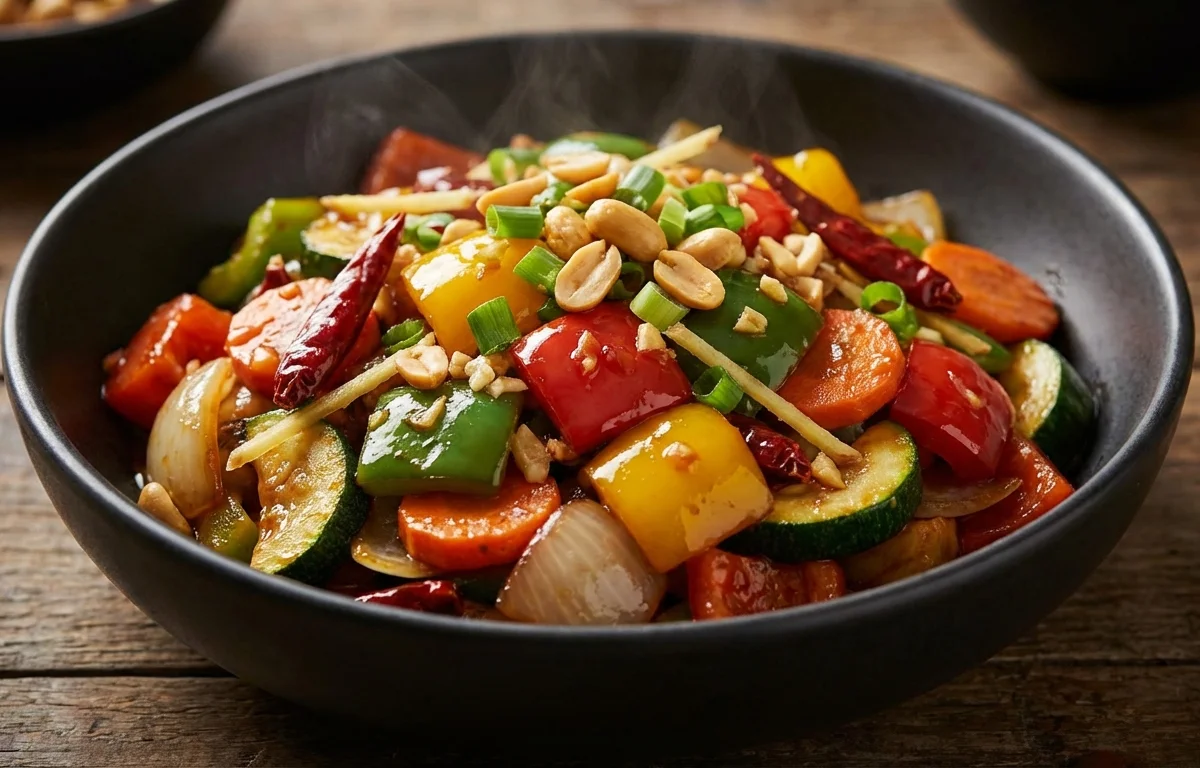
Kung Pao Vegetables
A vibrant Indo-Chinese stir-fry that brings crisp-tender vegetables together with crunchy peanuts in a bold, spicy-sweet sauce. The wok-tossed bell peppers, zucchini, and mushrooms soak up a glossy mix of soy, chili, and a touch of vinegar, delivering that iconic Kung Pao kick with every bite. Ready in under 30 minutes, it is a weeknight game-changer served over steamed rice or fried rice.
For 4 servings
- prep
Prepare all the vegetables and aromatics.
1.Cut bell peppers, zucchini, and mushrooms into uniform bite-sized cubes.2.Dice the onion into 1-inch pieces and keep the layers separated.3.Finely chop the ginger and garlic; chop the spring onion greens.4.Halve the dried red chilies and remove the seeds if you prefer less heat.TIPUniform cutting ensures all vegetables cook evenly in the high-heat stir-fry. - prep
Mix the Kung Pao sauce.
In a small bowl, whisk together soy sauce, rice vinegar, chili sauce, and sugar. Separately, dissolve corn flour in 3 tablespoons of water to make a smooth slurry.
- other · ~3 min
Stir-fry the aromatics and dried chilies.
1.Heat the wok over high heat until it smokes lightly.2.Add the oil and swirl to coat the sides.3.Add the halved dried red chilies and stir for 15-20 seconds until they darken slightly.4.Add the chopped ginger and garlic; toss for 30 seconds until fragrant.5.Add the diced onions and stir-fry on high heat for 1 minute.TIPKeep the heat high and move quickly — this is a flash stir-fry. Prep everything before you start. - other · ~3 min
Cook the vegetables and the peanuts.
1.Add the bell peppers and zucchini; stir-fry for 1 minute on high heat.2.Add the mushrooms, a pinch of salt, and black pepper; toss everything for another minute.3.Toss in the roasted peanuts and stir-fry for 30 seconds to warm them through.TIPThe vegetables should stay crisp-tender. Don't let them soften or release water — if the wok is not hot enough, they will steam instead of char. - other · ~1 min
Add the sauce and finish the dish.
Lower the heat to medium. Pour the soy-vinegar mixture over the vegetables. Stir the corn flour slurry and add it to the wok immediately. Toss everything vigorously for 1 minute until the sauce thickens and coats each piece of vegetable.
TIPAlways stir the slurry just before pouring — corn flour settles quickly. A glossy, clinging sauce is the signature of a good Kung Pao. - garnish
Garnish with spring onion greens and serve immediately.
Transfer to a serving bowl and scatter the chopped spring onion greens on top. Serve hot with steamed rice or Hakka noodles.
TIPKung Pao Vegetables waits for no one — serve it straight from the wok while the vegetables are still bright and crisp.
What to keep in mind.
7 tips from the recipe — small details that make a real difference to the final dish.
- 1Keep vegetables cut uniformly so they cook at the same rate over high heat.
- 2Heat the wok until it just starts to smoke before adding oil for proper wok hei.
- 3Stir the cornstarch slurry right before adding it, as it settles quickly.
- 4Cook vegetables just until crisp-tender; they should still have a slight bite.
- 5Toast dried red chilies briefly until they darken, but do not let them burn.
- 6Add peanuts at the very end to keep them crunchy, not soggy.
- 7Serve immediately from the wok — the dish loses its vibrant texture if it sits.
Adapt it for your goals.
High-protein
Add 1 cup of cubed firm tofu or pan-fried paneer along with the peanuts for a protein boost that makes the dish more filling.
low oilLow-oil
Reduce oil to 1 tablespoon and use a non-stick pan; add a splash of water when stir-frying to prevent sticking without extra fat.
extra spicyExtra-spicy
Increase dried red chilies to 10 and add 1 teaspoon of red chili flakes or Sichuan peppercorns for a numbing heat.
low sodiumLow-sodium
Swap regular soy sauce for low-sodium soy sauce and skip the salt to control sodium without losing flavor.
nut freeNut-free
Replace roasted peanuts with roasted sunflower seeds or omit entirely for a nut-free version that still offers a crunchy texture.
Why this is on our healthy list.
Rich in Antioxidants
Bell peppers and zucchini provide vitamin C and beta-carotene, which support immune health and protect cells from oxidative stress.
Good Source of Fiber
Vegetables like mushrooms, bell peppers, and zucchini contribute dietary fiber that aids digestion and promotes satiety.
Low in Saturated Fat
This stir-fry uses vegetable oil and unsalted peanuts, keeping saturated fat low while providing heart-healthy unsaturated fats.
Plant-Based Protein
Peanuts add a modest amount of plant protein, making this dish more satisfying as a main or side.
Frequently asked questions
Yes, you can substitute or add broccoli, snap peas, carrots, or baby corn — just adjust cooking time so all pieces remain crisp.