
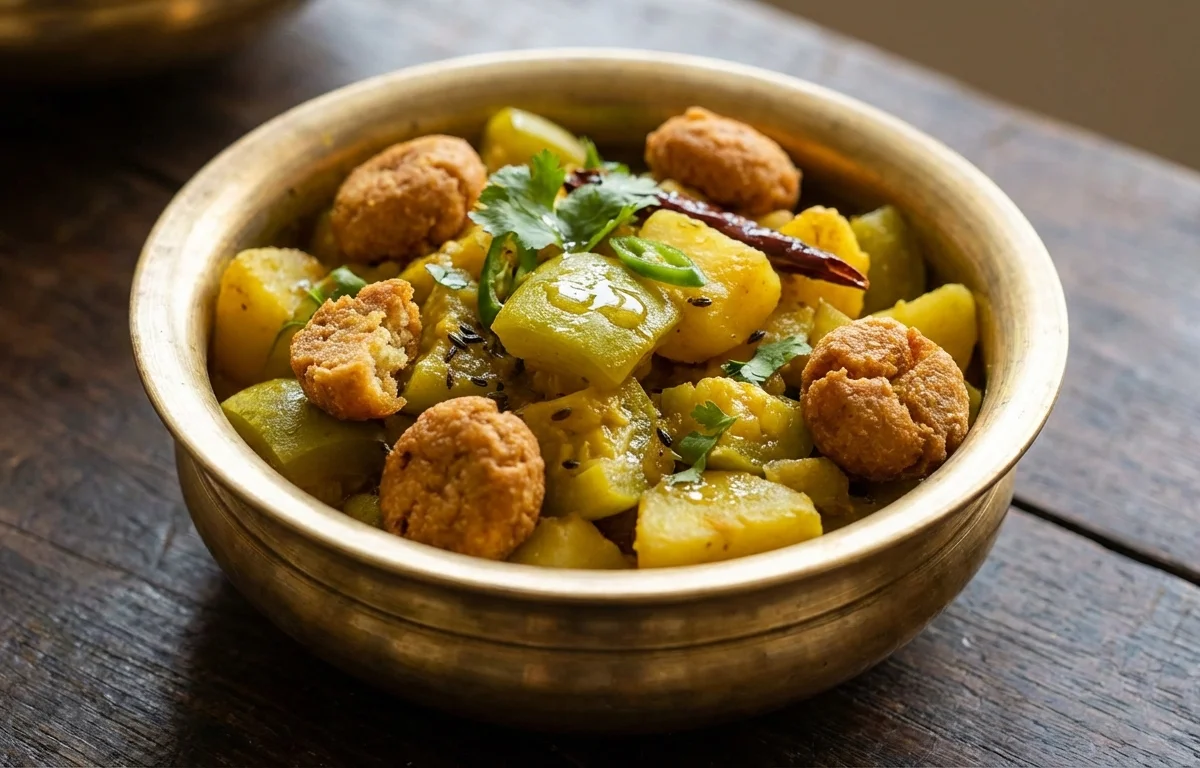
Lau Ghanta
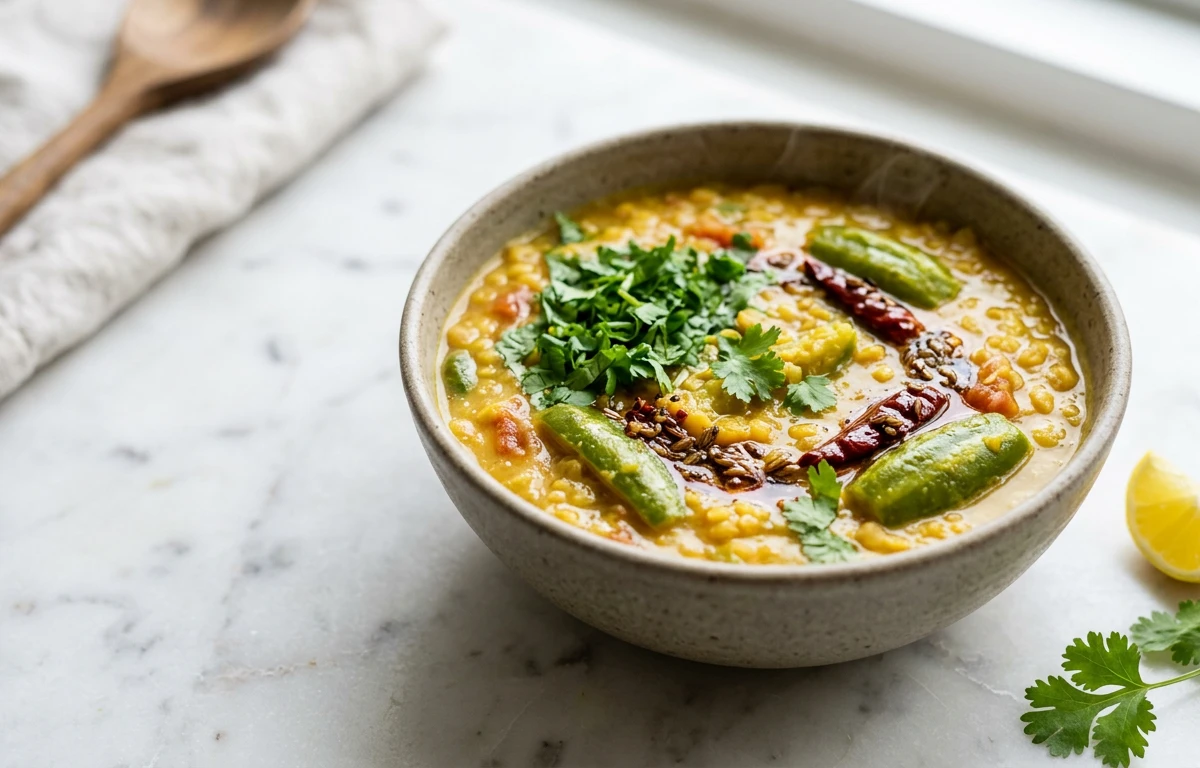
A fragrant, slow-simmered Bengali dish made with tender bottle gourd and lentils, delicately spiced with ginger and cumin. The lauki breaks down into a soft, almost creamy texture while the lentils add body and protein. A homestyle favorite that pairs beautifully with steamed rice.
For 4 servings
- prep
Prepare the bottle gourd and dal.
1.Peel the bottle gourd and cut into 1-inch cubes.2.Wash the toor dal thoroughly under running water. - pressure cook · ~10 min
Pressure cook the dal and lauki.
1.Add the cubed bottle gourd, washed toor dal, and 0.5 cup water into a pressure cooker.2.Cook on medium heat for 2 whistles, then remove from heat.3.Allow the pressure to release naturally, then open the lid. - temper · ~2 min
Make the tempering.
1.Heat mustard oil in a deep pan over medium heat until it smokes lightly.2.Add bay leaves, cumin seeds, and dried red chilies. Let them splutter.3.Add grated ginger and slit green chilies. Sauté until fragrant. - saute · ~5 min
Cook the masala base.
1.Add chopped tomatoes, turmeric powder, and cumin powder.2.Sauté until the tomatoes become soft and the oil starts to separate.3.Add salt and sugar. Stir well. - mix · ~8 min
Combine and simmer the ghanta.
1.Add the pressure-cooked lauki and dal mixture to the pan.2.Mix everything gently, mashing a few lauki pieces for a creamy texture.3.If the mixture looks too dry, add water and bring to a gentle simmer. - simmer · ~10 min
Finish the dish.
1.Simmer uncovered on low heat until the mixture thickens and comes together, about 8-10 minutes.2.Stir occasionally to prevent sticking.TIPThe ghanta is ready when it leaves the sides of the pan and the oil surfaces. - garnish · ~1 min
Finish with ghee and serve.
Drizzle a teaspoon of raw ghee over the top, give it a final gentle stir, and serve hot with steamed rice.
What to keep in mind.
7 tips from the recipe — small details that make a real difference to the final dish.
- 1Do not skip the natural pressure release; it allows the lauki to soften fully without turning mushy.
- 2Use a heavy-bottomed pan for the final simmer to prevent the ghanta from sticking and burning.
- 3Gently mash a few lauki cubes after combining to create the signature creamy texture without a blender.
- 4Let the mustard oil reach its smoking point before tempering to mellow its pungency and develop a nutty aroma.
- 5Adjust the final consistency with hot water; the ghanta should be spoonable but not soupy.
- 6For best flavor, let the ghanta rest for 10 minutes after cooking before serving.
- 7Leftover Lau Ghanta thickens on refrigeration; add a splash of water while reheating to restore texture.
Adapt it for your goals.
Higher protein
Replace half the toor dal with masoor dal (red lentils) for a quicker cook time and a slightly different earthy flavor, or add a handful of cooked chana dal for extra protein and bite.
veganvegan
Substitute the ghee with an extra teaspoon of mustard oil or a splash of coconut milk for a vegan finish that still adds richness and a subtle sweetness.
low oilLow-oil
Reduce mustard oil to 1 tablespoon and skip the final ghee drizzle; the natural creaminess of well-cooked lauki will still yield a satisfying texture without extra fat.
no onion no garlicNo-onion no-garlic
This recipe is naturally suited for a satvik (no onion, no garlic) diet; to add more depth, increase the ginger and green chilies or add a pinch of asafoetida (hing) during tempering.
Why this is on our healthy list.
Hydrating and Low-Calorie
Bottle gourd is over 90% water, making this dish naturally hydrating and very low in calories while providing a soothing, easily digestible meal.
Good Source of Plant Protein
Toor dal (pigeon pea lentils) contributes high-quality plant protein and dietary fiber, supporting satiety and steady energy release.
Contains Digestive Spices
Ginger, cumin, and turmeric are traditional digestive aids that can help reduce bloating and enhance nutrient absorption from the lentils and gourd.
Heart-Friendly Fats
Mustard oil, used in moderation, provides monounsaturated and polyunsaturated fatty acids, while ghee (in the small finishing amount) adds fat-soluble vitamins.
Frequently asked questions
Yes, you can use masoor dal (red lentils) or moong dal (split yellow gram). Masoor dal cooks faster and yields a slightly softer texture; moong dal gives a milder, creamier result.

-curry.webp)
.webp)