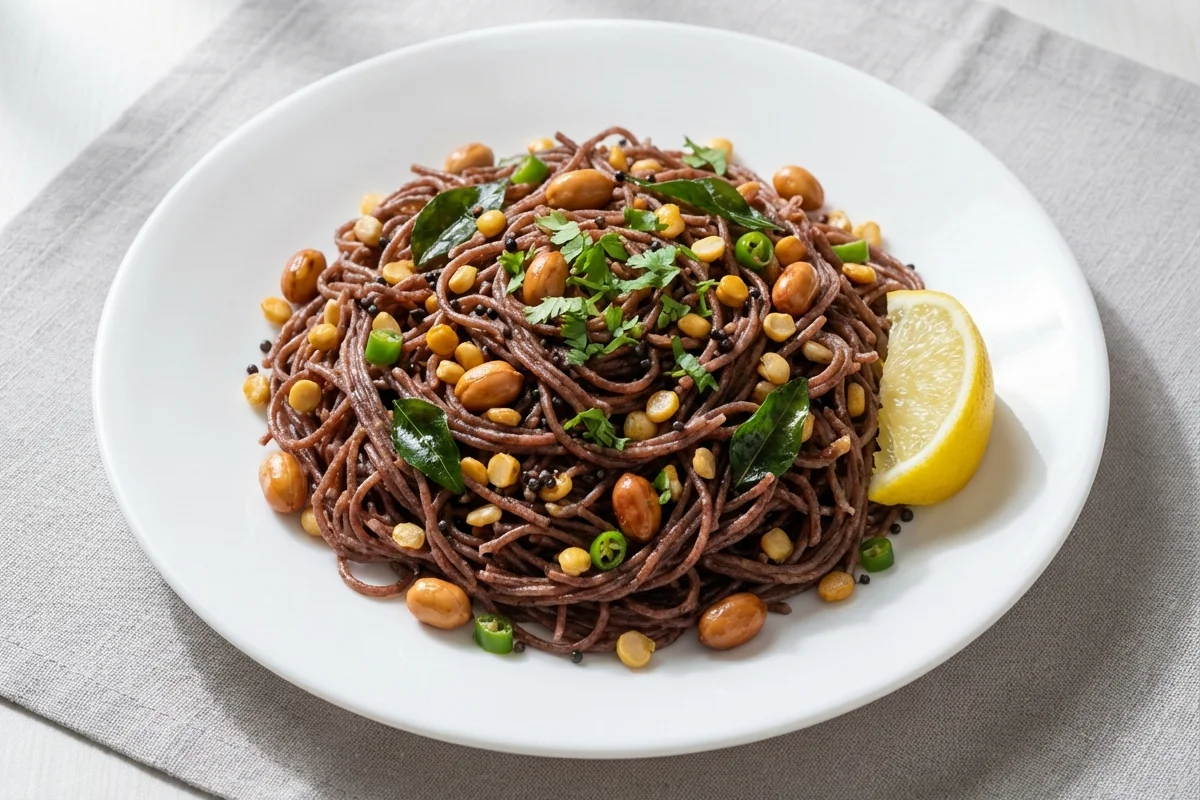
Lemon Ragi Sevai
Bright, lemony finger millet noodles tossed with mustard seeds, split lentils, and fresh curry leaves. This light South Indian breakfast or snack comes together in under 20 minutes and packs a nutritious punch with earthy ragi. Perfect with a side of coconut chutney or a crisp papad.
For 4 servings
- boil · ~3 min
Cook the ragi sevai.
1.Bring 500 ml water with 0.5 tsp salt to a rolling boil in a pot.2.Add ragi sevai and cook for 2-3 minutes until just tender.3.Drain immediately and rinse with cold water to stop cooking. Set aside.TIPRinse with cold water to prevent the sevai from turning mushy and sticky. - temper · ~4 min
Make the tempering.
1.Heat oil in a large pan or kadai over medium heat.2.Add mustard seeds and let them splutter (30 sec).3.Add urad dal and chana dal. Sauté until golden (1 min).4.Add peanuts and fry until lightly browned (1-2 min).5.Add curry leaves, slit green chilies, and grated ginger. Sauté until fragrant (30 sec).TIPKeep a watch on the dals — they burn fast and turn bitter if left unattended. - saute
Add turmeric and asafoetida.
1.Sprinkle in turmeric powder and asafoetida.2.Stir quickly for 15 seconds to bloom the spices without burning. - mix · ~2 min
Combine sevai with tempering.
1.Add the drained, cooled ragi sevai to the pan.2.Gently toss everything together on low heat for 2 minutes. Adjust salt if needed.3.Squeeze lemon juice over the sevai and fold gently.TIPFold, don't stir forcefully. Ragi sevai is delicate and can break apart easily. - garnish
Garnish with fresh coriander and grated coconut. Serve hot.
What to keep in mind.
7 tips from the recipe — small details that make a real difference to the final dish.
- 1Rinse the cooked ragi sevai under cold water immediately to stop carry-over cooking and prevent clumping.
- 2When toasting urad dal and chana dal, stir constantly and remove them as soon as they turn light golden — they turn bitter quickly.
- 3Use a gentle folding motion when mixing the sevai with the tempering; the noodles are delicate and break easily.
- 4For best texture, serve the sevai immediately after assembling — it can dry out if left to sit too long.
- 5Make the tempering in a wide pan so the sevai has room to be tossed without smashing.
- 6If your ragi sevai sticks together after cooling, toss it with a teaspoon of oil before adding to the pan.
- 7Slit the green chilies instead of chopping them so they infuse flavor without overwhelming heat — you can remove them before serving.
Adapt it for your goals.
Low-oil
Use only 1 teaspoon of oil for the tempering and toast the peanuts in a dry pan instead of frying — cuts fat while keeping the crunch and nutty flavor.
high proteinHigh-protein
Add 100g of crumbled panela or extra-firm tofu after the tempering step, cooking for 2 minutes before mixing in the sevai — boosts protein without overpowering the lemon-ragi base.
veganVegan
This recipe is already vegan — simply skip the optional coconut garnish or replace it with a sprinkle of roasted crushed peanuts for extra texture.
jainJain
Omit the green chili, ginger, and garlic; use asafoetida and a pinch of black pepper for heat, and skip any underground vegetables — still tangy and aromatic.
spicy mangoSpicy mango
Replace the lemon juice with raw green mango pulp (grated and juiced) and add a pinch of red chili powder for a sour, fiery twist that pairs beautifully with ragi.
Why this is on our healthy list.
Rich in Fiber
Ragi (finger millet) is naturally high in dietary fiber, which supports healthy digestion and helps keep you full longer.
High in Plant-Based Iron
Ragi is one of the best grain sources of iron, making this dish a great option for maintaining healthy blood iron levels.
Good Source of Plant Protein
The combination of urad dal, chana dal, and peanuts adds a solid dose of plant protein to this otherwise light noodle dish.
Low in Fat
With just 2 teaspoons of oil for a multi-serving dish, this preparation keeps fat content low while still delivering satisfying flavor.
Frequently asked questions
Yes, store-bought ragi vermicelli works perfectly — just follow the package cooking time (usually 2–4 minutes) and rinse thoroughly.