
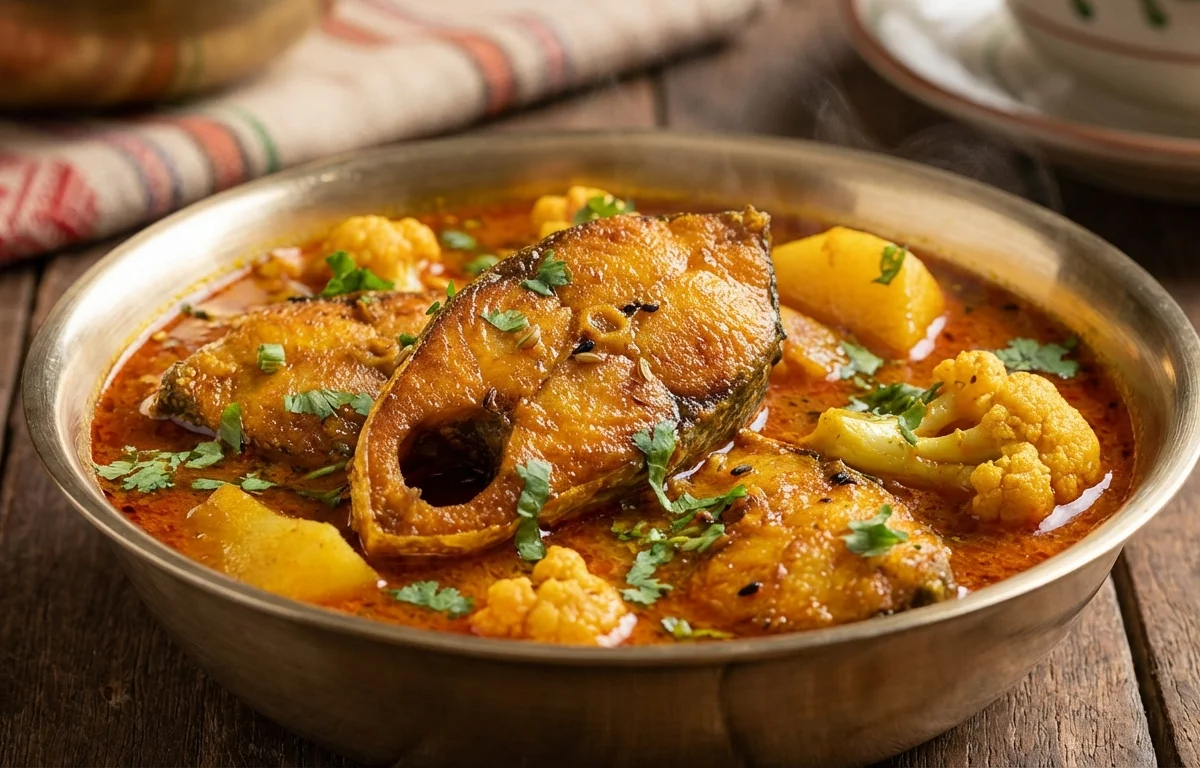
Macher Jhol
A light Bengali fish curry with mustard oil, potatoes, and a gently spiced turmeric-rich broth. It tastes clean, comforting, and homey, making it perfect with plain steamed rice for an everyday meal.
For 4 servings
- prep · ~10 min
Season the fish and potatoes.
1.Rub the fish pieces with 1 pinch turmeric powder and a little of the salt.2.Keep the fish aside for 10 minutes while you prep the curry ingredients.3.Peel and cut the potatoes into thick wedges.4.Chop the tomato, slit the green chilies, and measure the spices.TIPHandle the fish gently so the pieces stay whole during frying and simmering. - fry · ~8 min
Fry the fish and potatoes.
1.Heat mustard oil in a kadai until it reaches a smoking point, then lower the heat slightly.2.Slide in the fish pieces and fry lightly on both sides until just sealed, about 1 minute per side.3.Remove the fish to a plate.4.Add the potato wedges to the same oil and fry until lightly golden on the edges, about 4 to 5 minutes.TIPDo not fully cook the fish at this stage or it may break apart later in the jhol. - saute · ~5 min
Build the curry base.
1.In the same oil, add cumin seeds and bay leaf.2.When fragrant, add ginger paste and sauté for 30 seconds.3.Add chopped tomato, green chilies, turmeric powder, red chili powder, and the remaining salt.4.Cook until the tomato softens and the मसाला looks blended, about 3 to 4 minutes. - simmer · ~10 min
Simmer the potatoes in the broth.
Pour in the water and bring it to a gentle boil. Add the fried potatoes and simmer until nearly tender, 8 to 10 minutes.
- simmer · ~6 min
Finish the fish curry.
Slip the fried fish pieces into the simmering broth and cook gently for 5 to 6 minutes, until the fish is cooked through and the potatoes are soft. The gravy should stay light and brothy, not thick.
TIPShake the pan lightly instead of stirring hard so the fish pieces do not break. - garnish
Garnish with cilantro.
- serve
Serve hot with steamed rice.
What to keep in mind.
7 tips from the recipe — small details that make a real difference to the final dish.
- 1Let the mustard oil smoke first, then reduce the heat; this tames its raw sharpness while keeping the classic Bengali aroma.
- 2Pat the fish dry before marinating so it sears quickly and does not splutter too much in the hot oil.
- 3Only lightly fry the fish until the surface is sealed; over-frying makes rohu or catla tough in the final simmer.
- 4Cut the potatoes into thick, even wedges so they finish cooking at the same time as the fish without turning mushy.
- 5Keep the broth at a gentle simmer after adding the fish; a rolling boil can break the steak pieces apart.
- 6If the jhol tastes flat, add a tiny drizzle of raw mustard oil right before serving for a sharper finish.
- 7This curry reheats well the next day, but warm it gently and avoid stirring too much to keep the fish intact.
Adapt it for your goals.
Low-oil
Shallow-fry the fish and potatoes in less oil or pan-sear them in batches; you still get structure and flavor with a lighter finish.
spicierSpicier
Add an extra green chili or a little more red chili powder if you want a hotter jhol that still stays light and brothy.
no tomatoNo-tomato
Skip the tomato for a more old-style, simpler jhol focused on ginger, turmeric, mustard oil, and the sweetness of the fish.
other river fishOther-river-fish
Use pabda or tilapia steaks if rohu or catla are unavailable, adjusting the simmer so delicate fish does not overcook.
Why this is on our healthy list.
Fish-Based Protein
Rohu or catla provides satisfying protein, making the meal filling while keeping the curry lighter than cream-based gravies.
Turmeric and Ginger Goodness
The turmeric-rich broth and ginger paste add aromatic depth along with ingredients commonly valued in everyday home cooking.
Light, Brothy Curry
Because macher jhol is thin and water-based rather than creamy, it feels comforting and less heavy with steamed rice.
Frequently asked questions
Yes. Firm fish steaks work best. Choose fish that can handle frying and simmering without falling apart, and reduce cooking time for more delicate varieties.

-curry.webp)
.webp)