Masor Tenga
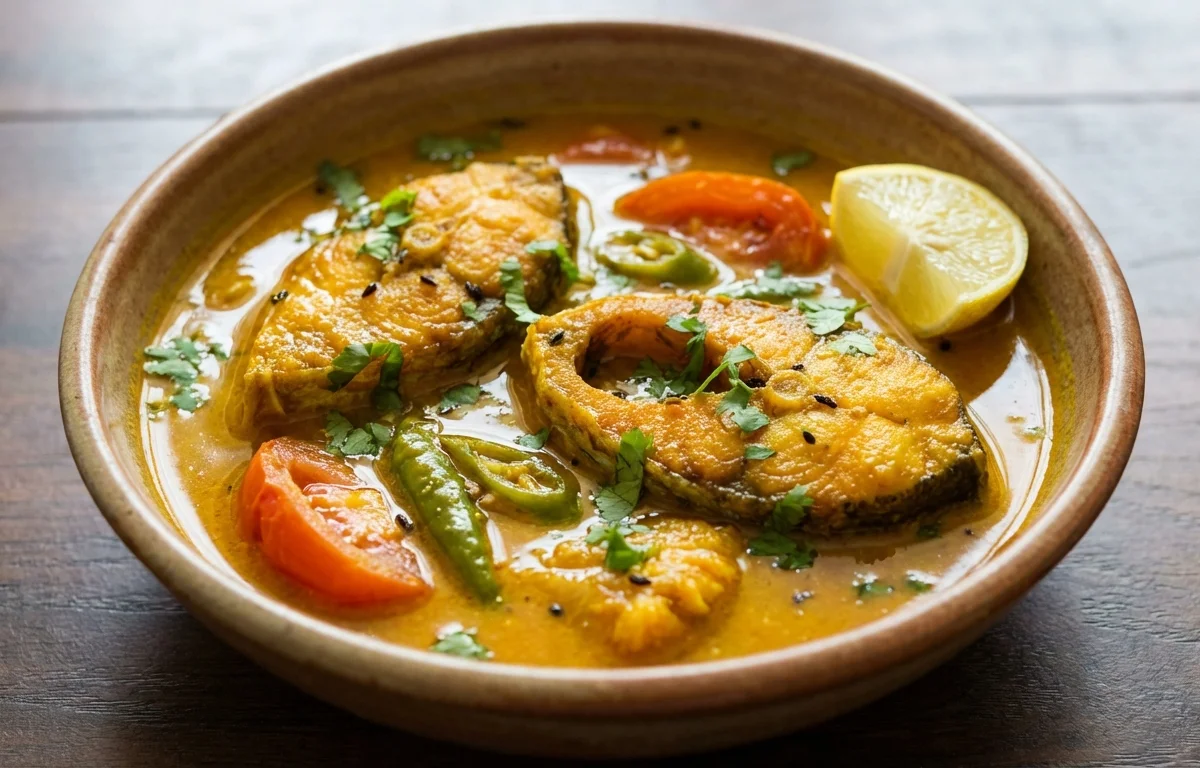
A light Assamese fish curry with a bright tang from tomatoes and lemon. This homestyle dish is gently spiced, clean-tasting, and perfect with a small serving of steamed rice.
For 4 servings
- prep · ~10 min
Season the fish.
Rub the fish pieces with turmeric powder and a small pinch from the measured salt. Set aside for 10 minutes while you prepare the other ingredients.
- fry · ~5 min
Lightly fry the fish pieces.
1.Heat mustard oil in a pan until it just begins to smoke lightly, then lower the heat.2.Slide in the fish pieces in a single layer.3.Fry each side until lightly golden, about 1 to 2 minutes per side.4.Remove the fish carefully to a plate.TIPDo not fully cook the fish here or it may break apart later in the curry. - saute · ~8 min
Cook the potato and tomatoes.
1.In the same pan, add the potato wedges and cook for 3 minutes.2.Add the chopped tomatoes and the remaining salt.3.Cook until the tomatoes soften and turn pulpy, about 4 to 5 minutes.4.Stir gently and mash a few tomato pieces with the spoon to help form the curry base. - boil · ~7 min
Add water and bring the curry to a boil.
Pour in the water and add the slit green chilies. Bring to a gentle boil and cook until the potato is nearly tender.
- simmer · ~6 min
Simmer the fish in the tangy broth.
Lower the fried fish into the pan and simmer gently for 5 to 6 minutes until the fish is cooked through and the flavors come together.
TIPKeep the heat low and avoid stirring too much so the fish pieces stay whole. - garnish
Finish with lemon juice and coriander leaves.
Turn off the heat, stir in the lemon juice, and sprinkle the coriander leaves on top.
- serve
Serve the Masor Tenga hot.
Serve hot in small bowls with steamed rice.
What to keep in mind.
7 tips from the recipe — small details that make a real difference to the final dish.
- 1Heat the mustard oil until it just smokes, then reduce the flame to mellow its raw sharpness before frying the fish.
- 2Pat the rohu pieces dry before seasoning so they fry lightly instead of steaming in the pan.
- 3Only sear the fish briefly; it should be lightly golden outside but still undercooked before going into the curry.
- 4Cook the tomatoes until fully pulpy, because they form the light sour base of this tenga without needing heavy spices.
- 5Add the lemon juice only after switching off the heat so the curry keeps a fresh, bright tang.
- 6Simmer the fish on low and avoid frequent stirring; gently shake the pan if needed to keep the pieces intact.
- 7This curry tastes best fresh, but leftovers can be refrigerated for a day and reheated very gently.
Adapt it for your goals.
More-tangy
Increase the tomato slightly or add a little extra lemon at the end if you prefer a sharper, more pronounced tenga.
no potatoNo-potato
Skip the potato for a lighter, more brothy version that keeps the focus on the fish and sour tomato base.
other river fishOther-river-fish
Use catla or another firm freshwater fish if rohu is unavailable; choose pieces that can handle frying and simmering.
spicierSpicier
Add one more slit green chili for extra heat while keeping the dish true to its clean, lightly spiced character.
Why this is on our healthy list.
Protein-Rich Fish Curry
Rohu provides satisfying protein, making this light curry filling without relying on heavy gravies or rich dairy.
Tomato-Based Light Broth
Tomatoes and lemon bring brightness and body to the curry, so it stays fresh-tasting rather than oil-heavy.
Moderate Use of Oil
Only a small amount of mustard oil is used to fry the fish and build flavor, keeping the dish relatively light.
Includes Vegetables
Tomato, potato, green chili, and coriander add plant ingredients and variety to the meal alongside the fish.
Frequently asked questions
You can, but the fish is more likely to break in the broth. A quick light fry helps the pieces stay intact and adds flavor.