
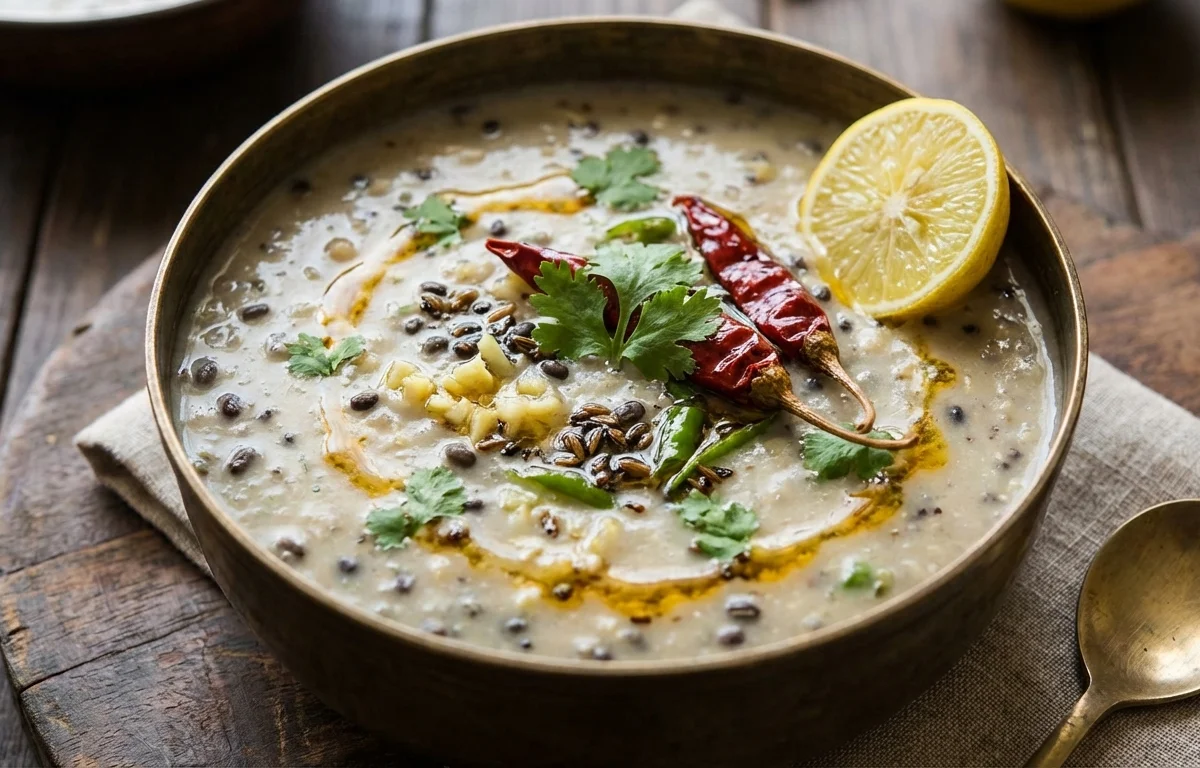
Matimahor Dal
A rustic Bengali-style dal made with matimahor lentils, gently cooked until soft and finished with a simple tempering. It is homely, light, and deeply comforting, with earthy flavor that goes beautifully with steamed rice.
For 4 servings
- prep · ~3 min
Rinse the dal.
Pick through the matimahor dal and rinse it well in a few changes of water until the water looks mostly clear.
- boil · ~25 min
Boil the dal until soft.
1.Add the matimahor dal, water, turmeric powder, green chili, and salt to a pot.2.Bring it to a boil over medium-high heat, skimming any foam from the top.3.Lower the heat and cook until the dal is soft and the grains start to break down, about 20 to 25 minutes.4.Stir once or twice and add a splash of water if the dal gets too thick.TIPKeep the dal gently bubbling, not rapidly boiling, so it cooks evenly and stays creamy. - temper · ~2 min
Make the tempering.
1.Heat mustard oil in a small pan until it just starts to smoke lightly, then lower the heat.2.Add the dried red chili, bay leaf, and cumin seeds.3.Let the cumin sizzle for a few seconds until fragrant.4.Add the crushed ginger and cook briefly for about 20 to 30 seconds.TIPDo not burn the ginger or cumin, or the dal will taste bitter. - assemble · ~2 min
Pour the tempering into the dal.
Pour the hot tempering over the cooked dal and stir well. Let it simmer together for 2 minutes so the flavors blend.
- serve
Serve hot with rice.
What to keep in mind.
7 tips from the recipe — small details that make a real difference to the final dish.
- 1If you have time, soak the matimahor dal for 30 minutes to help it soften faster and cook more evenly.
- 2Skim the foam in the first few minutes of boiling so the finished dal tastes cleaner and looks clearer.
- 3Cook the dal at a gentle simmer; a hard boil can make the outside split before the center turns soft.
- 4The right texture is when the lentils are soft and some grains have broken down, but it is still pourable over rice.
- 5Heat the mustard oil until lightly smoking before adding the spices to tame its raw sharpness.
- 6Pour the tempering into the dal immediately while it is still sizzling so the cumin, chili, and ginger aroma stays bright.
- 7This dal thickens as it sits, so loosen leftovers with a little hot water before reheating.
Adapt it for your goals.
Garlic
Add a few sliced garlic cloves to the tempering with the ginger for a deeper, more robust everyday dal.
thinnerThinner
Use a little extra water and simmer less if you want a lighter, soupier dal to eat from a bowl with rice.
spicierSpicier
Increase the green chili or break the dried red chilies in half before tempering for more heat and chili aroma.
no mustard oilNo-mustard-oil
Use neutral oil or ghee if you prefer a milder finish, though the flavor will be less distinctly Bengali.
Why this is on our healthy list.
Plant-Based Protein
Matimahor dal provides plant protein, making this simple rice-and-dal meal more filling and balanced.
Fiber-Rich Comfort Food
The lentils contribute dietary fiber, which supports fullness and makes this homely dal satisfying without being heavy.
Lightly Spiced and Gentle
With minimal oil and a simple tempering, this dal stays light while ginger, cumin, and turmeric add warmth and aroma.
Frequently asked questions
Yes. Cook the rinsed dal with water, turmeric, salt, and green chili until soft, then add the same mustard-oil tempering at the end.



-curry.webp)
.webp)