
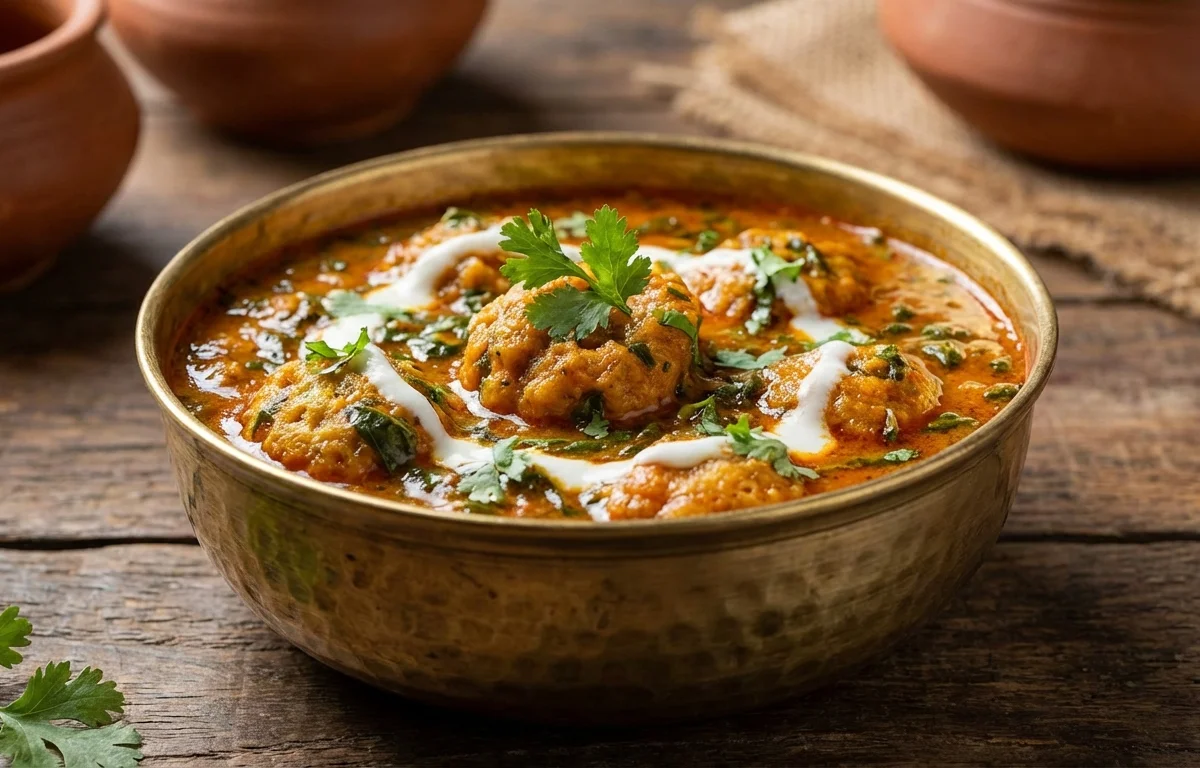
Methi Mangodi Sabzi
A homestyle North Indian sabzi where bitter-fresh fenugreek leaves and nutty mangodi come together in a lightly spiced onion-tomato masala. It is hearty, rustic, and especially good with roti or plain phulka.
For 4 servings
- prep · ~10 min
Prep the methi and vegetables.
1.Pick the methi leaves from the stems, wash well, and finely chop them.2.Chop the onion and tomatoes finely.3.Grate the ginger and slit the green chilies. - fry · ~4 min
Fry the mangodi lightly.
Heat 1 tbsp oil in a pan over medium heat and fry the mangodi until lightly golden and aromatic. Take them out and keep aside.
TIPKeep the heat medium so the mangodi crisp up without turning dark too fast. - temper · ~1 min
Make the base tempering.
Add the remaining oil to the same pan. Add cumin seeds and let them crackle, then add asafoetida.
- saute · ~6 min
Cook the onion, ginger, and chilies.
1.Add the chopped onion and cook until soft and light golden.2.Add the grated ginger and green chilies.3.Cook for 1 minute until fragrant. - saute · ~7 min
Cook the tomato masala.
1.Add the chopped tomatoes and mix well.2.Add turmeric powder, red chili powder, coriander powder, and salt.3.Cook until the tomatoes soften and the masala looks thick. - saute · ~5 min
Add the methi leaves.
Add the chopped methi leaves and cook until they wilt down and lose most of their raw moisture.
TIPCook the methi uncovered at first so its bitterness stays balanced and the sabzi does not turn watery. - simmer · ~10 min
Simmer with the mangodi.
Add the fried mangodi and water, mix, cover, and cook on low heat until the mangodi soften and the sabzi becomes semi-dry.
- serve
Serve hot.
Give the sabzi a final stir and serve hot with roti or phulka.
What to keep in mind.
7 tips from the recipe — small details that make a real difference to the final dish.
- 1Wash methi in several changes of water, then chop only after draining well so the sabzi does not turn soggy.
- 2Lightly frying the mangodi first keeps them nutty and helps them hold shape while simmering.
- 3Cook the onion to light golden, not deep brown, so the methi flavor stays distinct and not overly sweet.
- 4Let the tomato masala turn thick before adding methi; a loose masala can make the final sabzi watery.
- 5After adding methi, cook uncovered first so excess moisture evaporates and the bitterness tastes balanced.
- 6Add water gradually while simmering the mangodi; different brands absorb differently and can tighten the sabzi fast.
- 7This sabzi tastes even better after a short rest, when the mangodi absorb the spiced tomato-methi flavors.
Adapt it for your goals.
Low-oil
Dry-roast the mangodi first and reduce the oil in the masala; good if you want a lighter everyday sabzi.
garlickyGarlicky
Add a few chopped garlic cloves with the ginger for a more robust, dhaba-style flavor that pairs well with bajra roti.
spicierSpicier
Increase green chilies or red chili powder for a hotter version that stands up well to plain phulka.
no onion no garlicNo-onion-no-garlic
Skip onion and keep the hing, ginger, tomato, and spices; useful for vrat-style home preferences that still want full flavor.
Why this is on our healthy list.
Leafy Greens Goodness
Methi leaves bring the benefits of a leafy green vegetable and add fiber and plant compounds to an everyday sabzi.
Lentil-Based Protein
Mangodi, being made from lentils, adds plant protein and makes the dish more filling than a plain methi sabzi.
Moderate Home-Style Cooking
With a simple onion-tomato masala and limited oil, this sabzi stays hearty without being overly rich.
Frequently asked questions
Yes, lightly frying improves flavor and texture. It helps the mangodi stay intact and prevents a raw lentil taste in the finished sabzi.


