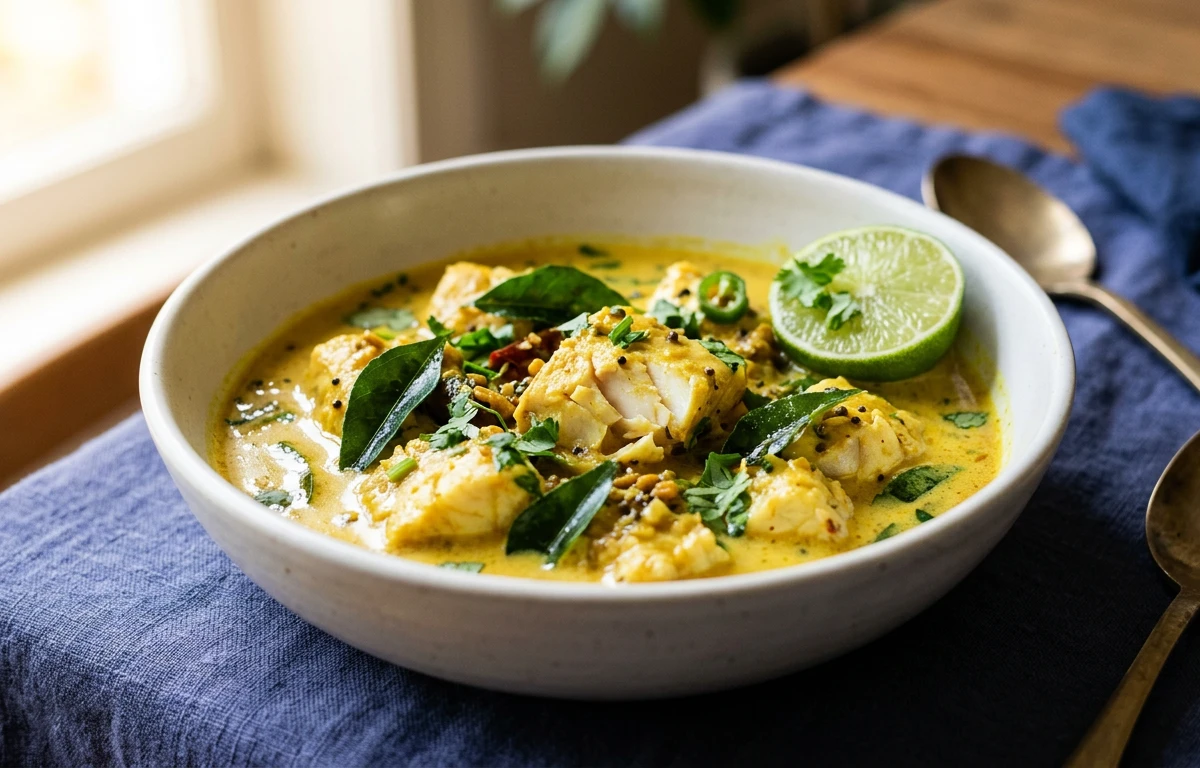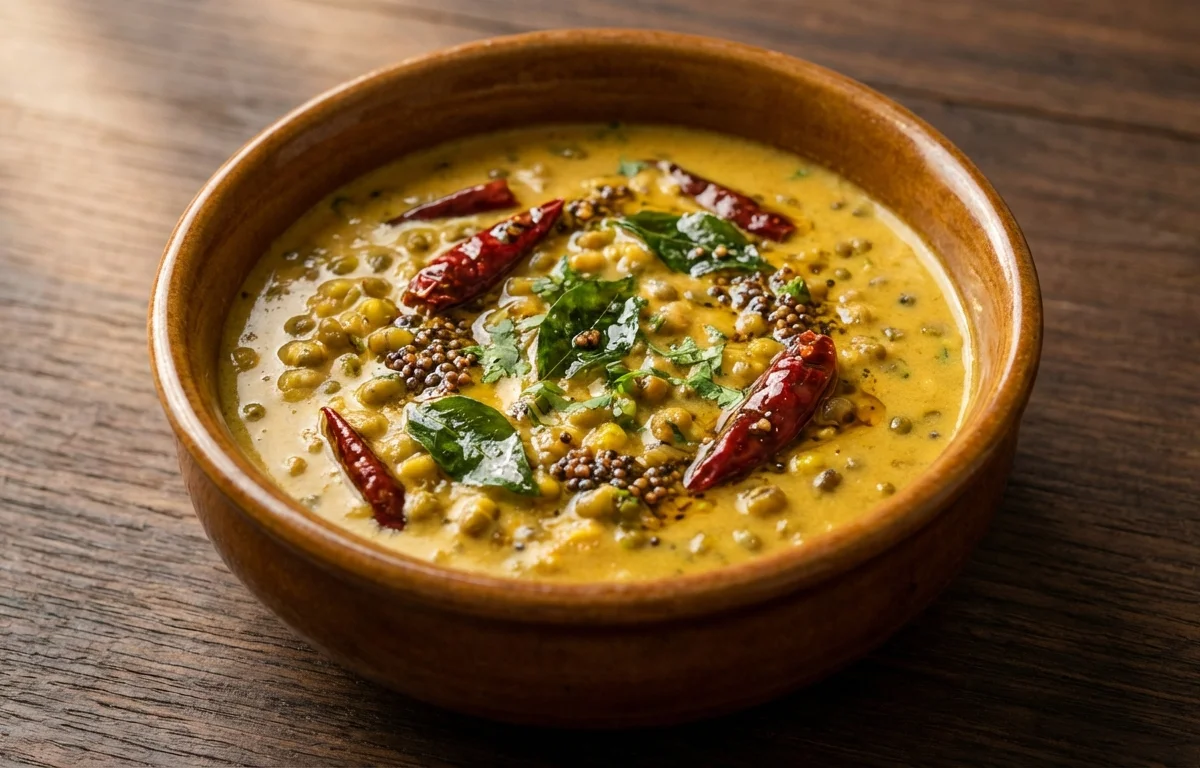
Mooga Gathi
A creamy and mildly spiced coconut-based curry from the Konkan region, made with tender sprouted green gram. The delicate balance of roasted spices and fresh coconut brings a light sweetness, while the tempering adds an aromatic finish. This Goan Saraswat classic is perfect with steamed rice or roti.
For 4 servings
- prep · ~15 min
Cook the sprouted moong beans.
1.Rinse the sprouted green gram well under running water.2.Add the sprouts to a pressure cooker with 1.5 cups water, salt, and turmeric powder.3.Pressure cook on medium heat for 3-4 whistles until soft but not mushy.4.Let the pressure release naturally.TIPIf you don't have a pressure cooker, boil the sprouts in a pot for 35-40 minutes until tender. - mix · ~4 min
Prepare the coconut masala paste.
1.Dry roast cumin seeds and black peppercorns in a small pan for 1 minute until fragrant.2.Add the roasted spices to a blender along with grated fresh coconut and 0.75 cup water.3.Blend to a very smooth, thick paste. Set aside. - simmer · ~10 min
Combine and simmer the curry.
1.Transfer the cooked moong sprouts along with their cooking liquid to a pot.2.Stir in the ground coconut masala paste, jaggery, and kokum petals.3.Bring to a gentle simmer on low heat, stirring occasionally.4.Cook for 8-10 minutes until the curry thickens slightly and flavors meld.TIPDon't boil vigorously — a gentle simmer keeps the coconut from splitting and ensures a creamy texture. - temper · ~2 min
Prepare the tempering.
1.Heat coconut oil in a small tadka pan over medium heat until shimmering.2.Add mustard seeds and let them splutter (30 seconds).3.Add curry leaves, broken dried red chilies, and asafoetida.4.Sauté for 10 seconds until fragrant, then immediately pour the tempering over the simmering curry. - simmer · ~2 min
Finish the curry.
1.Stir the tempering into the curry gently.2.Simmer for 2 more minutes, then remove from heat.3.Let the curry rest for 5 minutes before serving to allow flavors to settle. - serve
Serve the Mooga Gathi hot.
Serve hot with steamed rice or roti. A side of pickle or papad makes a perfect accompaniment.
What to keep in mind.
6 tips from the recipe — small details that make a real difference to the final dish.
- 1Sprout the moong beans until the tails are just 1 cm long for the best texture and digestibility.
- 2Gently squeeze the grated coconut while blending to extract maximum creaminess from the flesh.
- 3Let the pressure release naturally from the cooker so the sprouts stay intact and don't turn mushy.
- 4Add the kokum petals at the simmering stage, not earlier, so their tartness brightens the curry without fading.
- 5Always use fresh curry leaves for the tempering — dried ones lack the essential citrusy aroma.
- 6Rest the curry for 5 minutes off heat after tempering so the flavors meld into a harmonious whole.
Adapt it for your goals.
Vegan
Already vegan as written, but swap jaggery for any dry sweetener of choice; the coconut oil and coconut base keep it fully plant-based.
low oilLow-oil
Reduce coconut oil in the tempering to 1/2 tbsp and dry-roast the mustard seeds and curry leaves for a lighter version without sacrificing tempering flavor.
high proteinHigh-protein
Stir in 1/2 cup of cubed paneer (or firm tofu for vegan) along with the sprouts for an extra protein boost that complements the creamy curry.
spicySpicy
Add 2-3 green chilies to the coconut masala paste while grinding and use 3 dried red chilies in the tempering for a heat-packed variation.
Why this is on our healthy list.
Rich in Plant Protein
Sprouted green gram provides high-quality, easily digestible plant protein that supports muscle repair and satiety.
Good Source of Dietary Fiber
The combination of sprouted moong and fresh coconut offers generous fiber, aiding digestion and promoting gut health.
Packed with Antioxidants
Turmeric, black pepper, and curry leaves contribute potent antioxidants that help combat oxidative stress.
Low in Unhealthy Fats
Made with heart-friendly coconut oil and no heavy cream, this curry is naturally low in trans fats and cholesterol-free.
Frequently asked questions
Yes, but the texture and digestibility will differ. Use 1/2 cup raw moong, soaked overnight, and then pressure cook with extra water until soft.