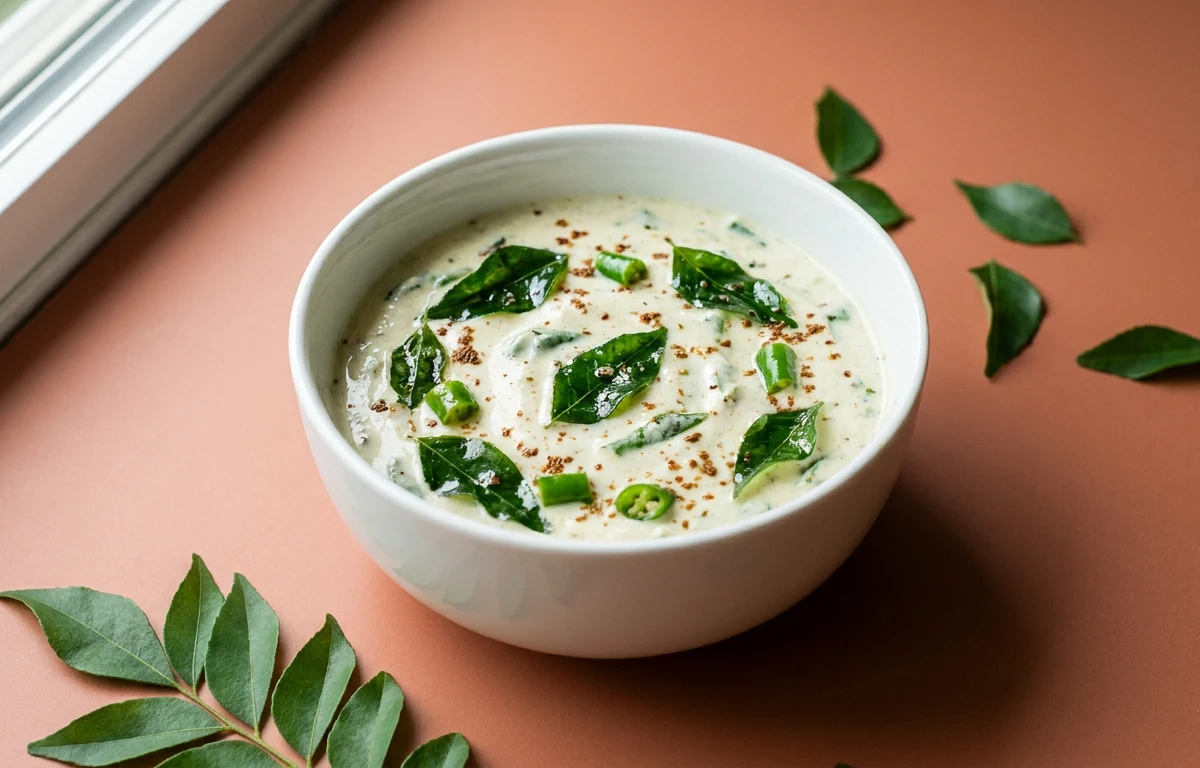
Mor Kuzhambu
A comforting Tamil-style yogurt curry with a gentle tang, soft ash gourd, and a fragrant coconut-spice paste. It is light, soothing, and especially good with steamed rice and a simple vegetable side.
For 4 servings
- prep · ~15 min
Soak the dal and rice.
Soak the toor dal and rice in a little water for 15 minutes. This helps them grind smoothly into the coconut paste.
TIPA short soak is enough here; longer soaking is not needed for this small quantity. - mix · ~3 min
Grind the coconut paste.
1.Drain the soaked toor dal and rice.2.Add coconut, soaked dal, soaked rice, green chili, cumin seeds, and turmeric powder to a grinder.3.Add a little water and grind to a smooth, thick paste. - boil · ~10 min
Cook the ash gourd.
Add the ash gourd to a pot with 1 cup water and cook until just tender. The cubes should hold their shape and not turn mushy.
TIPCook on medium heat so the ash gourd softens evenly without breaking apart. - mix · ~3 min
Whisk the yogurt and paste together.
Whisk the yogurt until smooth, then mix in the ground coconut paste with the remaining water and salt. Stir well so there are no lumps.
- simmer · ~7 min
Warm the kuzhambu gently.
1.Pour the yogurt mixture into the pot with the cooked ash gourd.2.Cook on low heat, stirring often, until the curry turns hot and slightly frothy.3.Switch off the heat before it comes to a full boil.TIPDo not let the yogurt curry boil hard, or it may split. - temper · ~1 min
Make the tempering.
1.Heat coconut oil in a small pan.2.Add mustard seeds and let them splutter.3.Add fenugreek seeds, dried red chili, and curry leaves.4.Cook for a few seconds until fragrant.TIPKeep the fenugreek brief in the oil so it stays aromatic and does not turn bitter. - assemble · ~1 min
Pour the tempering over the curry.
Pour the hot tempering over the mor kuzhambu and cover for a minute to trap the aroma.
- serve
Serve the mor kuzhambu warm.
What to keep in mind.
7 tips from the recipe — small details that make a real difference to the final dish.
- 1Use slightly sour yogurt for the classic tang; very fresh yogurt can taste flat here.
- 2Grind the coconut paste very smooth so the kuzhambu stays silky, not grainy.
- 3Cook ash gourd only until a knife slides in easily; overcooking will make the cubes collapse.
- 4Keep the heat low after adding the yogurt mixture and stir often to prevent splitting.
- 5Switch off as soon as the curry looks steamy and lightly frothy; do not let it reach a rolling boil.
- 6Add fenugreek seeds to the tempering only after mustard splutters, and fry briefly to avoid bitterness.
- 7This tastes even better after 15 to 20 minutes of resting, which lets the tempering perfume the curry.
Adapt it for your goals.
With-ladies-finger
Replace ash gourd with sautéed okra for another classic mor kuzhambu version with a slightly earthier taste and less watery texture.
jainJain
Skip the toor dal if needed and rely on soaked rice and coconut for body; the curry stays mild, tangy, and sattvic-friendly.
spicierSpicier
Add one extra green chili to the paste or a second dried red chili in the tempering for a brighter heat without changing the dish's character.
veganVegan
Use a plain unsweetened plant-based yogurt that can handle gentle heating; choose one with a mild tang so the curry still tastes balanced.
Why this is on our healthy list.
Cooling and Light
Yogurt and ash gourd make this a soothing, lighter curry that is often appreciated in warm weather or alongside spicy sides.
Contains Beneficial Cultured Dairy
The yogurt brings fermented dairy elements and a pleasant tang while also contributing protein to the dish.
Plant Ingredients Add Fiber
Ash gourd, coconut, and the small amount of dal add plant-based fiber and texture to an otherwise gentle curry.
Frequently asked questions
It usually happens when the yogurt mixture boils too hard. Heat it only on low until hot and slightly frothy, stirring often.