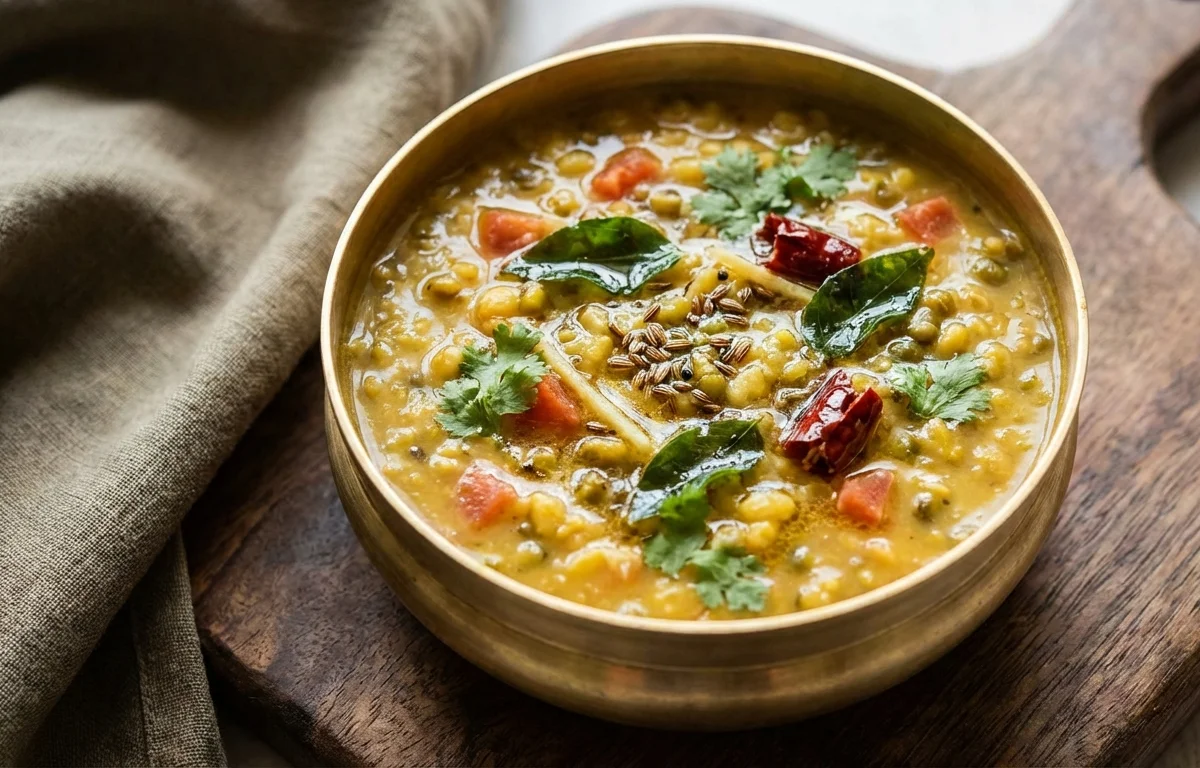
Muga Dali
A comforting Odia-style moong dal with a gentle roasted aroma, light sweetness from coconut, and warm whole spices. It is simple, homely, and especially good with plain rice and a spoon of ghee.
For 4 servings
- roast · ~5 min
Roast the moong dal.
Heat a dry pan over low to medium heat and roast the moong dal, stirring often, until it turns lightly golden and smells nutty. Do not let it brown too much.
TIPLow heat gives the dal its classic aroma without making it bitter. - prep · ~1 min
Rinse the roasted dal.
Transfer the roasted dal to a bowl and rinse it once or twice under water to remove any dust and stop further cooking.
- boil · ~10 min
Cook the dal with whole spices.
1.Add the rinsed dal to a pot with water.2.Add salt, turmeric powder, bay leaf, cinnamon, green cardamom, and cloves.3.Bring to a boil over medium heat.4.Skim any foam from the top for a cleaner broth. - simmer · ~15 min
Simmer until the dal is soft.
Lower the heat and simmer until the dal is soft but still holds a little shape. Stir once or twice so it does not catch at the bottom, then add the grated coconut.
TIPMuga Dali tastes best when the dal is soft and pourable, not mashed into a paste. - temper · ~2 min
Make the tempering.
1.Heat ghee in a small pan over medium heat.2.Add cumin seeds and let them sizzle for a few seconds.3.Add dried red chili and grated ginger.4.Cook briefly until the ginger smells fragrant. - assemble · ~2 min
Pour the tempering into the dal.
Add the hot tempering to the simmering dal and mix well. Cook for 2 more minutes so the flavors come together.
- serve
Serve hot with rice.
What to keep in mind.
7 tips from the recipe — small details that make a real difference to the final dish.
- 1Roast the moong only to light golden; deep browning can make the dal taste bitter instead of nutty.
- 2Rinse after roasting to stop carryover cooking and wash off any dusty residue without losing the roasted aroma.
- 3Skim the foam when the dal first boils so the finished broth stays cleaner and more delicate.
- 4Keep the dal slightly loose and pourable; it thickens as it rests, especially after the coconut goes in.
- 5Add the coconut only near the end so it stays sweet and fresh-tasting instead of turning chewy.
- 6Do not burn the ginger in the tempering; once it smells fragrant, pour it in immediately.
- 7If reheating leftovers, add a splash of hot water before warming to bring back the proper consistency.
Adapt it for your goals.
Vegan
Replace ghee with a neutral oil or coconut oil for a fully plant-based version that still keeps the roasted dal and spice profile intact.
no coconutNo-coconut
Skip the grated coconut for a plainer, lighter dal if you want the roasted moong and whole-spice aroma to stand out more.
spicierSpicier
Add an extra dried red chili in the tempering for more heat while keeping the dish otherwise traditional and simple.
pressure cookerPressure-cooker
Cook the roasted rinsed dal with the whole spices in a pressure cooker to save time, then finish with coconut and the tempering.
Why this is on our healthy list.
Plant Protein and Fiber
Moong dal provides plant-based protein and fiber, making this simple rice-and-dal meal more satisfying and balanced.
Gentle, Easy-to-Digest Meal
Split yellow moong is often considered one of the lighter dals, and the soft cooked texture makes this dish comforting and easy on the stomach.
Aromatics With Functional Value
Ginger, cumin, and turmeric add flavor while also contributing traditional digestive and warming qualities to the dish.
Frequently asked questions
Roasting gives Muga Dali its characteristic nutty aroma and slightly deeper flavor. Keep the heat moderate so the dal turns fragrant, not dark brown.