Mutton Harisa
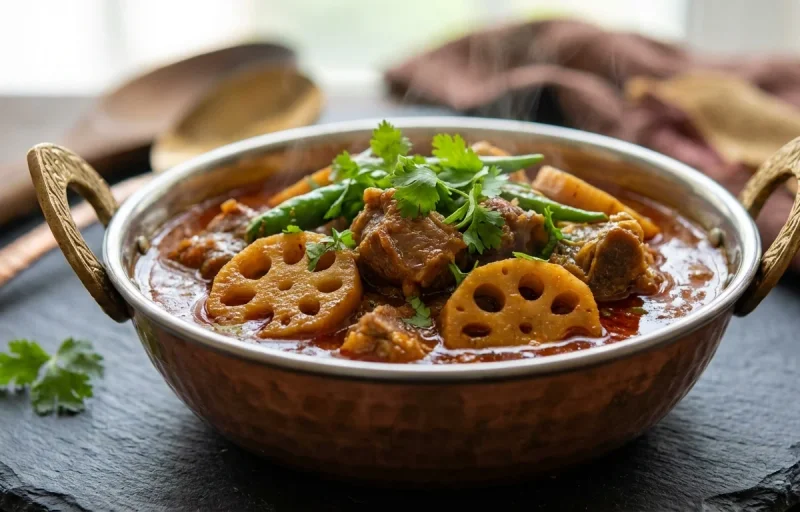
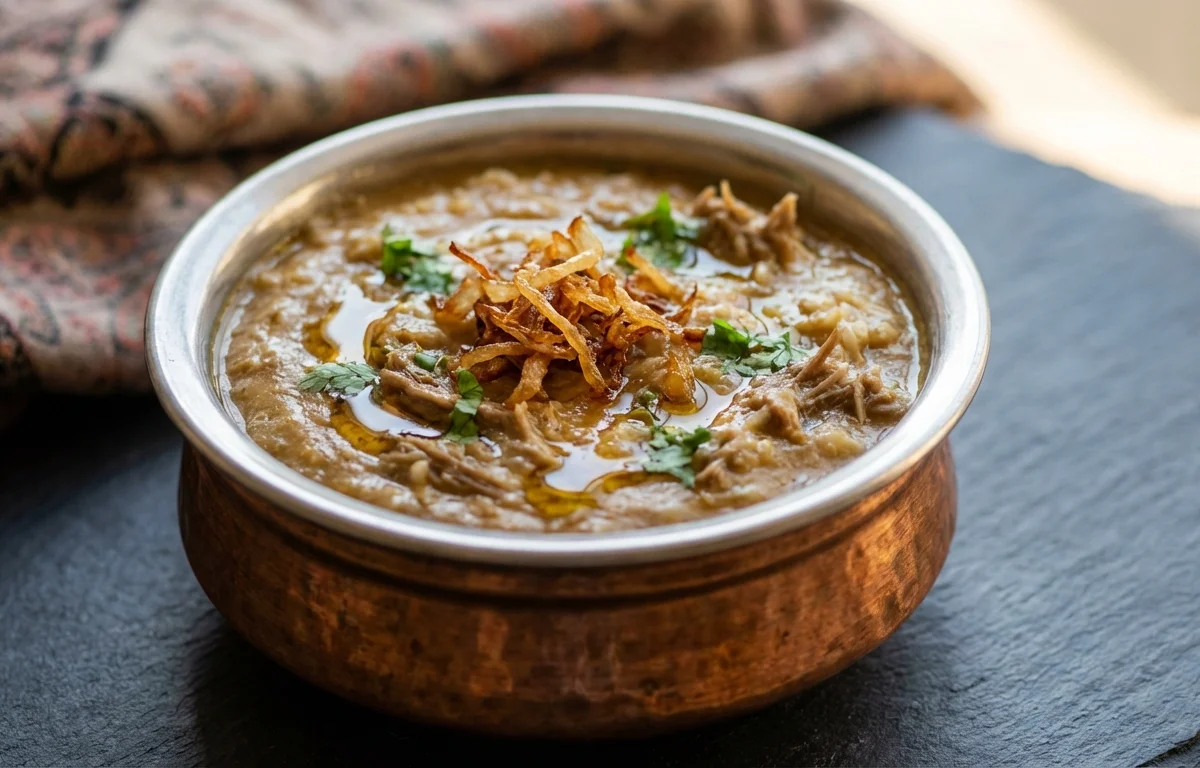
A slow-cooked Kashmiri-style porridge of mutton and wheat, harisa turns rich, silky, and deeply savory as the grains break down and the meat is pounded into the pot. It is hearty, warming, and best served hot with a little ghee on top.
For 4 servings
- prep · ~1 min
Soak the wheat.
Wash the wheat well and soak it in plenty of water overnight. Drain before cooking.
- boil · ~20 min
Start the mutton and wheat.
1.Add mutton, soaked wheat, rice, onion, crushed ginger, garlic, fennel powder, dry ginger powder, black pepper, green cardamom, cinnamon, bay leaf, salt, and water to a heavy pot.2.Bring to a boil over medium-high heat.3.Skim off any foam from the top for a cleaner broth.TIPUse a heavy pot and keep the boil gentle once the foam is removed so the meat stays tender. - simmer · ~160 min
Cook until the mutton is very tender.
Lower the heat, cover loosely, and simmer for 2 1/2 to 3 hours, stirring now and then, until the wheat has broken down and the mutton is falling off the bone.
- prep · ~10 min
Remove the bones and whole spices.
Lift out the mutton pieces with tongs. Remove and discard the bones, bay leaf, cinnamon, and cardamom pods, then return the meat to the pot.
- mix · ~20 min
Pound and mash the harisa.
Mash the meat and wheat together in the pot with a sturdy wooden spoon or masher until the mixture turns thick, pasty, and almost smooth. Keep stirring so it does not catch at the bottom.
TIPThe texture should be like a thick savory porridge. Add a splash of hot water only if it gets too tight to stir. - simmer · ~20 min
Cook again until glossy.
Simmer the mashed harisa for 15 to 20 minutes on low heat, stirring often, until it looks glossy and holds soft mounds on the spoon.
- garnish · ~2 min
Top with ghee and ginger.
Stir in half the ghee. Spoon the harisa into bowls, drizzle the rest of the ghee on top, and finish with the ginger strips.
- serve
Serve hot.
What to keep in mind.
7 tips from the recipe — small details that make a real difference to the final dish.
- 1Choose bone-in mutton with a little fat; it gives the harisa its fuller body and richer mouthfeel.
- 2Skim the initial foam well before the long simmer so the final porridge tastes cleaner, not muddy.
- 3Keep the simmer very gentle after boiling; a hard boil can tighten the meat before it has time to soften.
- 4Remove every cardamom pod, cinnamon piece, and bone before mashing so the texture stays smooth and safe to eat.
- 5Mash while the meat is still hot and tender; it shreds into the wheat much more easily than if it cools.
- 6Stir frequently during the final thickening stage, because the dense wheat-meat mixture can catch on the bottom fast.
- 7Harisa thickens as it stands, so loosen leftovers with a little hot water while reheating and finish with fresh ghee.
Adapt it for your goals.
Pressure-cooker
Cook the mutton, wheat, rice, and aromatics under pressure to shorten the long simmer, then open, debone, mash, and finish on low heat.
spicierSpicier
Add a little extra black pepper for a warmer, sharper finish while keeping the dish close to its traditional flavor profile.
leanerLeaner
Use slightly leaner mutton and reduce the finishing ghee if you want a lighter bowl that still keeps the classic wheat-meat texture.
smoother textureSmoother-texture
Mash more thoroughly and pass over the pot longer on low heat if you prefer a finer, more paste-like harisa.
Why this is on our healthy list.
Protein-Rich Main Dish
Mutton makes this a filling, protein-rich meal that can help keep you satisfied for longer.
Whole Grain Goodness
Soaked whole wheat adds grain-based fiber and a slow-cooked, sustaining body to the dish.
Warming Aromatics
Ginger, garlic, black pepper, and fennel contribute aroma and depth while making the porridge feel especially warming.
Frequently asked questions
Soaking is strongly recommended because it helps the wheat soften and break down properly during the long cook. Without soaking, the texture may stay coarse and cooking will take longer.