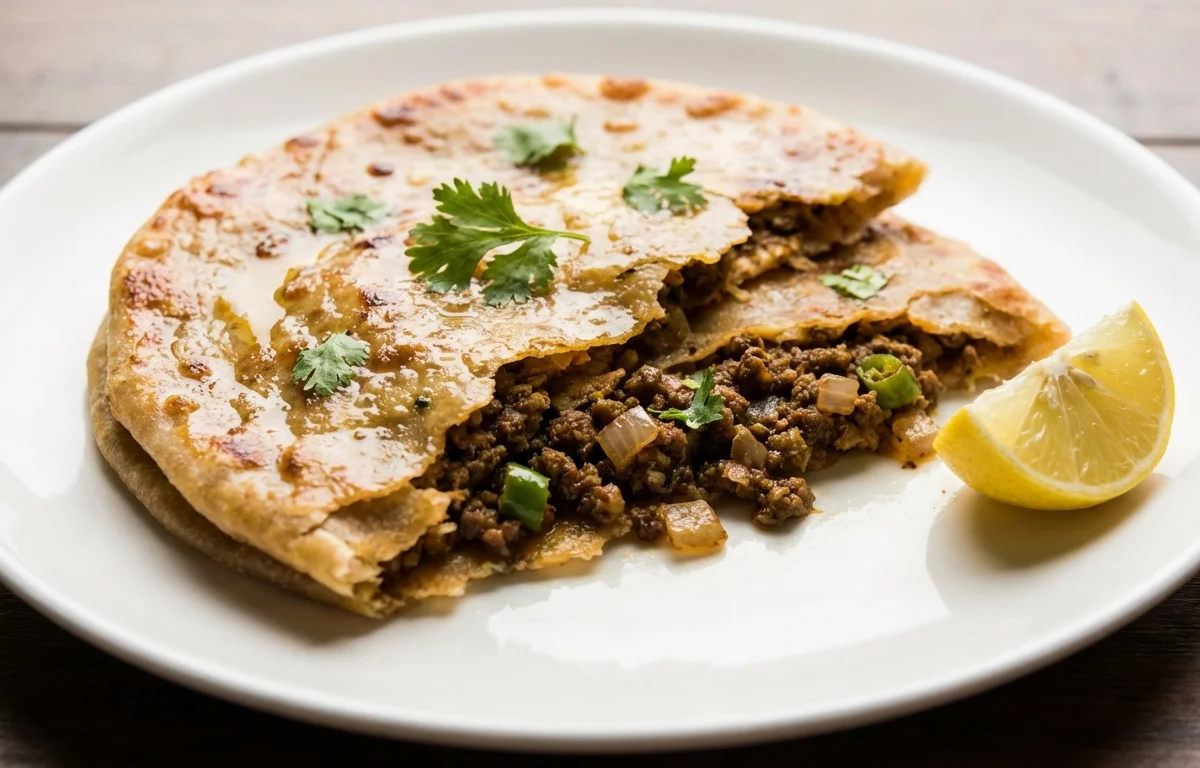
Mutton Kheema Paratha
Flaky whole wheat parathas stuffed with spiced minced mutton make a hearty, satisfying Indian meal. The filling is cooked until dry and flavorful, then tucked into soft dough and pan-cooked until golden.
For 4 servings
- knead · ~20 min
Knead the dough.
Mix whole wheat flour, 0.25 tsp salt, 1 tbsp oil, and water to make a soft, smooth dough. Knead for 5 minutes, cover, and let it rest while you prepare the filling.
TIPA slightly soft dough makes stuffed parathas easier to roll without tearing. - saute · ~8 min
Cook the kheema filling.
1.Heat 1 tbsp oil in a pan over medium heat.2.Add cumin seeds and let them sizzle for 20-30 seconds.3.Add onion, green chili, ginger, and garlic, then cook until the onion turns light golden, 5-6 minutes.4.Add mutton mince and break it up well with a spoon.5.Add the remaining salt, red chili powder, turmeric powder, coriander powder, and garam masala. - saute · ~15 min
Dry out the filling.
Cook the mince over medium heat for 10-12 minutes, stirring often, until it is fully cooked and any moisture has dried up. Turn off the heat, then mix in coriander leaves and lemon juice. Cool the filling completely.
TIPKeep the filling fairly dry or the parathas will burst while rolling. - assemble · ~10 min
Stuff and shape the parathas.
1.Divide the dough into 4 equal balls and divide the filling into 4 portions.2.Roll one dough ball into a small disc using a little dusting flour.3.Place one portion of filling in the center and gather the edges to seal.4.Flatten gently and roll into a medium paratha without pressing too hard.TIPRoll from the center outward with light pressure to keep the filling evenly spread. - fry · ~12 min
Cook the parathas.
1.Heat a tawa or skillet over medium heat.2.Place one paratha on the hot surface and cook until light bubbles appear, about 1 minute.3.Flip, spread a little ghee, and cook until golden spots form.4.Flip again, add a little more ghee, and cook both sides until crisp golden patches appear.TIPMedium heat cooks the layers through; high heat can brown the outside before the inside is done. - serve
Serve the parathas hot.
What to keep in mind.
7 tips from the recipe — small details that make a real difference to the final dish.
- 1Cook the kheema until the pan looks almost dry; any leftover moisture makes the stuffed parathas split.
- 2Let the filling cool completely before stuffing so steam does not soften the dough from inside.
- 3Finely chop the onion and green chili so the filling spreads evenly and rolls without lumps.
- 4If the mince releases fat, cook a little longer rather than adding flour; a dry filling keeps the flavor cleaner.
- 5Seal the dough pouch tightly and pinch off any thick top knot before rolling for an even paratha.
- 6Use medium heat on the tawa so the whole wheat dough cooks through before the ghee browns the outside.
- 7Make the kheema filling a day ahead and chill it; cold filling is easier to portion and stuff.
Adapt it for your goals.
Spicier
Add more green chili and a little extra red chili powder for a hotter kheema paratha with a stronger North Indian street-style kick.
low oilLow-oil
Use less oil in the filling and cook the parathas with minimal ghee on a well-heated skillet for a lighter everyday version.
egg kheemaEgg-kheema
Mix in a grated boiled egg with the cooled mince to stretch the filling and add extra richness without changing the basic method.
atta maida mixAtta-maida mix
Replace part of the whole wheat flour with all-purpose flour for a softer, more pliable dough that is easier to roll thin.
Why this is on our healthy list.
Protein-Rich Meal
Mutton mince adds substantial protein, making these stuffed parathas filling and satisfying for a main meal.
Whole Grain Dough
Whole wheat flour brings more fiber and a steadier, heartier texture than refined flour parathas.
Aromatic Digestive Spices
Ginger, garlic, cumin, and coriander are classic warming spices that add depth while supporting easier digestion of a rich filling.
Frequently asked questions
The usual cause is wet or warm filling. Cook the mince until dry, cool it fully, and roll with gentle pressure from the center outward.

.webp)