Nadir Yakhni
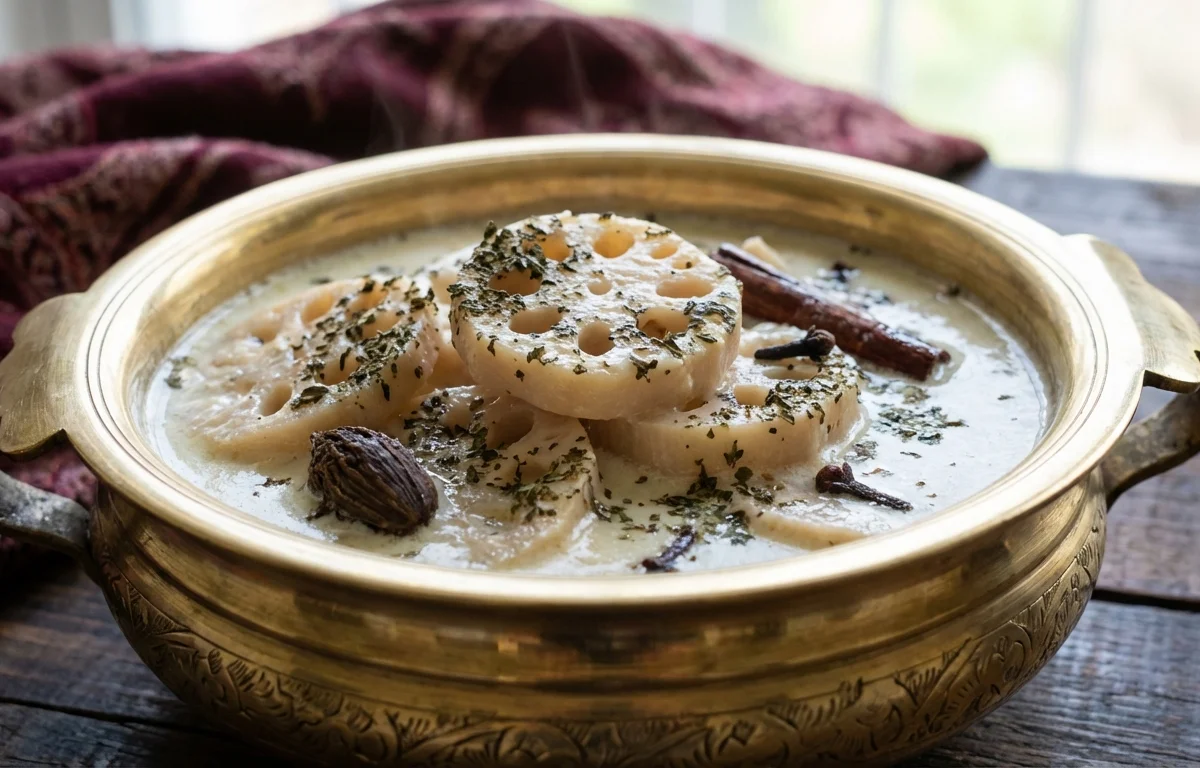
Tender lotus stem simmered in a light yogurt gravy scented with fennel, dried ginger, and whole spices. This Kashmiri-style curry is gentle, fragrant, and especially comforting with plain steamed rice.
For 4 servings
- prep · ~10 min
Clean and cut the lotus stem.
1.Peel the lotus stem and scrub it well to remove any trapped mud.2.Slice off the ends and cut it into 2 inch batons.3.Rinse the pieces in fresh water until clean. - boil · ~15 min
Boil the lotus stem until just tender.
Bring 4 cups water to a boil in a pot. Add the lotus stem and cook for 12 to 15 minutes until tender but not mushy, then drain well.
TIPCook just until a knife slips in easily. Overcooked lotus stem can break in the gravy. - mix · ~3 min
Whisk the yogurt with the ground spices.
In a bowl, whisk the yogurt until smooth. Mix in fennel powder, dry ginger powder, black pepper, and salt so the gravy cooks evenly without lumps.
- saute · ~2 min
Heat the oil and bloom the whole spices.
1.Heat mustard oil in a pan until it reaches the smoking point, then lower the heat slightly.2.Add cumin seeds, green cardamom, cloves, black cardamom, and bay leaf.3.Add asafoetida and cook for a few seconds until fragrant.TIPSmoking the mustard oil first softens its raw sharpness and gives the curry a cleaner flavor. - saute · ~3 min
Add the boiled lotus stem.
Add the drained lotus stem to the pan and toss for 2 to 3 minutes so it picks up the flavor of the spices and oil.
- simmer · ~15 min
Cook the yogurt gravy gently.
1.Lower the heat and add the whisked yogurt mixture slowly, stirring continuously.2.Add 3 cups water and mix well.3.Bring the curry to a very gentle simmer without letting it boil hard.4.Cook for 12 to 15 minutes, stirring now and then, until the gravy turns smooth and lightly thickened.TIPKeep the heat low after adding yogurt. A hard boil can split the gravy. - garnish
Finish with mint.
- serve
Serve hot with steamed rice.
What to keep in mind.
7 tips from the recipe — small details that make a real difference to the final dish.
- 1Rinse the lotus stem thoroughly through its holes so no grit remains in the finished curry.
- 2Boil the lotus stem only until a knife slides in with slight resistance; it will cook again in the yakhni.
- 3Whisk the yogurt until completely smooth before adding spices to prevent a grainy gravy.
- 4After smoking the mustard oil, lower the heat before adding whole spices so they bloom without burning.
- 5Add the yogurt mixture slowly while stirring constantly to keep the yakhni silky and prevent splitting.
- 6Keep the curry at a bare simmer, not a rolling boil, once the yogurt goes in.
- 7This dish tastes even better after a short rest, when the lotus stem absorbs the fennel-ginger gravy.
Adapt it for your goals.
No-mint
Skip the mint for a more traditional, cleaner yakhni profile that lets fennel, dry ginger, and whole spices stand out.
richer yakhniRicher-yakhni
Use slightly thicker full-fat yogurt for a creamier gravy with a fuller mouthfeel, ideal for serving with plain rice.
milder spiceMilder-spice
Reduce cloves and black cardamom slightly if you want a softer, more delicate aroma that highlights the lotus stem.
jain styleJain-style
Omit asafoetida if needed and ensure the yogurt is acceptable for your practice; the dish still keeps its gentle Kashmiri character.
Why this is on our healthy list.
Vegetable-Focused Comfort Dish
Lotus stem makes this curry centered on a vegetable ingredient rather than heavy cream or fried bases.
Digestive Warming Spices
Fennel, dry ginger, cumin, and asafoetida add traditional digestive warmth while keeping the gravy light.
Calcium and Protein from Yogurt
The yogurt base contributes dairy protein and calcium while giving the curry body without a rich nut paste.
Frequently asked questions
Whisk the yogurt very smooth, lower the heat before adding it, and simmer gently without letting the curry boil hard.