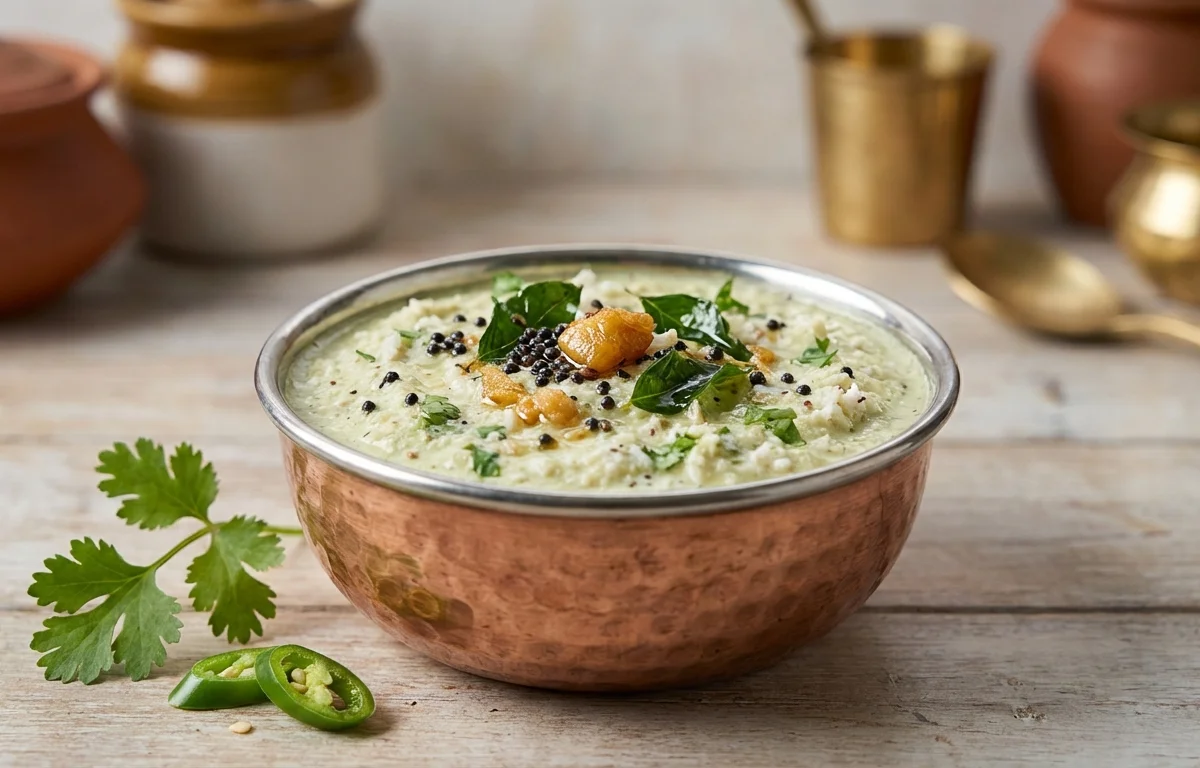
Naralachi Chutney
A bright, fresh Maharashtrian coconut chutney with a nutty depth from roasted chana dal and a gentle kick of green chili. Tempered with mustard seeds, curry leaves, and hing, this chutney comes together in minutes and is the perfect companion to vada pav, sabudana khichdi, or simple steamed rice.
For 8 servings
- prep
Gather and prep the ingredients.
1.Grate the fresh coconut to yield 1 cup firmly packed.2.Roughly chop the green chilies, ginger, and cilantro with tender stems.3.Juice the lemon to extract 1 tablespoon of fresh juice.TIPUse fresh coconut for the best flavor and creamy texture. If using frozen, thaw completely and drain any excess water. - mix · ~2 min
Grind the chutney base.
1.Add grated coconut, roasted chana dal, green chili, ginger, cilantro, lemon juice, salt, and sugar to the mixer grinder.2.Add 2 tablespoons of water and grind to a coarse, slightly gritty paste.3.Scrape down the sides and add a teaspoon more water if too thick—aim for a spoonable consistency, not a runny paste.TIPGrind in short pulses to avoid the coconut turning oily. The chutney should have a pleasant coarse texture, not a smooth puree. - mix
Transfer chutney to a serving bowl.
Scoop the ground chutney into a clean bowl and set aside while you prepare the tempering.
- temper · ~2 min
Make the tempering.
1.Heat 1 teaspoon of oil in a small tempering pan over medium heat.2.Add mustard seeds and let them splutter completely (30 seconds).3.Add cumin seeds and let them sizzle and turn fragrant (10 seconds).4.Toss in the curry leaves and a pinch of asafoetida. Stir briefly until the leaves crackle (10 seconds).5.Immediately pour the hot tempering over the chutney in the bowl.TIPSpluttering mustard seeds is the key—don't rush it. If they don't pop, your oil isn't hot enough. - mix
Mix and adjust consistency.
Stir the tempering gently into the chutney. Taste and adjust salt or lemon juice if needed. The chutney is ready to serve.
- serve
Serve naralachi chutney fresh at room temperature.
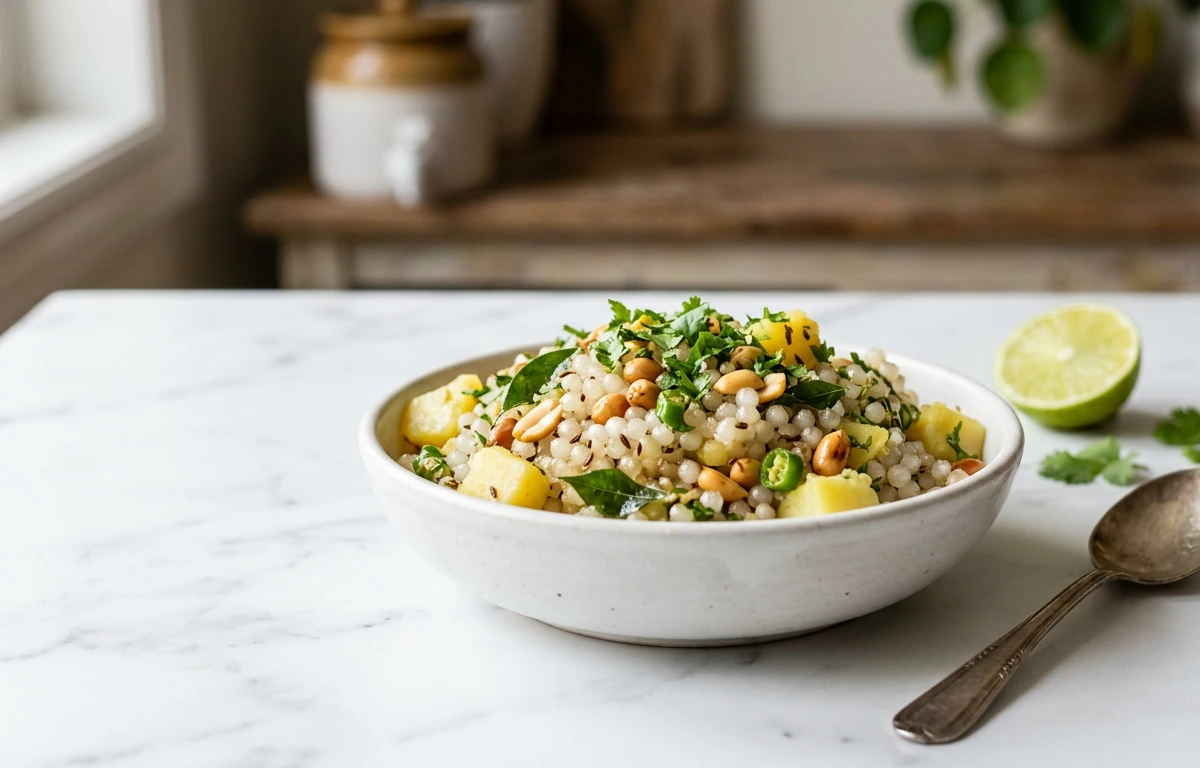
Pair with vada pav, sabudana khichdi, dosa, or steamed rice. Refrigerate leftovers and consume within 24 hours.
TIPThis chutney tastes best fresh. Avoid leaving it out for more than 2 hours, as fresh coconut can spoil quickly in warm weather.
What to keep in mind.
7 tips from the recipe — small details that make a real difference to the final dish.
- 1Use fresh coconut for the best creamy texture and natural sweetness.
- 2Grind in short pulses to prevent the coconut from releasing oil and turning greasy.
- 3Let the mustard seeds splutter fully before adding cumin for proper tempering aroma.
- 4Adjust green chili quantity based on spice preference; remove seeds for milder heat.
- 5Store leftover chutney in an airtight container in the fridge and use within 24 hours.
- 6Add a teaspoon of water at a time while grinding to achieve a spoonable, not runny, paste.
- 7Fold the hot tempering gently into the chutney just before serving for maximum fragrance.
Adapt it for your goals.
Kosher/Plant-Based
Use a neutral oil like sunflower or avocado instead of vegetable oil for a cleaner flavor. The recipe is already vegan; just ensure your sugar is plant-based.
Low OilLow-Oil
Omit the oil and dry-roast the mustard seeds, cumin seeds, and curry leaves in a small pan over low heat until fragrant, then crush lightly. This reduces fat while keeping the essential aromatic notes.
No CilantroNo-Cilantro
Replace cilantro with fresh mint leaves (2 tbsp) for a cooler, brighter chutney that pairs especially well with fried snacks like samosas or pakoras.
SpicierSpicier
Add 1/4 teaspoon of red chili powder or a small dried red chili to the tempering for a deeper heat and vibrant color.
Why this is on our healthy list.
Rich in Healthy Fats
Fresh coconut provides medium-chain triglycerides (MCTs), which are a quick source of energy and may support metabolism.
Good Source of Plant Protein
Roasted chana dal adds a modest amount of plant-based protein and dietary fiber, making the chutney more satisfying.
Digestive Support
Ginger and asafoetida (hing) are traditionally used to aid digestion and reduce bloating, making this chutney a gut-friendly accompaniment.
Antioxidant Properties
Cilantro and curry leaves contain antioxidants like quercetin and kaempferol that help combat oxidative stress.
Frequently asked questions
Desiccated coconut lacks moisture and natural creaminess. If substituting, rehydrate 1 cup desiccated coconut with 1/4 cup warm water for 10 minutes, then drain excess liquid before grinding.



.webp)