Pakoda Curry
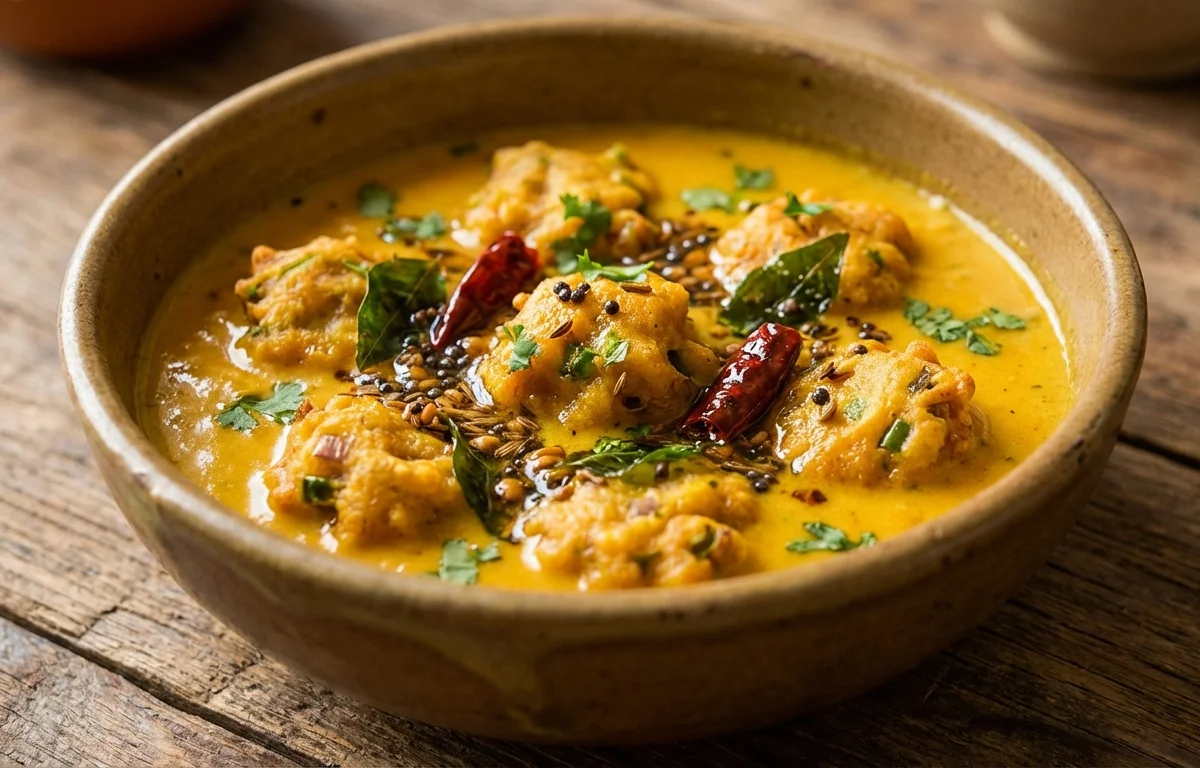
Crisp onion pakodas simmered in a lightly spiced yogurt-besan gravy make this comforting North Indian curry especially satisfying. It has the cozy tang of kadhi and the bite of fresh pakodas in every spoonful.
For 4 servings
- prep · ~5 min
Prepare the pakoda batter.
1.Place sliced onion in a bowl and mix with 1 cup chickpea flour, green chili, carom seeds, 1 pinch turmeric powder, 1 pinch red chili powder, and 1 pinch salt.2.Rub the onion with the flour mixture for 2 minutes so the slices release moisture.3.Add 2 to 3 tbsp water only if needed and mix into a thick, clinging batter.TIPKeep the batter thick so the pakodas stay craggy and hold up in the curry. - fry · ~15 min
Fry the pakodas.
1.Heat oil for frying in a kadai over medium heat.2.Drop small portions of batter into the hot oil without overcrowding the pan.3.Fry until deep golden and crisp, turning once or twice, about 4 to 5 minutes per batch.4.Lift out and drain the pakodas well.TIPFry on medium heat so the onion cooks through before the outside turns too dark. - mix · ~5 min
Whisk the curry base.
1.In a bowl, whisk yogurt until smooth.2.Add the remaining 0.5 cup chickpea flour, remaining turmeric powder, remaining red chili powder, coriander powder, and remaining salt.3.Pour in water gradually and whisk until no lumps remain. - temper · ~2 min
Make the tempering.
1.Heat 1 tbsp oil in a pot over medium heat.2.Add mustard seeds and let them crackle.3.Add cumin seeds, fenugreek seeds, asafoetida, curry leaves, and ginger.4.Cook for 20 to 30 seconds until fragrant.TIPDo not let the fenugreek seeds blacken or the curry will taste bitter. - simmer · ~18 min
Cook the curry.
Pour the yogurt-chickpea mixture into the pot and stir continuously over medium-low heat until it comes to a gentle simmer. Cook for 15 to 18 minutes, stirring often, until the curry thickens slightly and the raw taste of chickpea flour disappears.
TIPContinuous stirring at the start helps keep the yogurt smooth and prevents splitting. - simmer · ~4 min
Add the pakodas to the curry.
Add the fried pakodas to the simmering curry and cook for 3 to 4 minutes so they soften slightly but still keep some texture.
- garnish
Garnish with cilantro.
- serve
Serve the pakoda curry hot.
What to keep in mind.
7 tips from the recipe — small details that make a real difference to the final dish.
- 1Rub the onions with besan well before adding water; their moisture helps form a thicker pakoda batter.
- 2Fry pakodas in small batches on medium heat so the onion cooks through and the centers do not stay doughy.
- 3Whisk the yogurt and besan completely smooth before heating, or the curry can turn lumpy.
- 4Stir constantly for the first few minutes after adding the yogurt mixture to prevent curdling.
- 5Keep fenugreek seeds lightly toasted in the tempering; dark brown methi will make the gravy noticeably bitter.
- 6Add the pakodas only 3 to 4 minutes before serving if you want them soft outside but still a little craggy inside.
- 7If the curry thickens too much as it sits, loosen it with a splash of hot water and simmer briefly before serving.
Adapt it for your goals.
Low-oil
Shallow-fry or air-fry the pakodas instead of deep-frying for a lighter version that still gives oniony bites in the curry.
spicierSpicier
Increase green chili and red chili powder for a hotter curry that balances the tangy yogurt base.
no onionNo-onion
Make the pakodas with spinach or shredded cabbage instead of onion for a different texture and a milder sweetness.
veganVegan
Replace yogurt with a tangy plant-based yogurt that can handle simmering, keeping the same besan gravy style.
Why this is on our healthy list.
Protein From Besan and Yogurt
Chickpea flour and yogurt together make this curry more filling and add satisfying protein to the meal.
Digestive Spice Support
Carom seeds, ginger, cumin, asafoetida, and fenugreek are traditionally used to aid digestion in rich, fried dishes.
Calcium-Rich Dairy Base
The yogurt-based gravy contributes dairy nutrients while bringing the signature tang of this North Indian curry.
Frequently asked questions
Usually the heat was too high or the mixture was not stirred enough at the start. Keep the flame medium-low and stir continuously until the curry begins to simmer.



.webp)