Parwal Sabzi
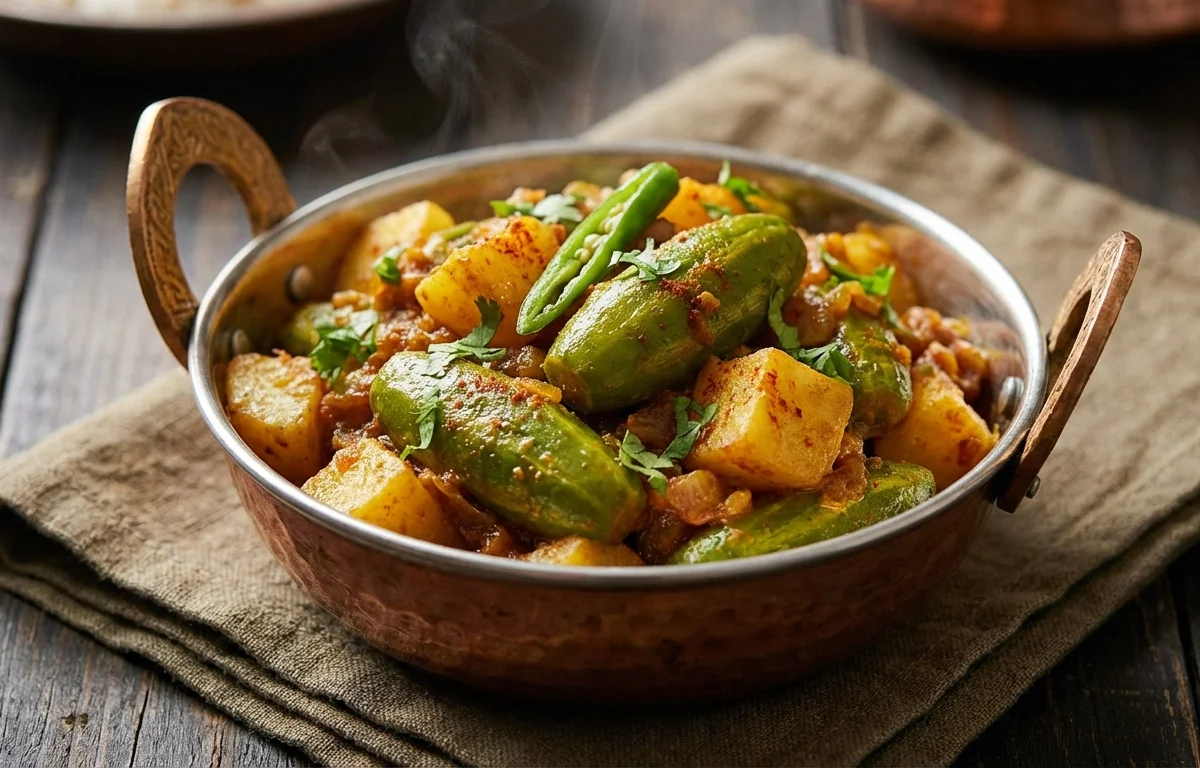
A simple North Indian dry vegetable dish where tender pointed gourd is cooked with onion, tomato, and everyday spices until lightly coated and flavorful. It makes a comforting side for roti or dal-rice meals.
For 4 servings
- prep · ~15 min
Prepare the parwal and other vegetables.
1.Trim both ends of the parwal and lightly scrape the outer skin.2.Slit each parwal lengthwise and cut into halves if large.3.Chop the onion and tomatoes finely.4.Slit the green chilies and grate the ginger. - saute · ~6 min
Cook the onion base.
1.Heat oil in a kadai over medium heat.2.Add cumin seeds and let them crackle for a few seconds.3.Add onion and cook until soft and lightly golden, 4 to 5 minutes.4.Add ginger and green chili, then cook for 30 seconds. - saute · ~6 min
Add tomatoes and spices.
1.Add tomato and cook until soft and pulpy, 4 to 5 minutes.2.Add turmeric powder, red chili powder, coriander powder, and salt.3.Mix well and cook for 1 minute so the spices lose their raw taste. - saute · ~10 min
Cook the parwal.
1.Add the prepared parwal to the pan and mix well to coat with the masala.2.Cook on medium heat for 3 to 4 minutes, stirring now and then.3.Pour in water, cover, and cook until the parwal is tender.TIPKeep the heat medium and stir once or twice so the masala does not catch at the bottom. - saute · ~3 min
Finish the sabzi.
Remove the lid and cook for 2 to 3 minutes until any extra moisture dries up and the sabzi looks lightly coated. Sprinkle garam masala and mix gently.
- garnish
Garnish with coriander leaves.
- serve
Serve hot with roti or dal-rice.
What to keep in mind.
7 tips from the recipe — small details that make a real difference to the final dish.
- 1Lightly scrape the parwal instead of peeling deeply, so it stays tender yet holds its shape while cooking.
- 2Cut the parwal pieces to a similar size so they soften evenly under the covered cooking step.
- 3Cook the onions only to light golden; dark browning can overpower the mild, delicate taste of parwal.
- 4Let the tomatoes turn fully pulpy before adding parwal, or the masala will taste raw and won’t coat well.
- 5Use only enough water to soften the parwal; too much will make this dry sabzi stewy instead of lightly coated.
- 6In the final uncovered cooking, stir gently so the softened parwal doesn’t break apart.
- 7This sabzi tastes even better after 20 to 30 minutes of resting, when the spices settle into the parwal.
Adapt it for your goals.
Aloo-parwal
Add cubed potato with the parwal for a heartier, more familiar North Indian side dish that pairs especially well with roti.
no onion no garlicNo-onion-no-garlic
Skip the onion and rely on tomato, ginger, cumin, and coriander powder for a lighter satvik-style version.
mustard oilMustard-oil
Use mustard oil instead of regular oil for a sharper, more rustic flavor that suits many North Indian vegetable sabzis.
spicierSpicier
Increase green chili and red chili powder if you want the mild parwal to carry a stronger, hotter masala.
Why this is on our healthy list.
Vegetable-Forward Side Dish
Parwal makes this sabzi a produce-rich accompaniment that fits well into simple everyday meals with roti or dal-rice.
Moderate Oil Cooking
The dish uses a small amount of oil mainly to bloom cumin and cook the masala, rather than deep-frying the vegetable.
Phytonutrients From Spices
Ginger, cumin, turmeric, coriander powder, and green chili contribute aromatic plant compounds along with flavor.
Frequently asked questions
No. Lightly scraping the outer skin is enough; fully peeling can make the pieces too soft and less flavorful.



.webp)