Patra Poda Machha
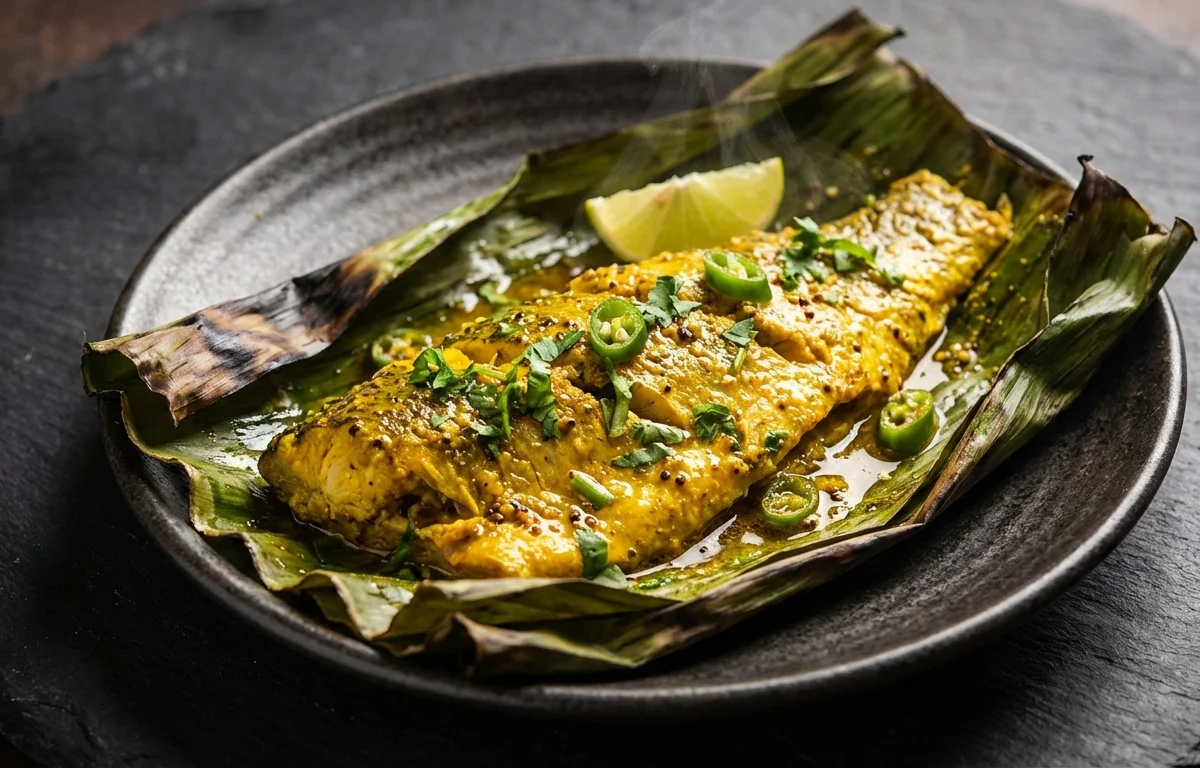
Delicate fish fillets marinated in a bold mustard-poppy seed paste, wrapped snugly in aromatic banana leaves, and slow-cooked over a griddle until smoky and tender. This Odia delicacy fills the kitchen with an irresistible earthy fragrance and pairs beautifully with steaming hot rice.
For 4 servings
- prep
Prepare the banana leaves.
1.Wash banana leaves and pat them dry.2.Gently pass each leaf over a low open flame for a few seconds until it softens and becomes pliable.3.Trim the thick central veins and cut leaves into rectangles large enough to wrap each fish piece. - prep · ~5 min
Make the mustard-poppy seed paste.
1.Drain the soaked mustard seeds and poppy seeds.2.Add them to a grinder along with garlic cloves, 2 green chilies, turmeric powder, red chili powder, salt, and 1 tablespoon of mustard oil.3.Grind to a smooth, thick paste using minimal water. Add lemon juice and pulse to mix. - prep · ~10 min
Marinate the fish.
1.Pat the fish fillets completely dry with a kitchen towel.2.Coat each piece generously with the mustard-poppy seed paste on all sides.3.Let the fish rest and absorb the flavors for 10 minutes. - assemble
Wrap the fish in banana leaves.
1.Place a marinated fish piece in the center of a softened banana leaf.2.Top the fish with 2 slices of tomato and a slit green chili.3.Fold the leaf over the fish to form a snug parcel and tie it securely with kitchen twine. Repeat for all pieces. - fry · ~15 min
Cook the wrapped fish parcels.
1.Heat a cast-iron tawa or heavy skillet over medium-low heat. Drizzle the remaining 1 tablespoon of mustard oil across the surface.2.Place the banana leaf parcels on the tawa, seam-side down first.3.Cook for 12 to 15 minutes, turning carefully every 3 to 4 minutes, until the leaves are nicely charred and the fish inside is steamed through and fragrant.TIPDon't rush with high heat. Gentle cooking allows the banana leaf aroma to infuse into the fish. - serve · ~2 min
Rest briefly and serve hot.
Remove parcels from heat and let them rest for 2 minutes. Serve the bundles directly on the plate so each person unwraps their own, releasing the beautiful smoky aroma. Pair with steamed rice and a squeeze of fresh lemon.
What to keep in mind.
7 tips from the recipe — small details that make a real difference to the final dish.
- 1Pat the fish fillets bone-dry before marinating to help the paste cling better and prevent steaming inside the wrap.
- 2Always wilt banana leaves over a low open flame until they become pliable and glossy to avoid tearing while folding.
- 3Use a cast-iron tawa or heavy skillet for even heat distribution and authentic smoky char marks on the banana leaves.
- 4Cook the parcels over medium-low heat and turn every 3–4 minutes to ensure the fish steams evenly without burning the leaf.
- 5Let the wrapped parcels rest for 2 minutes after cooking so the juices redistribute and the fish stays moist when unwrapped.
- 6Tie the banana leaf parcels tightly with kitchen twine so no steam escapes during cooking.
- 7Serve the bundles unopened so each person unwraps their own fish, releasing the trapped smoky aroma at the table.
Adapt it for your goals.
Pan-Fry Finish
After steaming in the banana leaf, open the parcel and sear the fish directly on the griddle for 1 minute per side for a crispy, caramelized crust.
Lighter PasteLighter Paste
Replace half the poppy seeds with grated fresh coconut for a milder, sweeter paste that reduces the pungency and adds a subtle tropical note.
Vegetable Steamer VariationVegetable Steamer Variation
If banana leaves are unavailable, wrap the fish in parchment paper and steam in a bamboo steamer for 12–15 minutes for a similar moist result.
Herb InfusedHerb-Infused
Add 2 sprigs of fresh curry leaves or a few mint leaves inside each parcel before sealing for an extra layer of aromatic freshness.
Why this is on our healthy list.
Rich in Omega-3 Fatty Acids
Firm white fish like rohu or sea bass is an excellent source of heart-healthy omega-3s, supporting brain and cardiovascular health.
Boosts Metabolism from Mustard Seeds
Mustard seeds contain glucosinolates and selenium, which aid metabolism and provide anti-inflammatory benefits.
Low in Saturated Fat
This dish uses mustard oil instead of butter or cream, keeping saturated fat minimal while delivering healthy monounsaturated fats.
Antioxidant-Rich Spices
Turmeric and red chili powder provide curcumin and capsaicin, two potent antioxidants that combat oxidative stress.
Good Source of Plant Protein from Poppy Seeds
Poppy seeds add a small but notable amount of plant-based protein and fiber, along with calcium and magnesium.
Frequently asked questions
Yes, but thaw them completely in the refrigerator, pat very dry, and use within 24 hours for the best texture.