
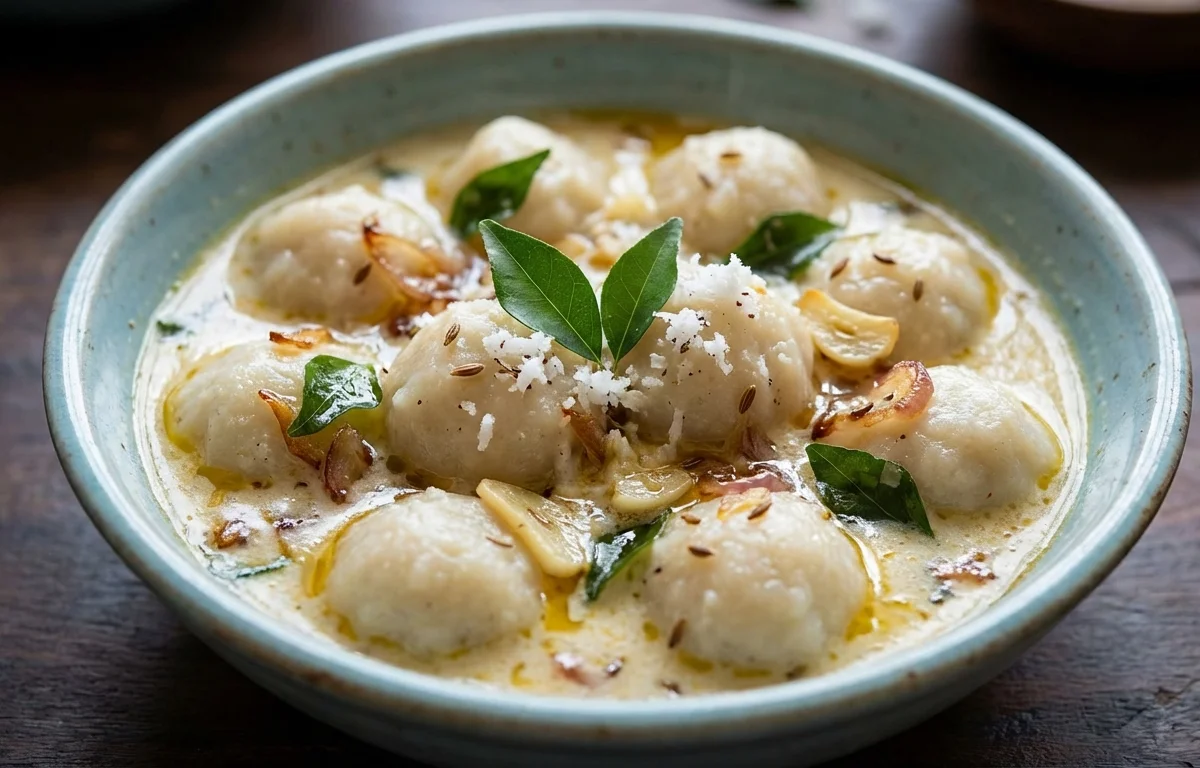
Pidi
Soft, tender rice flour dumplings simmered in a fragrant, mildly spiced coconut milk gravy. A beloved Kerala Christian breakfast or teatime treat that's naturally gluten-free and wonderfully comforting.
For 4 servings
- prep · ~9 min
Make the rice dough.
1.Dry roast the rice flour in a heavy-bottomed pan over low heat for 3-4 minutes until fragrant. Set aside.2.Boil 1.5 cups water with a pinch of salt and a few drops of coconut oil.3.Pour the hot water into the roasted rice flour and mix well with a wooden spoon until a smooth, pliable dough forms. Cover and let it rest for 5 minutes.TIPThe dough should be soft but not sticky. Sprinkle a little warm water if it feels dry. - prep · ~8 min
Shape the pidi dumplings.
1.Knead the warm dough gently for a minute.2.Pinch small lemon-sized portions and roll them into smooth, oval-shaped dumplings.TIPKeep the unused dough covered with a damp cloth to prevent drying. - steam · ~10 min
Steam the dumplings.
1.Arrange the shaped dumplings in a greased steamer basket or idli stand without overcrowding.2.Steam for 8-10 minutes until firm and slightly glossy. Set aside. - saute · ~5 min
Build the coconut milk gravy base.
1.Heat coconut oil in a wide pan over medium heat.2.Splutter cumin seeds and fry curry leaves until aromatic (15 seconds).3.Add sliced shallots and crushed garlic, sauté until soft and translucent (3-4 minutes). - simmer · ~7 min
Simmer the gravy and finish the dish.
1.Add the thick coconut milk, fresh grated coconut, and a pinch of salt to the pan. Bring to a gentle simmer over low heat.2.Carefully drop the steamed rice dumplings into the simmering gravy.3.Cook uncovered for 5-7 minutes, gently stirring once or twice, until the gravy reduces slightly and clings to the dumplings.TIPDo not boil the coconut milk vigorously; it can split. Keep the heat low and steady. - serve
Serve warm.
Let the pidi rest in the pan for 5 minutes to absorb the flavors. Serve warm in bowls, drizzling any remaining gravy on top.
What to keep in mind.
6 tips from the recipe — small details that make a real difference to the final dish.
- 1Roast the rice flour until it releases a nutty aroma, but do not let it brown—this ensures a soft, pliable dough.
- 2Use hot, freshly boiled water to make the dough; tepid water will yield crumbly dumplings.
- 3Keep shaped dumplings covered with a damp cloth to prevent a dry skin from forming.
- 4Steam the dumplings just until firm and glossy—over-steaming makes them dense and rubbery.
- 5Simmer the coconut gravy on the lowest heat; a vigorous boil will cause the coconut milk to curdle.
- 6Let the pidi rest in the gravy for 5 minutes off the heat so the dumplings soak up the flavors.
Adapt it for your goals.
Vegan
This recipe is already naturally vegan as it uses coconut milk and coconut oil, with no dairy or animal products. Serve as is for a plant-based meal.
low oilLow-oil
Reduce coconut oil to 1 tsp for sautéing the shallots and garlic. The gravy's richness from coconut milk compensates for the lower fat, making it lighter while still flavorful.
spicy pidiSpicy pidi
Add 2 slit green chillies and ½ tsp crushed black pepper along with the shallots for a gentle heat that complements the coconut gravy.
Why this is on our healthy list.
Gluten-Free Grains
Made entirely with rice flour, this dish is naturally gluten-free, making it suitable for those with celiac disease or gluten sensitivity.
Healthy Fats from Coconut
Coconut milk and grated coconut provide medium-chain triglycerides (MCTs), which are easily digested and may support energy metabolism.
Rich in Aromatic Spices
Cumin seeds and curry leaves contribute antioxidants and digestive properties, enhancing both flavor and nutritional value.
Frequently asked questions
The water may not have been hot enough, or you added too little. Use water at a rolling boil and pour it all in at once; cover immediately to steam the flour.



.webp)
.webp)