
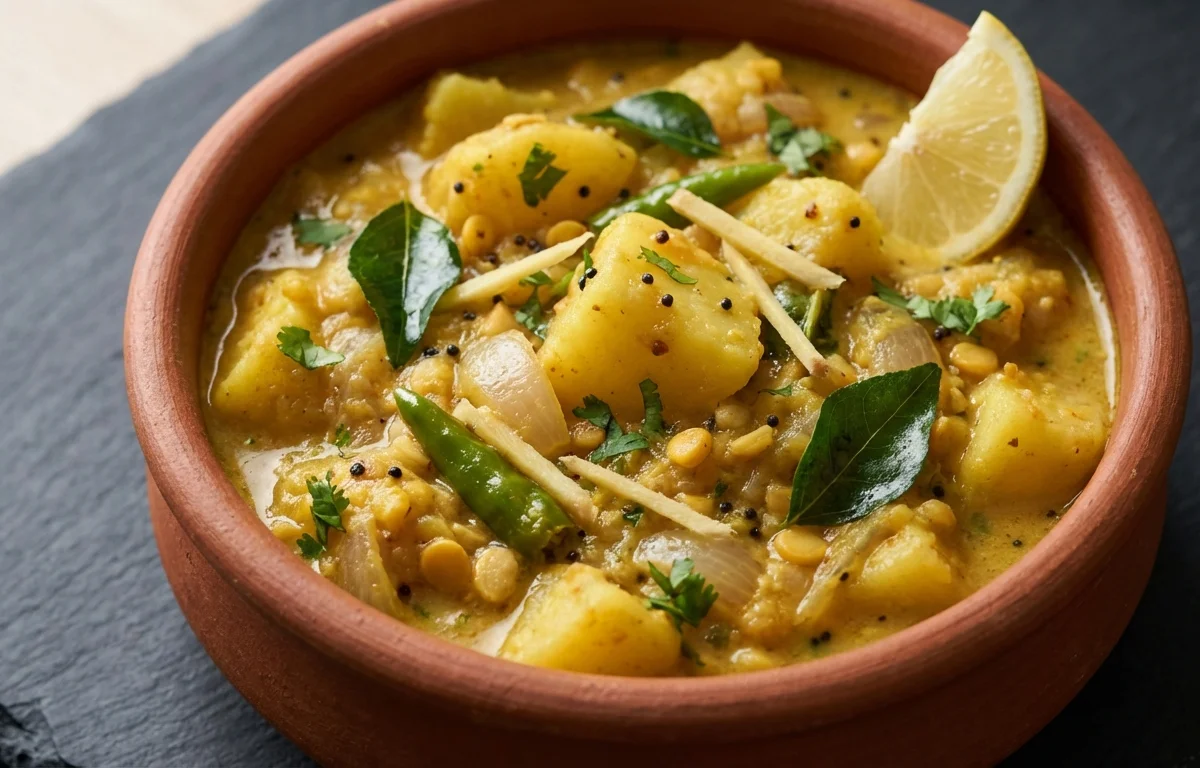
Potato Masala for Dosa
A lightly spiced South Indian potato filling with soft chunks of potato, sweet onions, green chili, and curry leaves. It cooks up quickly and slips perfectly inside a crisp dosa without feeling too heavy.
For 4 servings
- prep · ~10 min
Prep the potatoes and aromatics.
1.Peel the boiled potato and lightly mash it, keeping a few small chunks for texture.2.Slice the onion thinly.3.Slit the green chili and chop the ginger finely.4.Chop the coriander leaves and keep the lemon juice ready. - temper · ~2 min
Make the tempering.
1.Heat the oil in a kadai over medium heat.2.Add mustard seeds and let them splutter.3.Add urad dal and chana dal, and cook until lightly golden.4.Add curry leaves and asafoetida and stir for a few seconds.TIPKeep the heat medium so the dals turn golden without burning. - saute · ~6 min
Cook the onion mixture.
1.Add the sliced onion, green chili, and ginger to the pan.2.Sauté until the onion turns soft and translucent.3.Add turmeric powder and salt, and mix well. - simmer · ~4 min
Add the potatoes and bring it together.
Add the mashed potato and water. Mix well, breaking up any large lumps, and cook for 3 to 4 minutes until the masala is soft, moist, and lightly thickened.
- garnish
Finish with lemon juice and coriander leaves.
Turn off the heat and stir in the lemon juice and coriander leaves. Mix gently so the masala stays light and fluffy.
- serve
Serve the potato masala warm for filling dosas.
What to keep in mind.
7 tips from the recipe — small details that make a real difference to the final dish.
- 1Lightly mash the potatoes instead of making them smooth; small chunks give the dosa filling better texture.
- 2Let the mustard seeds fully splutter before adding the dals, or the tempering will taste raw.
- 3Cook urad dal and chana dal only until pale golden; too dark and they turn bitter in the masala.
- 4Sauté the onions just to soft and translucent, not browned, to keep the filling classic and mild.
- 5Keep the masala slightly moist so it spreads easily inside a dosa without cracking the crepe.
- 6Add lemon juice only after switching off the heat so the fresh tang stays bright.
- 7If making ahead, reheat with a splash of water to loosen the filling before stuffing dosas.
Adapt it for your goals.
Low-oil
Reduce the oil slightly and use a splash of water while sautéing the onions; good if you want a lighter filling that still stays soft.
spicierSpicier
Add an extra green chili or a few crushed black peppercorns for a sharper heat that pairs well with plain dosa batter.
no onionNo-onion
Skip the onions for a simpler temple-style version; the ginger, curry leaves, and lemon keep it flavorful.
vegetable boostVegetable-boost
Mix in a handful of cooked peas or finely chopped carrots for more color, sweetness, and texture in the dosa filling.
Why this is on our healthy list.
Comforting Energy Source
Potatoes provide satisfying carbohydrates, making this filling a hearty option for breakfast or a light meal.
Digestive Spice Support
Ginger, asafoetida, and curry leaves are traditional aromatics that add flavor while helping make a starchy dish feel lighter.
Plant-Based and Satisfying
This masala is naturally plant-based, and the small amount of urad dal and chana dal adds extra body and texture.
Frequently asked questions
It likely cooked too long after adding the potatoes. Stir in a small splash of hot water and warm gently until soft and moist again.


