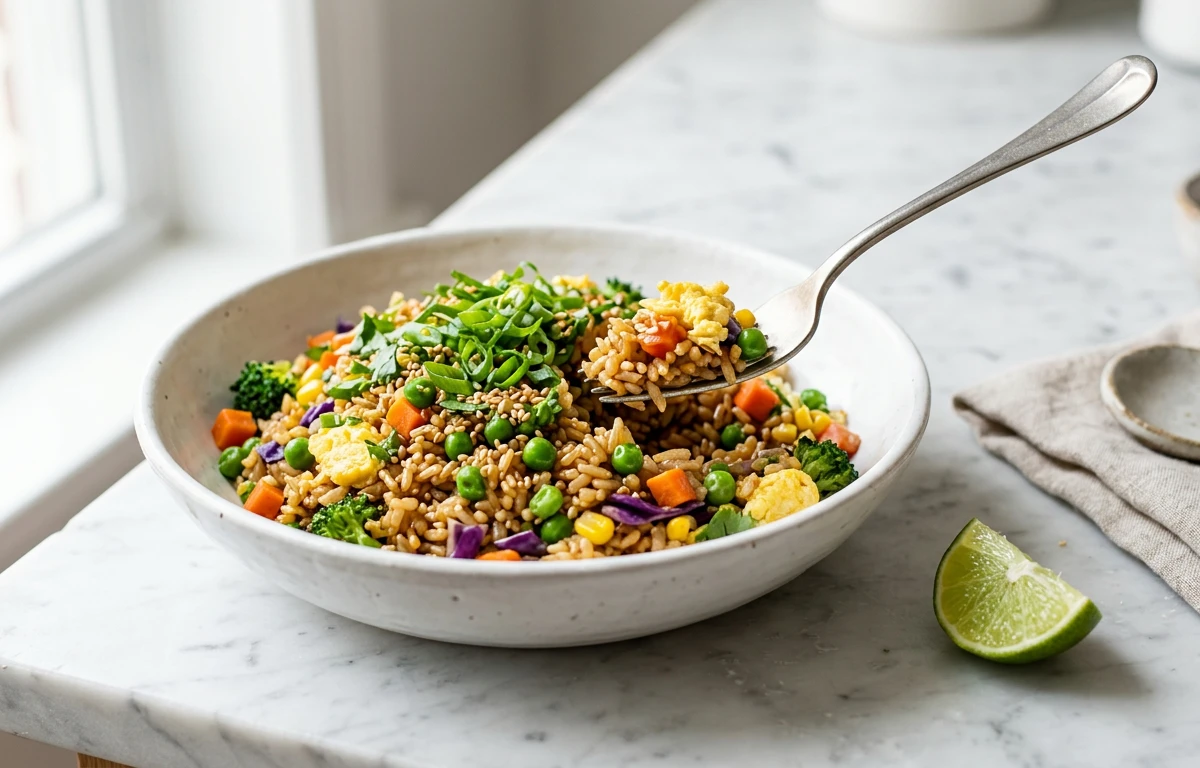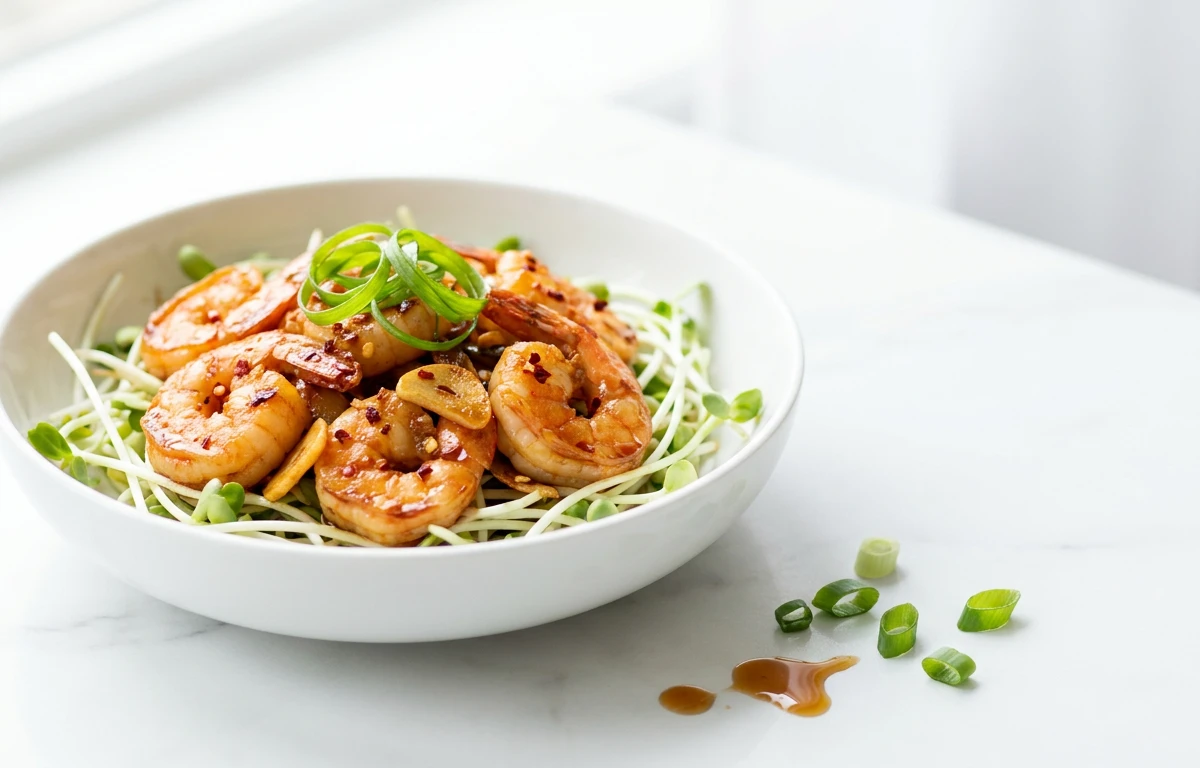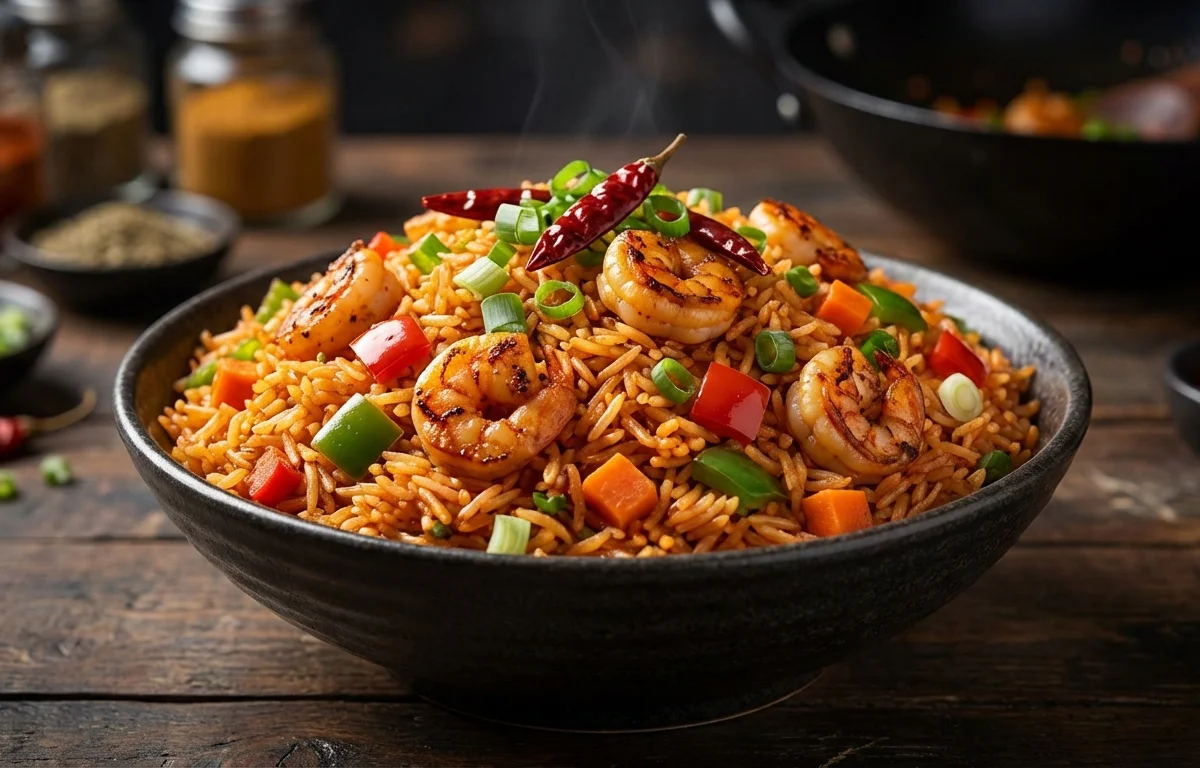
Prawn Szechuan Fried Rice
Plump, juicy prawns tossed with fiery Szechuan sauce, crunchy vegetables, and day-old rice in a blazing hot wok. This Indo-Chinese street-food favorite is smoky, spicy, and utterly satisfying—ready in under 20 minutes.
For 4 servings
- prep
Prep the ingredients.
1.If using freshly cooked rice, spread it on a plate to cool completely.2.Peel and devein prawns, pat them dry.3.Finely chop garlic, ginger, spring onion whites, and vegetables.4.Keep all ingredients near the wok—stir-frying moves fast.TIPDay-old refrigerated rice works best; it's drier and won't clump. - fry · ~2 min
Sear the prawns.
1.Heat 1 tbsp oil in a wok over high heat until smoking.2.Add prawns in a single layer and sear for 45 seconds per side.3.Remove prawns from wok and set aside.TIPDon't crowd the wok—cook prawns in two batches if needed to get a good sear. - fry · ~4 min
Stir-fry the aromatics and vegetables.
1.Add remaining 1 tbsp oil to the hot wok.2.Add chopped garlic and ginger; stir for 20 seconds until fragrant.3.Add diced onion and spring onion whites; stir-fry for 1 minute.4.Add bell pepper, carrot, green beans, and green chili; stir-fry on high heat for 2 minutes until veggies are crisp-tender.TIPKeep the vegetables crunchy—high heat and constant tossing are key. - fry · ~3 min
Add the rice and sauces.
1.Add cooled rice to the wok, breaking up any clumps.2.Drizzle soy sauce, chili paste, and vinegar over the rice.3.Sprinkle salt and black pepper powder.4.Toss everything on high heat for 2-3 minutes until rice is well coated and slightly charred at the edges.TIPUse a folding action, not mashing—press rice against the wok and flip to avoid mushiness. - fry · ~1 min
Return prawns and finish.
1.Add the seared prawns back into the wok.2.Toss for 1 minute until everything is heated through.3.Turn off heat and fold in spring onion greens. - serve
Serve immediately.
Transfer to a serving plate. Serve piping hot as a standalone meal or with a side of chili chicken or gobi manchurian.
What to keep in mind.
6 tips from the recipe — small details that make a real difference to the final dish.
- 1Use day-old basmati rice that's been refrigerated for at least 4 hours—fresh rice turns mushy in the wok.
- 2Pat prawns completely dry with paper towels before searing to ensure a golden-brown crust, not steamed rubber.
- 3Work in batches if your wok is small; overcrowding drops the temperature and makes everything steam instead of sear.
- 4Toss vegetables on highest heat for only 2 minutes to retain their crunch—they should still have a slight bite.
- 5Press rice against the hot wok with a spatula and flip it in a folding motion, never stir-mash, to get smoky wok hei.
- 6Add the vinegar and chili paste just before the rice goes in—they need heat to bloom but can burn if left too long.
Adapt it for your goals.
Low-oil
Use a non-stick pan and reduce oil to 1 tablespoon total. Mist the pan with cooking spray between steps. The result is lighter but still spicy and crisp.
high proteinHigh-protein
Skip the rice and double the prawns (600 g). Stir-fry the vegetables and sauces as directed, then toss with the extra prawns for a low-carb, protein-packed bowl.
veganVegan
Replace prawns with 200 g firm tofu (pressed and cubed) and use 1 tablespoon dark soy sauce plus 1 teaspoon mushroom powder for umami. Searing tofu instead of prawns keeps the same textural contrast.
jainJain
Omit garlic, ginger, and onion. Use asafoetida (hing) pinch with oil, replace onion with extra bell pepper and carrot, and skip the spring onion whites.
Why this is on our healthy list.
Lean Protein from Prawns
Prawns are low in fat and high in high-quality protein, which supports muscle repair and keeps you full longer.
Rich in Antioxidants
Bell peppers, carrots, and green beans provide vitamin C and beta-carotene, which help protect cells from oxidative stress.
Ginger Aids Digestion
Fresh ginger in the stir-fry is traditionally used to ease digestion and reduce nausea, balancing the spicy chili heat.
Low in Saturated Fat
With only 2 tablespoons of oil and no heavy creams, this dish is naturally low in saturated fat compared to many fried rice versions.
Frequently asked questions
Freshly cooked rice has too much moisture—it releases steam in the wok, making grains stick and turn mushy. Day-old rice grains are drier and stay separate, giving you that perfect fluffy, slightly charred texture.