
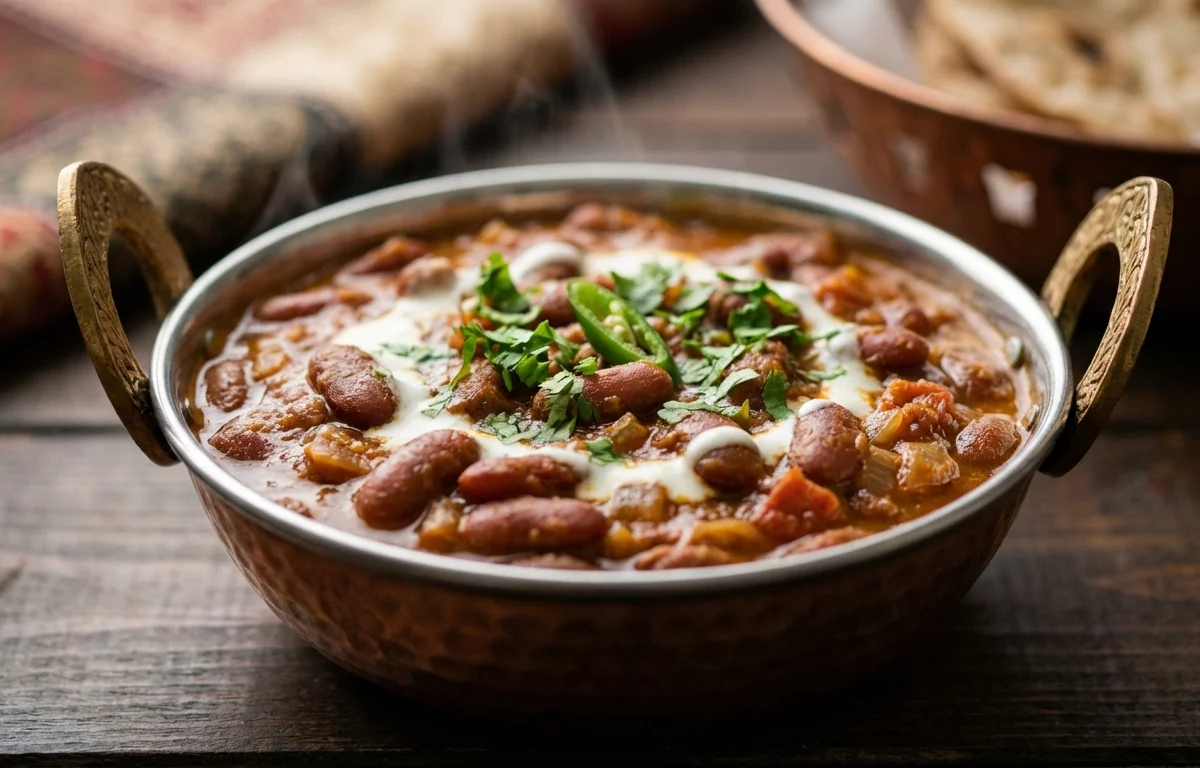
Punjabi Rajma Masala
Creamy kidney beans simmered in a richly spiced onion-tomato gravy until thick and comforting. This Punjabi favorite is hearty, homestyle, and especially good with hot rice or roti.
For 4 servings
- prep · ~480 min
Soak the rajma.
Rinse the rajma well and soak it in enough water overnight or for at least 8 hours. Drain before cooking.
TIPOlder beans take longer to soften, so a full overnight soak helps them cook evenly. - pressure cook · ~30 min
Pressure cook the rajma until soft.
1.Add soaked rajma and 4 cups water to a pressure cooker.2.Add 0.25 tsp salt and close the lid.3.Cook on medium heat for 18 to 22 minutes after full pressure builds.4.Let the pressure release naturally and check that the beans mash easily.TIPThe beans must be fully soft before they go into the masala or the curry will not turn creamy. - saute · ~10 min
Cook the whole spices and onions.
1.Heat oil in a pan over medium heat.2.Add cumin seeds and bay leaf and cook until fragrant, about 20 to 30 seconds.3.Add chopped onion and cook until light golden, 6 to 8 minutes.4.Stir in ginger, garlic, and green chili and cook for 1 minute.TIPCook the onions patiently so the gravy gets its deep Punjabi flavor. - saute · ~10 min
Make the masala base.
1.Add tomato puree and mix well.2.Add turmeric powder, red chili powder, coriander powder, cumin powder, and the remaining salt.3.Cook the masala on medium heat until thick and glossy, 8 to 10 minutes.4.Stir often so the tomato mixture does not catch at the bottom.TIPWhen the masala loses its raw tomato smell and looks slightly oily, it is ready. - simmer · ~20 min
Simmer the rajma in the masala.
1.Add the cooked rajma with about 1.5 cups of its cooking liquid to the pan.2.Lightly mash a few beans with the back of a spoon to help thicken the gravy.3.Mix well and bring to a gentle simmer.4.Cover loosely and cook for 15 to 20 minutes, stirring once or twice.TIPMashing a small portion of the beans gives the gravy a restaurant-style creamy texture without cream. - garnish · ~1 min
Finish with garam masala and coriander leaves.
Stir in garam masala and chopped coriander leaves. Simmer for 1 more minute, then switch off the heat.
- serve
Serve hot.
Serve Punjabi Rajma Masala hot with steamed rice, jeera rice, or roti.
What to keep in mind.
7 tips from the recipe — small details that make a real difference to the final dish.
- 1If your rajma is old, add extra pressure-cooking time until the beans mash easily between your fingers.
- 2Do not rush the onion stage; light golden onions give the gravy its deep Punjabi base flavor.
- 3Cook the tomato masala until it turns thick, glossy, and loses its raw smell before adding the beans.
- 4Mash a small handful of cooked rajma into the gravy for a naturally creamy texture without cream.
- 5Use some of the rajma cooking liquid instead of plain water to keep the curry fuller-bodied and flavorful.
- 6Rajma tastes even better the next day, so make it ahead and reheat gently after resting overnight.
- 7If the gravy thickens too much on standing, loosen it with a splash of hot water while reheating.
Adapt it for your goals.
Jain
Skip onion and garlic, increase ginger and tomatoes, and keep the whole spices for a simpler but still comforting rajma.
low oilLow-oil
Reduce the oil and cook the onions more slowly with splashes of water; good if you want a lighter everyday version.
spicierSpicier
Add an extra green chili or a bit more red chili powder for a hotter rajma that pairs especially well with plain rice.
dhaba styleDhaba-style
Finish with a small knob of butter and a slightly longer simmer for a richer, more indulgent North Indian restaurant feel.
Why this is on our healthy list.
Rich in Plant Protein
Kidney beans make this dish filling and satisfying, especially when served with rice or roti for a hearty meal.
Good Source of Fiber
Rajma and the onion-tomato base contribute fiber, which helps make the curry more sustaining and wholesome.
Tomato and Spice Benefits
Tomatoes, ginger, garlic, and cumin add flavor along with beneficial plant compounds commonly used in homestyle Indian cooking.
Frequently asked questions
The beans may be old or under-soaked. Pressure cook them longer until they mash easily, because firm beans will not give the curry its creamy texture.


