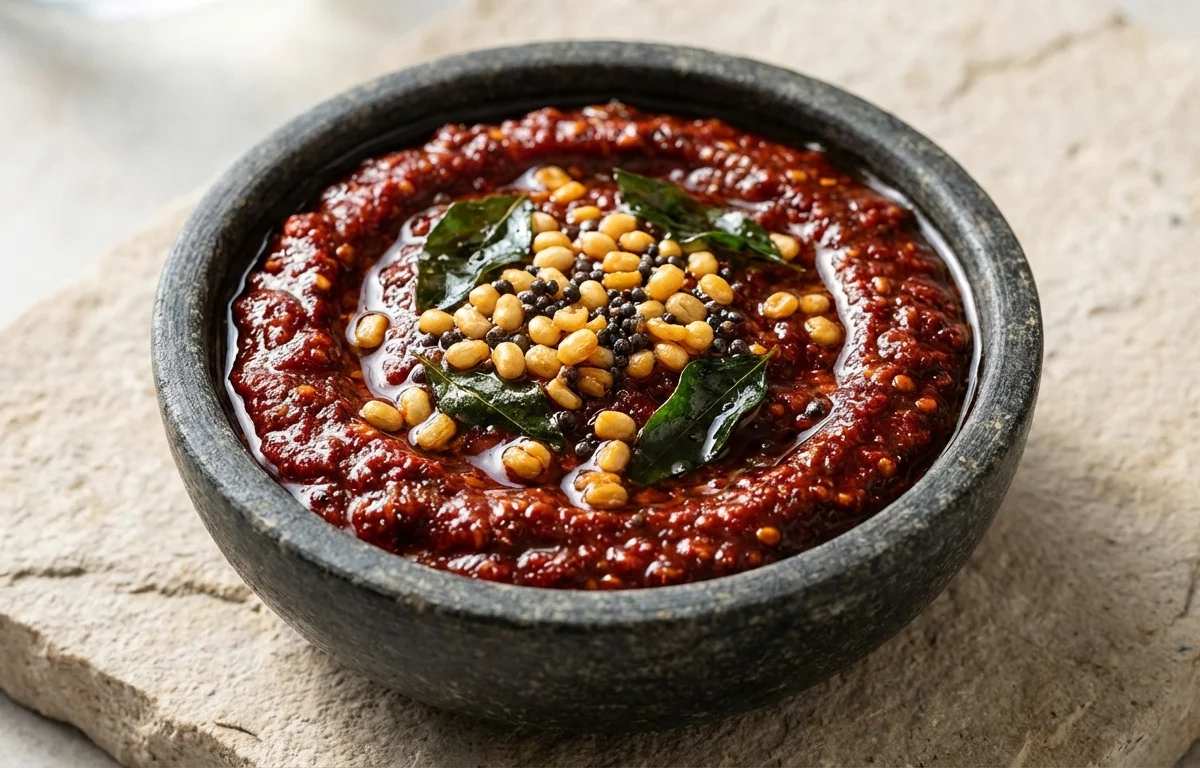
Red Chutney
A bold, spicy Indian chutney made with dried red chilies, garlic, and tamarind. It has a deep red color, bright tang, and just enough heat to liven up snacks, sandwiches, dosa, or vada.
For 8 servings
- prep · ~15 min
Soak the chilies and tamarind.
Place the dried red chilies and tamarind in a bowl. Pour over hot water and let them soak until softened.
- mix · ~3 min
Grind the chutney.
1.Drain the softened chilies and tamarind, reserving a little soaking water.2.Add the chilies, tamarind, garlic, jaggery, and salt to a grinder jar.3.Blend to a smooth or slightly coarse chutney, adding a little reserved water as needed.TIPKeep the chutney thick so it spreads well and does not taste watery. - serve
Transfer to a bowl and serve.
What to keep in mind.
6 tips from the recipe — small details that make a real difference to the final dish.
- 1Soak the dried chilies in hot water until fully pliable; hard skins leave the chutney gritty.
- 2Use the reserved soaking liquid a spoonful at a time so the chutney stays thick and spreadable.
- 3If your chilies are very hot, split them and shake out some seeds before soaking.
- 4Blend the garlic thoroughly with the softened chilies to avoid raw sharp chunks in the chutney.
- 5Let the chutney rest for 10 to 15 minutes before serving so the tamarind, garlic, and jaggery meld.
- 6Store in a clean airtight jar in the fridge and always use a dry spoon to keep it fresh longer.
Adapt it for your goals.
Smoky
Lightly toast the dried red chilies before soaking for a deeper, roasted flavor that pairs especially well with dosa and vada.
low garlicLow-garlic
Reduce the garlic for a milder chutney if you want the chili and tamarind notes to stand out more.
extra tangyExtra-tangy
Increase the tamarind slightly for a sharper chutney that cuts through fried snacks beautifully.
sandwich spreadSandwich-spread
Grind it extra smooth and slightly thicker so it spreads neatly inside sandwiches and rolls without making them soggy.
Why this is on our healthy list.
Garlic-Forward Goodness
Garlic adds strong savory flavor along with beneficial plant compounds, so a little chutney brings a lot of impact.
Tamarind Adds Brightness
Tamarind contributes a tangy depth that can make simple foods like idli, dosa, or sandwiches taste more satisfying.
Small-Amount Condiment
Because this chutney is intense and concentrated, a small serving can add bold flavor without needing much.
Frequently asked questions
Yes. Remove some of the chili seeds, use milder dried red chilies, or increase the jaggery slightly to soften the heat.