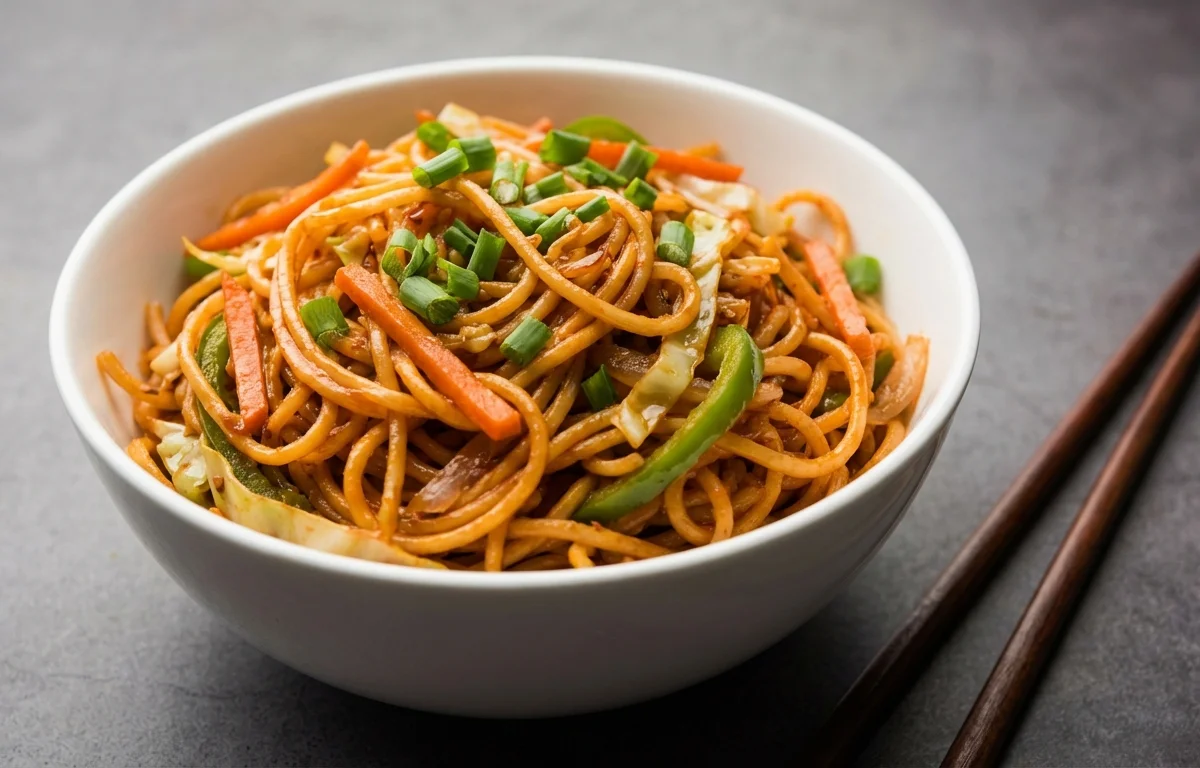
Schezwan Noodles
Fiery, tangy, and utterly addictive street-style noodles tossed with crunchy vegetables in a bold Schezwan sauce. This Indo-Chinese favorite hits all the right notes — spicy, garlicky, and just a little smoky — coming together in under 30 minutes for a quick weeknight dinner that tastes like your favorite food stall.
For 4 servings
- boil · ~8 min
Boil the noodles.
Bring 6 cups of water to a rolling boil in a large pot. Add salt and noodles. Cook until al dente — about 1 minute less than the package instructions. Drain immediately in a colander and rinse with cold water to stop the cooking. Toss with a few drops of oil to prevent sticking and set aside.
- saute · ~4 min
Sauté the aromatics.
1.Heat 1.5 tbsp oil in a wok over high heat until shimmering.2.Add chopped garlic, ginger, and slit green chilies. Stir-fry for 30 seconds until fragrant.3.Add sliced onion and cook until translucent with a slight char (2-3 min).TIPKeep the heat high and keep the ingredients moving — this is what gives Indo-Chinese cooking its signature smoky wok flavor. - saute · ~3 min
Stir-fry the vegetables.
1.Add sliced bell pepper and julienned carrot to the wok. Toss on high heat for 2 minutes.2.Add shredded cabbage and stir-fry for another 1 minute. Vegetables should stay crunchy, not turn soft. - mix · ~2 min
Add the sauces and seasonings.
1.Reduce heat to medium. Add schezwan sauce, soy sauce, and vinegar to the wok.2.Sprinkle red chili powder, black pepper, and a pinch of salt. Toss everything to coat the vegetables evenly.3.Let the sauce bubble and reduce slightly for 30 seconds. - mix · ~2 min
Toss the noodles with the sauce and vegetables.
1.Add the boiled noodles to the wok. Increase heat to high.2.Using tongs or two spatulas, lift and toss the noodles vigorously until every strand is coated in the sauce and well combined with the vegetables.3.Drizzle the remaining 0.5 tbsp oil around the edges of the wok for extra sheen. Toss once more. - garnish
Garnish with spring onion greens and serve hot.
Transfer to serving plates immediately. Sprinkle generously with chopped spring onion greens.
What to keep in mind.
7 tips from the recipe — small details that make a real difference to the final dish.
- 1Rinse the boiled noodles under cold water immediately after draining to stop carry-over cooking and keep them springy.
- 2Use a wok on the highest heat possible; the intense heat creates the signature 'wok hei' smoky flavor.
- 3Prep all vegetables and sauces before you start cooking — stir-frying moves fast and leaves no time for chopping mid-step.
- 4Don't oversoften the vegetables; they should stay crisp-tender for the best texture contrast against the noodles.
- 5Add the final drizzle of oil around the edges of the wok right before serving to give the noodles a glossy restaurant-style sheen.
- 6Make ahead: Prep boiled noodles and store in the fridge for up to 2 days; stir-fry fresh vegetables and sauce when ready.
- 7If the noodles clump after cooling, loosen them under hot running water for a few seconds before adding to the wok.
Adapt it for your goals.
High-Protein
Add 100 g of cubed paneer or sautéed tofu along with the vegetables, and toss in 1 tbsp of chili garlic sauce for a protein-packed vegetarian version that keeps the fiery Indo-Chinese flavor.
Low OilLow-Oil
Reduce oil to 1 tbsp total and boil noodles with a bit more water; use a non-stick pan and spray oil for stir-frying — ideal for those watching their oil intake but still craving the spice.
Seafood Schezwan NoodlesSeafood Schezwan Noodles
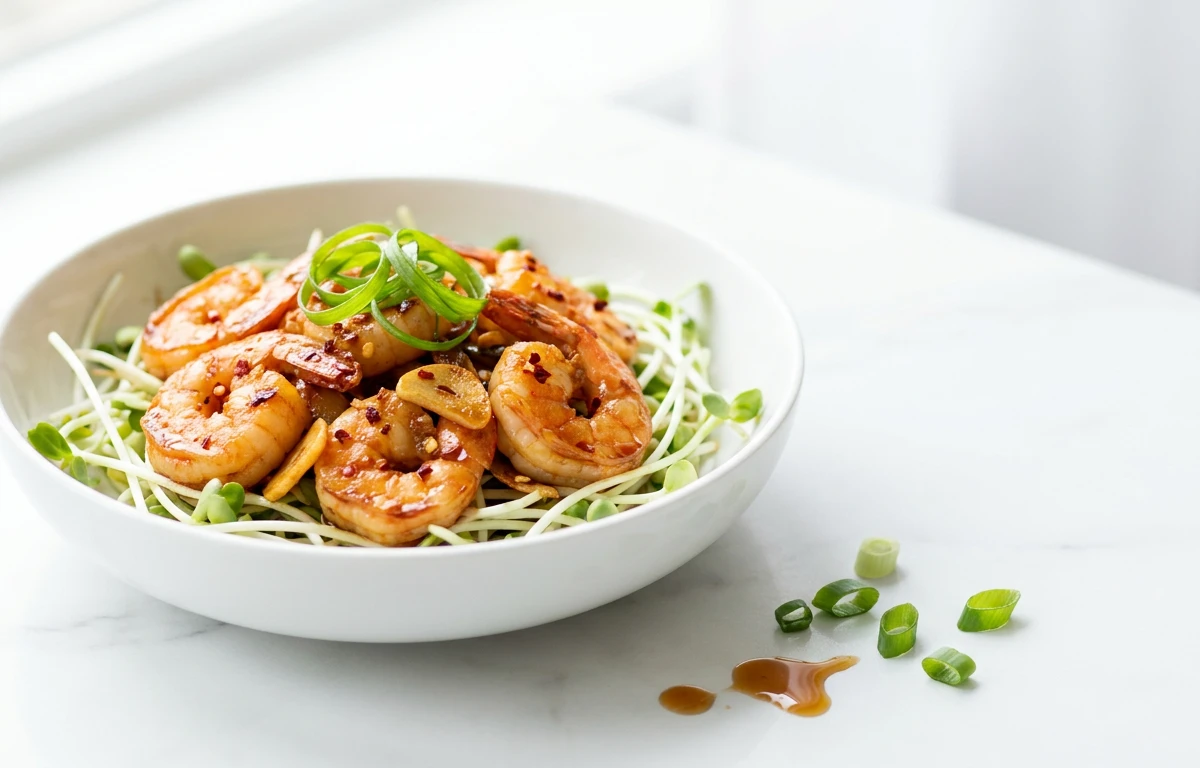
Toss in 150 g of cooked shrimp or squid rings after the vegetables, and add a splash of fish sauce with the soy sauce for a briny umami twist on the classic.
Why this is on our healthy list.
Rich in Crunchy Vegetables
Packed with bell pepper, carrot, and cabbage, this dish provides a good dose of dietary fiber, vitamin C, and beta-carotene naturally.
Low in Saturated Fat
Made with only vegetable oil and no dairy or heavy creams, this stir-fry is naturally low in saturated fat and cholesterol-free.
Ginger and Garlic Boost
Fresh ginger and garlic add anti-inflammatory compounds and a metabolism-warming effect, commonly used in Asian cooking for their digestive benefits.
Supports Hydration
The water-rich vegetables (cabbage, bell pepper) contribute to fluid balance while adding satisfying crunch without extra calories.
Frequently asked questions
Yes, you can substitute with spaghetti, udon, or any long wheat noodle; just cook them al dente and rinse with cold water to prevent stickiness.