Senai Kizhangu Varuval
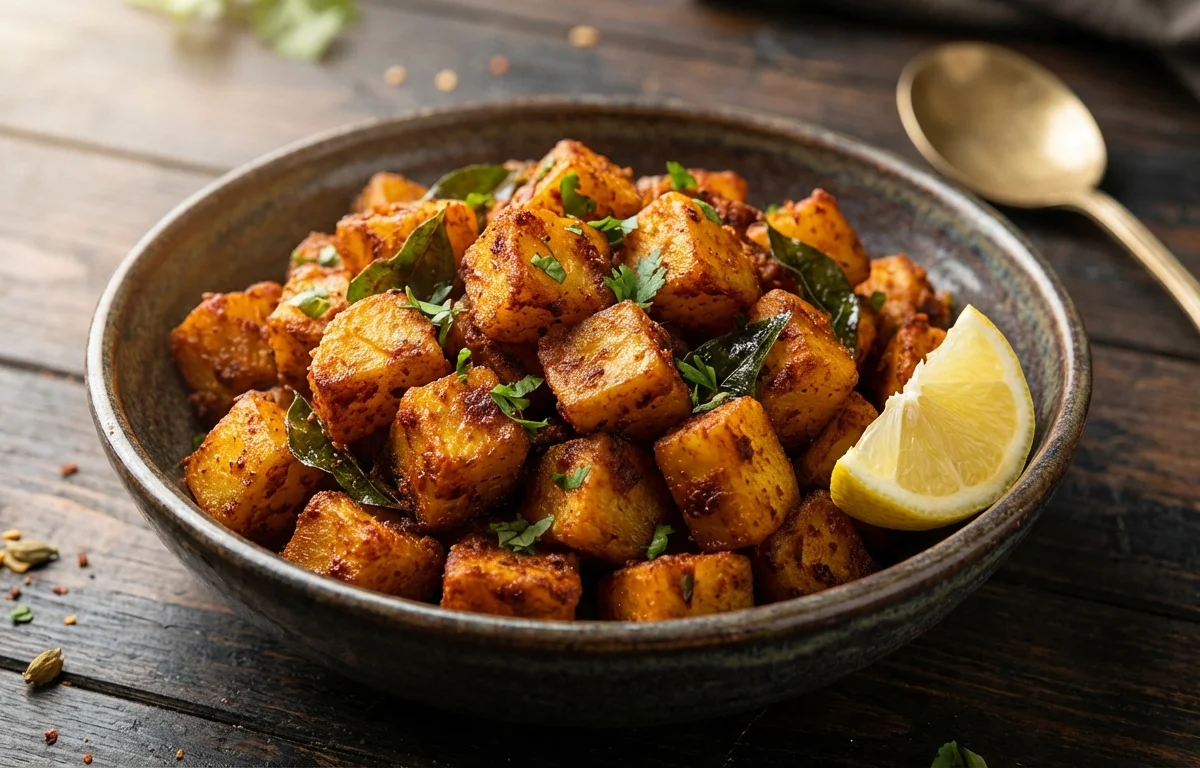
A homestyle Tamil stir-fry made with elephant foot yam, gentle spices, and a crisp finish around the edges. It is earthy, lightly spicy, and pairs especially well with rasam rice, curd rice, or simple sambar.
For 4 servings
- prep · ~5 min
Peel and cut the yam.
Peel the elephant foot yam and cut it into small, even cubes so they cook evenly and crisp well later.
TIPRub a little oil on your knife and hands if the yam feels itchy to handle. - boil · ~12 min
Boil the yam until just tender.
1.Add water to a pot and bring it to a boil.2.Add the yam, turmeric powder, tamarind paste, and salt.3.Cook until the cubes are just tender but still hold their shape, about 8 to 10 minutes.4.Drain the water well and let the yam sit for 2 minutes to dry slightly.TIPDo not overcook the yam or it will break while frying. - temper · ~2 min
Make the tempering.
1.Heat oil in a wide pan over medium heat.2.Add mustard seeds and let them splutter.3.Add urad dal and cook until lightly golden.4.Add curry leaves and asafoetida and cook for a few seconds.TIPUse a wide pan so the yam pieces get more direct contact with the heat. - saute · ~3 min
Add the spices and coat the yam.
Lower the heat and add red chili powder and coriander powder. Stir quickly, then add the boiled yam and the final pinch of salt. Toss gently until the pieces are well coated.
TIPAdd the spice powders on low heat so they do not burn and turn bitter. - fry · ~10 min
Cook until the edges turn crisp.
Cook the yam on medium heat, turning every couple of minutes, until the edges are browned and crisp and the masala clings well to the pieces.
- serve
Serve hot.
Serve the Senai Kizhangu Varuval hot as a side with rice, sambar, rasam, or curd rice.
What to keep in mind.
7 tips from the recipe — small details that make a real difference to the final dish.
- 1Parboil only until a knife goes in with slight resistance; fully soft yam will crumble in the pan.
- 2After draining, let the yam steam off for a couple of minutes so the surface dries and crisps faster.
- 3Use a wide, heavy pan and avoid overcrowding, or the yam will steam instead of getting browned edges.
- 4Toss gently with a flat spatula so the cubes keep their shape while the masala coats evenly.
- 5Add the chili and coriander powders on low heat and immediately follow with yam to prevent scorched spices.
- 6If your yam feels itchy to handle, oil your hands and knife before peeling and cutting.
- 7Leftovers re-crisp best in a skillet, not the microwave, which softens the edges.
Adapt it for your goals.
Pepper-garlic
Swap part of the chili powder for crushed black pepper and add lightly crushed garlic to the tempering for a sharper, more robust varuval.
low oilLow-oil
Use less oil and finish in an air fryer or hot oven after tossing with the tempering for a lighter version with crisp edges.
milderMilder
Reduce the chili powder and increase coriander powder slightly for a gentler side dish that pairs well with curd rice.
coconut finishedCoconut-finished
Add a spoonful of fresh grated coconut at the end for a softer, slightly sweet Kerala-style touch.
Why this is on our healthy list.
Fiber-Rich Root Vegetable
Elephant foot yam adds fiber and bulk, making this simple stir-fry more filling than many side dishes.
Digestive Spice Support
Asafoetida, curry leaves, turmeric, and coriander are traditional seasonings often used to make hearty vegetable dishes easier to enjoy.
Plant-Based Side Dish
This varuval is built from yam, spices, and a small tempering, making it a naturally vegetarian accompaniment to rice meals.
Frequently asked questions
Tamarind helps reduce the yam's raw itchiness and earthy smell while adding a slight tang that balances the final fry.