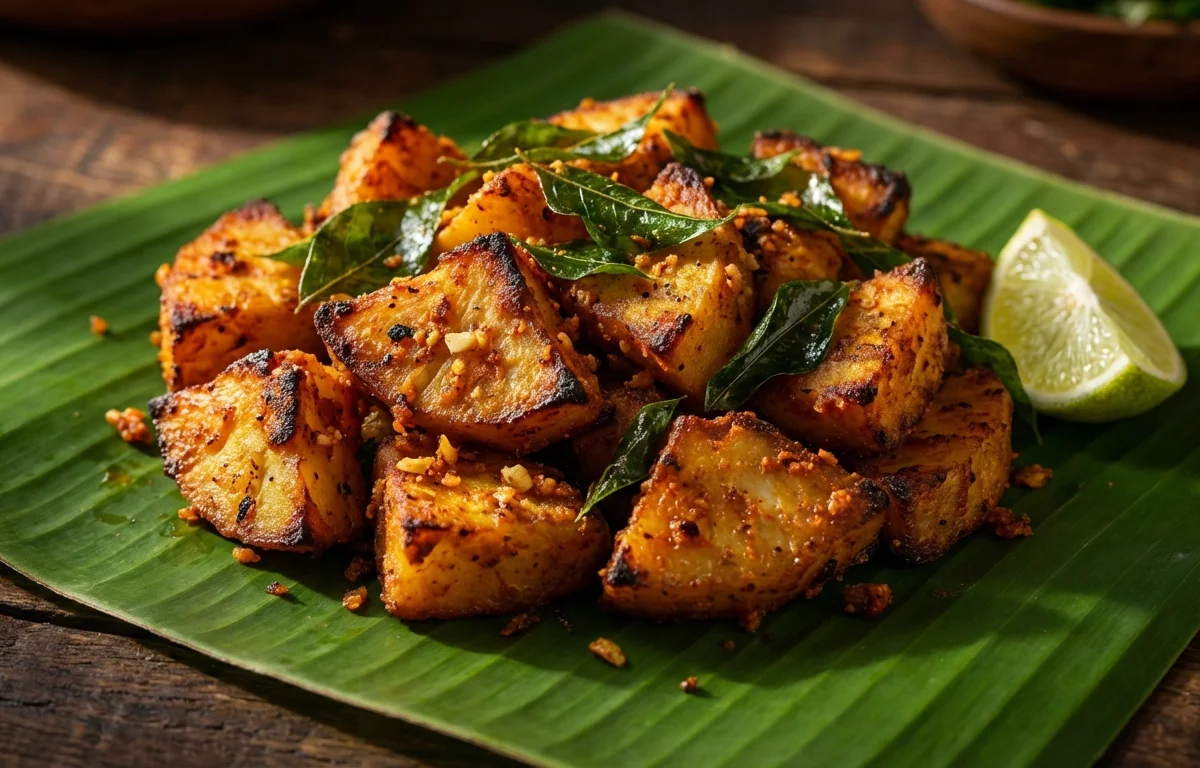
Senaikizhangu Varuval
Crisp-edged elephant foot yam cubes tossed with simple South Indian spices and roasted until beautifully browned. This homestyle varuval is earthy, lightly spicy, and perfect alongside rice, sambar, or rasam.
For 4 servings
- prep · ~10 min
Prep the yam and tamarind.
1.Peel the elephant foot yam and cut it into medium, even cubes.2.Soak the tamarind in a little warm water and squeeze out the extract.3.Keep the yam pieces and tamarind extract ready near the stove. - boil · ~12 min
Boil the yam until just tender.
Add the yam, water, tamarind extract, and salt for boiling to a pot. Bring to a boil and cook until the cubes are just tender but still hold their shape, then drain well.
TIPDo not overcook the yam or it will break while roasting in the pan. - temper · ~2 min
Make the tempering.
1.Heat oil in a wide pan over medium heat.2.Add mustard seeds and let them splutter.3.Add urad dal and cook until lightly golden.4.Add curry leaves and asafoetida and stir for a few seconds.TIPUse a wide pan so the yam cooks in a single layer and browns better. - saute · ~3 min
Season the yam.
Add the drained yam to the pan along with turmeric powder, red chili powder, coriander powder, and the remaining salt. Toss gently so the cubes stay intact and get coated evenly.
- fry · ~15 min
Roast until crisp and browned.
1.Spread the yam in the pan and cook on medium heat without stirring too often.2.Turn the pieces every few minutes so all sides brown evenly.3.Cook until the edges look crisp and the spice coating turns deep golden.TIPLet the pieces sit undisturbed between turns for better crust and color. - serve
Serve the senaikizhangu varuval hot.
What to keep in mind.
7 tips from the recipe — small details that make a real difference to the final dish.
- 1Boil the yam with tamarind until just tender; if it turns soft, the cubes will crumble in the pan.
- 2Drain the yam thoroughly and let it steam-dry for a few minutes before roasting for better browning.
- 3Use a wide, heavy pan so the cubes sit in a single layer and develop crisp edges instead of steaming.
- 4Add the spice powders only after the tempering is ready, so they coat the yam evenly without scorching in oil.
- 5Turn the cubes gently with a flat spatula every few minutes to keep the pieces intact while browning all sides.
- 6If making ahead, parboil the yam first and roast just before serving to keep the varuval crisp.
- 7Leftovers reheat best in a skillet, not the microwave, which softens the crust.
Adapt it for your goals.
Extra-spicy
Increase the red chili powder slightly or add a few dried red chilies to the tempering for a hotter varuval that pairs well with curd rice.
low oilLow-oil
Use less oil and finish the yam in a hot oven or air fryer after tempering for a lighter version with crisp edges.
garlicGarlic
Add a few crushed garlic cloves after the mustard splutters for a more robust, homestyle flavor.
coconut finishCoconut-finish
Toss in a little fresh grated coconut at the end for a softer, slightly sweet contrast to the roasted spices.
Why this is on our healthy list.
Fiber-Rich Root Vegetable
Elephant foot yam is a hearty tuber that adds filling fiber, making this side dish satisfying alongside rice and kuzhambu.
Digestive Spice Support
Asafoetida, curry leaves, and tamarind are traditional additions that bring flavor while helping balance the heaviness of yam.
Moderate Oil Cooking
This varuval gets its texture from pan-roasting rather than deep-frying, giving you crisp edges with relatively less oil.
Frequently asked questions
Tamarind helps reduce the itchiness that elephant foot yam can sometimes cause and also gives the cubes a subtle tang.