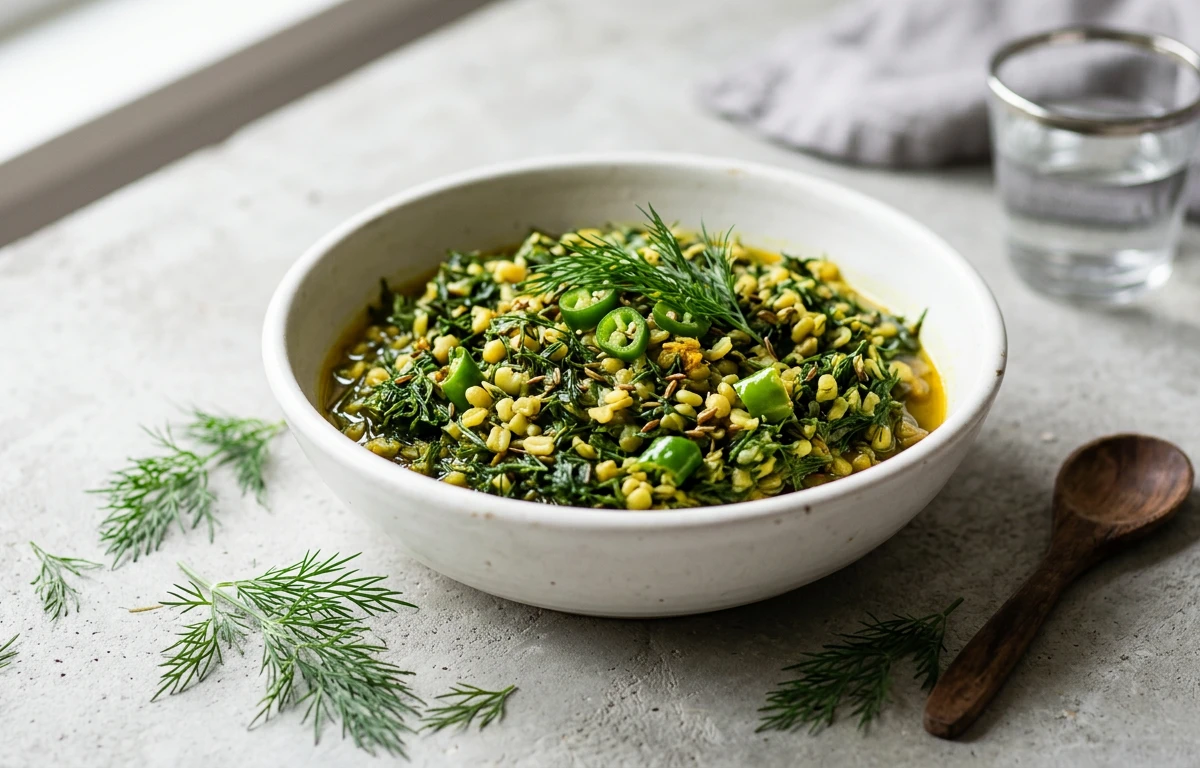
Shepu chi Bhaji
A simple, earthy Maharashtrian stir-fry made with fresh dill leaves, lentils, and a gentle tempering of mustard seeds and garlic. Soft, fragrant, and mildly spiced, this no-onion-no-garlic-optional dish is a comforting weekday staple that pairs beautifully with bhakri or chapatis and a squeeze of lemon.
For 4 servings
- prep
Soak and pressure cook the chana dal.
1.Soak chana dal in water for 30 minutes. Drain.2.Add soaked dal to a pressure cooker with 0.5 cup fresh water.3.Cook on medium heat for 3-4 whistles until soft but not mushy.4.Let the pressure release naturally. Set aside.TIPThe dal should hold its shape — test one grain between your fingers before draining. - prep
Prep the dill leaves.
1.Pick through the dill, discarding any thick hard stems and yellow leaves.2.Wash the leaves thoroughly in running water to remove any grit.3.Shake off excess water and finely chop the leaves and tender stems. - temper · ~3 min
Make the tempering.
1.Heat oil in a kadai over medium heat until warm.2.Add mustard seeds and let them pop completely.3.Add cumin seeds and let them sizzle for a few seconds.4.Add chopped garlic and slit green chilies. Saute until garlic is light golden.TIPDon't burn the garlic — keep the heat medium and stir continuously. - saute · ~10 min
Add turmeric and dill leaves.
1.Sprinkle in turmeric powder and stir for a few seconds.2.Add all the chopped dill leaves at once — don't worry if it looks like a mountain.3.Stir well and sauté for 8-10 minutes until the leaves wilt down dramatically.TIPDill releases its own moisture — resist adding water. The volume reduces by more than half. - mix · ~4 min
Combine dal and season.
1.Add the cooked chana dal to the wilted dill.2.Add salt and crushed peanuts.3.Stir to combine everything well. Cook for another 3-4 minutes.TIPCoarsely crush the peanuts with a mortar-pestle or pulse in a blender — powder is too fine, whole is too chunky. - garnish
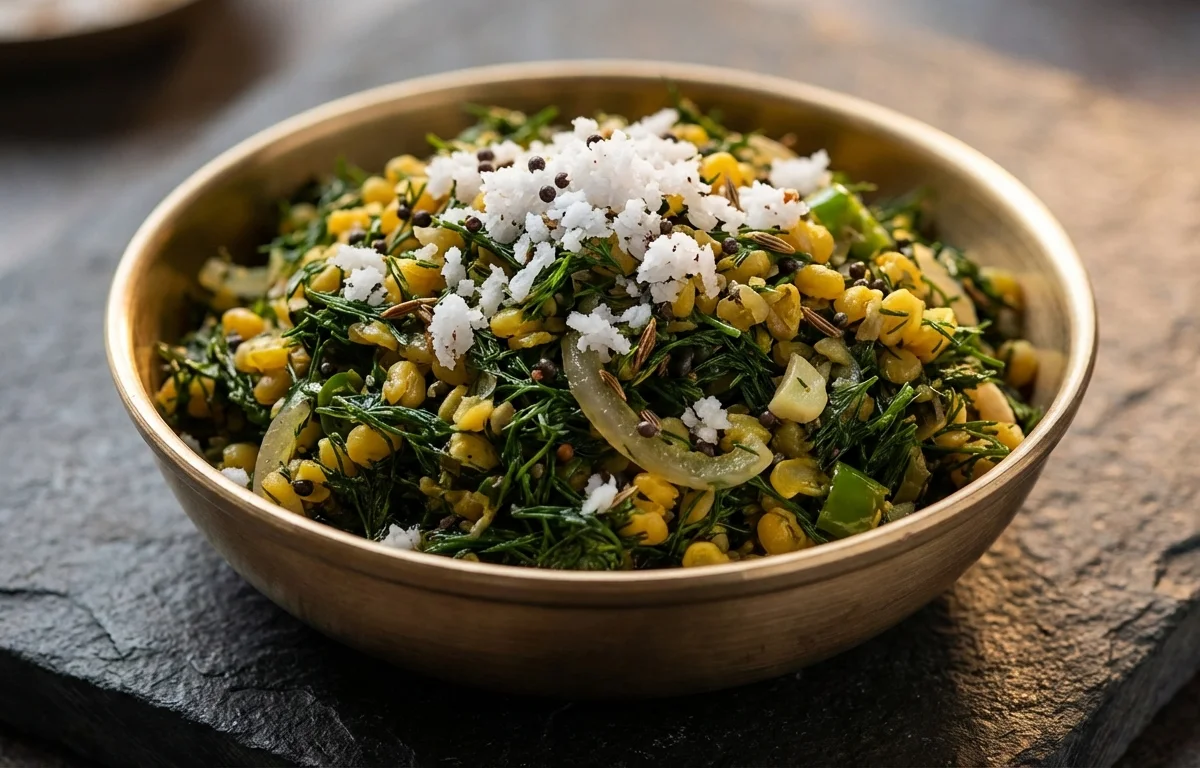
Finish with lemon and coconut.
1.Turn off the heat.2.Stir in fresh lemon juice.3.Transfer to a serving bowl and sprinkle grated coconut on top.TIPFresh coconut lifts the dish — don't skip it unless you absolutely have to. - serve
Serve hot with bhakri or chapatis.
Shepu chi bhaji is best eaten immediately while warm. Spoon onto the plate alongside jowar bhakri or soft chapatis. A wedge of lemon on the side never hurts.
What to keep in mind.
7 tips from the recipe — small details that make a real difference to the final dish.
- 1When washing dill, agitate the leaves in a large bowl of water to dislodge any hidden grit, then lift them out.
- 2Soak the chana dal for exactly 30 minutes — under-soaking leaves it hard, over-soaking turns it to mush.
- 3Cook the dal until just tender but still intact; it will finish softening when mixed with the hot bhaji.
- 4Let the mustard seeds pop fully before adding the garlic — this unlocks their nutty, pungent aroma.
- 5Sauté the dill leaves on medium heat without a lid so excess moisture evaporates and the bhaji stays dry.
- 6Crush the roasted peanuts coarsely with a mortar and pestle for the best crunchy texture contrast.
- 7This bhaji keeps well in the fridge for 2 days; warm it in a pan, not a microwave, to preserve texture.
Adapt it for your goals.
No-garlic (jain/varakari variant)
Omit the garlic and use a pinch of asafoetida (hing) in the tempering instead. This is the traditional way this dish is made during fasting days or in certain Maharashtrian communities.
higher proteinHigher-protein
Double the chana dal or replace half with cooked moong dal for a lighter, higher-protein version that still keeps the earthy character.
low oilLow-oil
Use just 1 teaspoon of oil and dry-toast the mustard seeds and cumin before adding a splash of water to wilt the dill. The crushed peanuts still add healthy fats and crunch.
Why this is on our healthy list.
Rich in Plant Protein
Chana dal (split chickpeas) provides substantial plant-based protein and fiber, making this bhaji a satisfying and energy-sustaining side dish.
Packed with Antioxidants
Fresh dill leaves contain flavonoids and monoterpenes that act as antioxidants, while turmeric and garlic offer additional anti-inflammatory compounds.
Supports Digestive Health
The combination of fiber from dill and chana dal, along with carminative spices like cumin and mustard seeds, gently aids digestion.
Low in Unhealthy Fats
With just 2 teaspoons of oil and healthy fats from peanuts and coconut, this dish is moderate in total fat and free of saturated oils.
Frequently asked questions
No, this recipe relies on fresh dill's abundant moisture and delicate flavor. Dried dill will not soften properly and will taste much more intense and hay-like.



.webp)