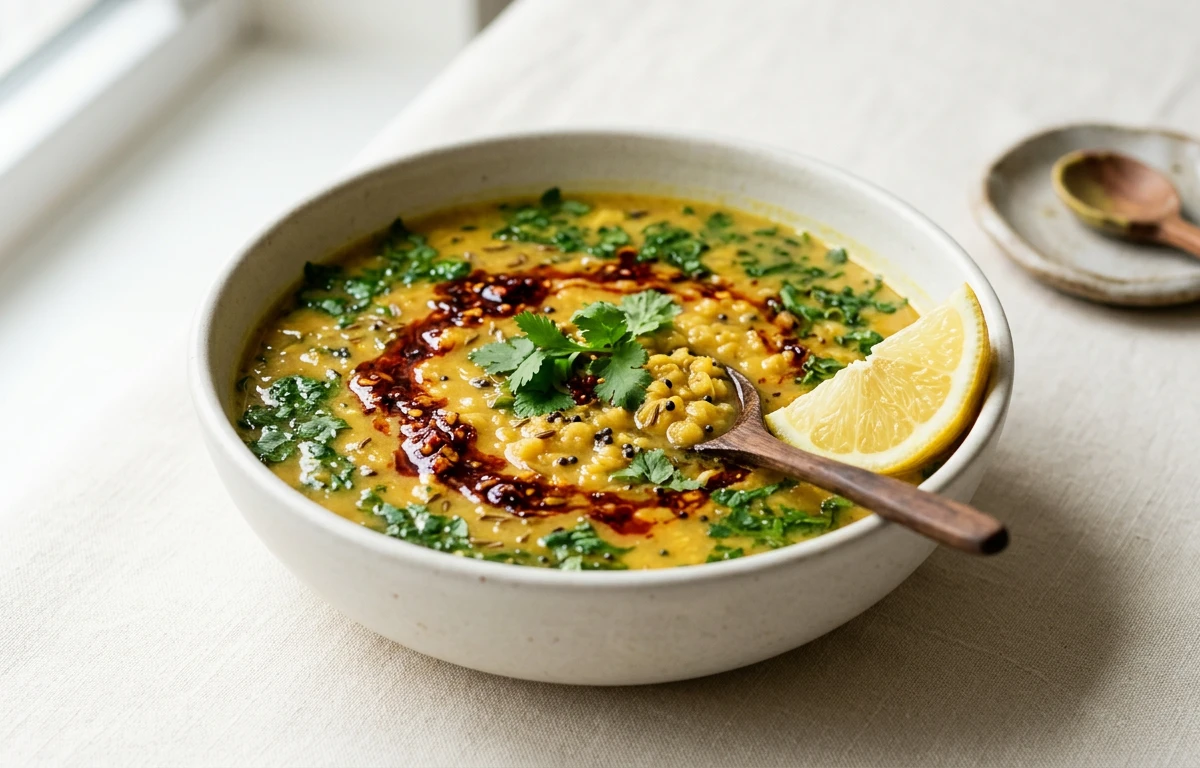
Singhi Tamate Mein
A simple hill-style fish curry where singhi fish is lightly seared and finished in a tangy tomato gravy. The flavors stay clean and homely, with ginger, garlic, and warm spices giving the fish a gentle lift without overpowering it.
For 4 servings
- prep · ~10 min
Clean and season the fish.
Wash the singhi fish pieces well and pat them dry. Rub with half the turmeric powder and a small pinch of the salt, then set aside for 10 minutes.
TIPDry fish sears better and breaks less in the pan. - fry · ~4 min
Lightly sear the fish.
1.Heat mustard oil in a pan until it reaches a light smoking point, then lower the heat.2.Place the fish pieces in a single layer.3.Sear both sides lightly until just firm and lightly colored, 2 to 3 minutes total.4.Lift the fish out carefully and keep aside.TIPDo not cook the fish through at this stage; it will finish in the gravy. - saute · ~7 min
Cook the onion base.
1.In the same pan, add cumin seeds and let them crackle for a few seconds.2.Add onion and cook over medium heat until soft and light golden, 5 to 6 minutes.3.Add ginger, garlic, and green chili.4.Cook for 1 minute until the raw smell fades. - saute · ~8 min
Cook the tomatoes and spices.
1.Add tomato and mix well.2.Add the remaining turmeric powder, red chili powder, coriander powder, and the rest of the salt.3.Cook until the tomatoes soften fully and the masala turns thick, 6 to 8 minutes.4.Mash the tomatoes lightly with the spoon as they cook.TIPCook the tomatoes down well so the gravy tastes rounded instead of raw and sharp. - simmer · ~8 min
Simmer the fish in the tomato gravy.
Pour in the water and bring the gravy to a gentle simmer. Slide in the seared fish pieces, cover loosely, and cook for 6 to 8 minutes until the fish is tender and the gravy is lightly thickened.
TIPShake the pan gently instead of stirring hard so the fish pieces stay whole. - garnish
Finish with coriander leaves.
- serve
Serve hot with steamed rice.
What to keep in mind.
7 tips from the recipe — small details that make a real difference to the final dish.
- 1Pat the singhi very dry before seasoning so it sears cleanly and does not stick in mustard oil.
- 2Heat the mustard oil to a light smoke first, then reduce the flame to remove its raw pungency.
- 3Only give the fish a light sear; over-frying now will make it tough once simmered in the gravy.
- 4Cook the tomato-onion masala until it looks thick and jammy, or the curry will taste raw and watery.
- 5Slide the fish into a gently simmering gravy, not a rolling boil, to keep the pieces intact.
- 6Shake the pan or spoon gravy over the fish instead of stirring, since singhi can break after softening.
- 7This curry tastes even better after a short rest of 10 to 15 minutes, when the fish absorbs the tangy gravy.
Adapt it for your goals.
Low-oil
Use just enough mustard oil to sear the fish lightly and sauté the masala; good if you want a lighter everyday curry.
spicierSpicier
Add an extra green chili or a little more red chili powder for a sharper heat that suits rice well.
no onionNo-onion
Skip the onion and cook the tomatoes longer with ginger, garlic, and cumin for a lighter, more tang-forward gravy.
other fishOther-fish
Make the same curry with rohu or catfish if singhi is unavailable, adjusting simmer time based on the fish thickness.
Why this is on our healthy list.
Good Source of Protein
The singhi fish provides satisfying protein, making this curry filling while still feeling light with rice.
Tomato-Rich Curry Base
Tomatoes add natural acidity and plant compounds, while keeping the gravy fresh and not overly heavy.
Digestive Spice Support
Ginger, garlic, cumin, and coriander bring flavor along with traditional aromatic ingredients often used in light home-style curries.
Frequently asked questions
You can, but the fish is more likely to break in the gravy. A brief sear helps the pieces stay firm and whole.