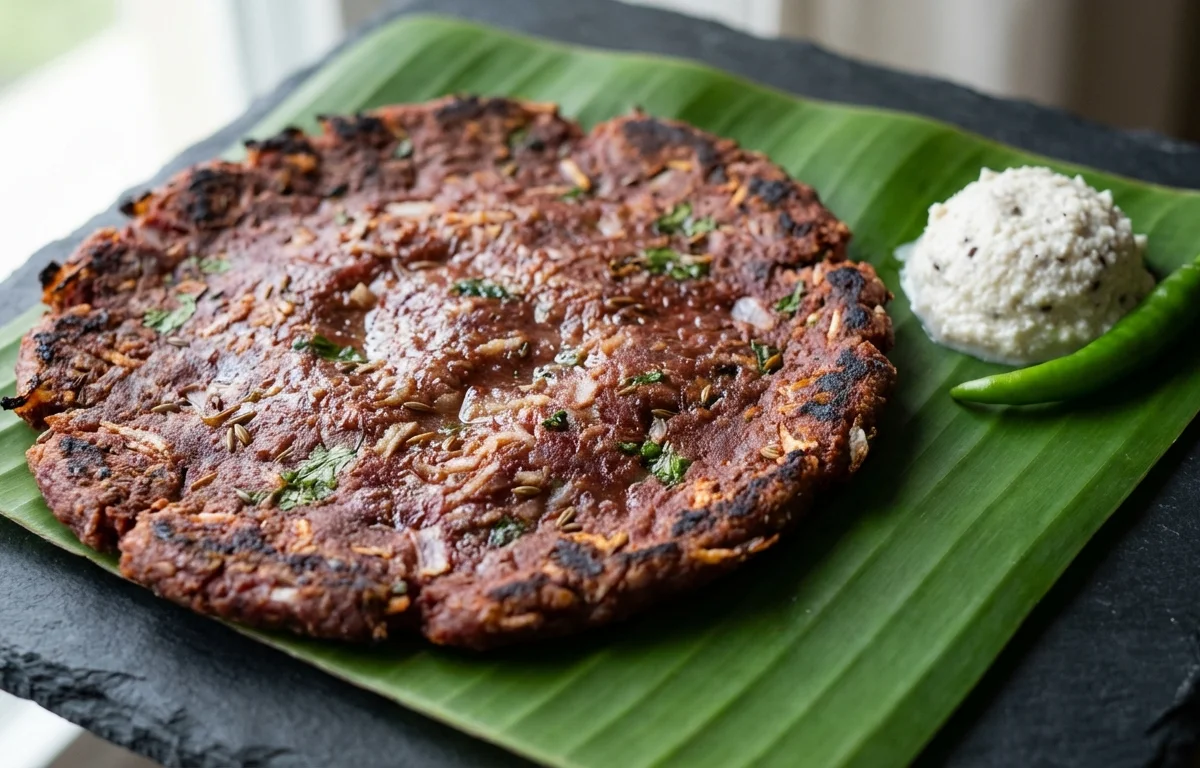
Teek Rotti
Crispy, golden rice flour flatbreads studded with green chili, onion, and fresh curry leaves. A beloved Mangalorean breakfast staple that pairs perfectly with coconut chutney or a hot cup of filter coffee.
For 4 servings
- prep
Prepare the banana leaves and mix-ins.
1.Wash and pat dry the banana leaves. Cut into 8-inch squares (about 8 pieces).2.Finely chop the onion, green chilies, and curry leaves. Grate the coconut if using fresh. - mix · ~10 min
Make the dough.
1.In a large bowl, combine rice flour, chopped onion, green chili, curry leaves, grated coconut, cumin seeds, and salt. Mix well with your fingertips.2.Bring 2.5 cups of water to a rolling boil. Pour the boiling water a little at a time into the flour mixture, stirring with a wooden spoon.3.Once cool enough to handle, knead with your hands into a soft, smooth dough. The dough should be pliable and not crumbly.TIPThe water must be boiling hot to cook the rice flour slightly, making the dough easier to handle. - prep · ~8 min
Shape the rottis.
1.Divide the dough into 8 equal lemon-sized balls.2.Place one dough ball on a greased banana leaf square. Using your fingertips and palm, gently press and pat the ball outward into a thin, round disc about 5-6 inches wide.3.Use a few drops of coconut oil on your fingers to prevent sticking as you pat.TIPKeep the thickness even; thinner rottis turn crispier. Dip your fingertips in oil frequently so the dough doesn't stick. - fry · ~10 min
Cook the rotti on a hot tawa.
1.Heat a tawa or flat griddle over medium heat until hot.2.Gently lift the banana leaf and flip the rotti onto the tawa. Peel off the banana leaf carefully.3.Drizzle a few drops of coconut oil around the edges and in the center. Cook until the underside is golden and crisp (1.5 to 2 minutes).4.Flip and cook the other side until golden spots appear and the rotti is cooked through.TIPMedium heat is key — too hot and the rotti burns without cooking inside; too low and it turns hard instead of crispy. - serve
Serve hot.
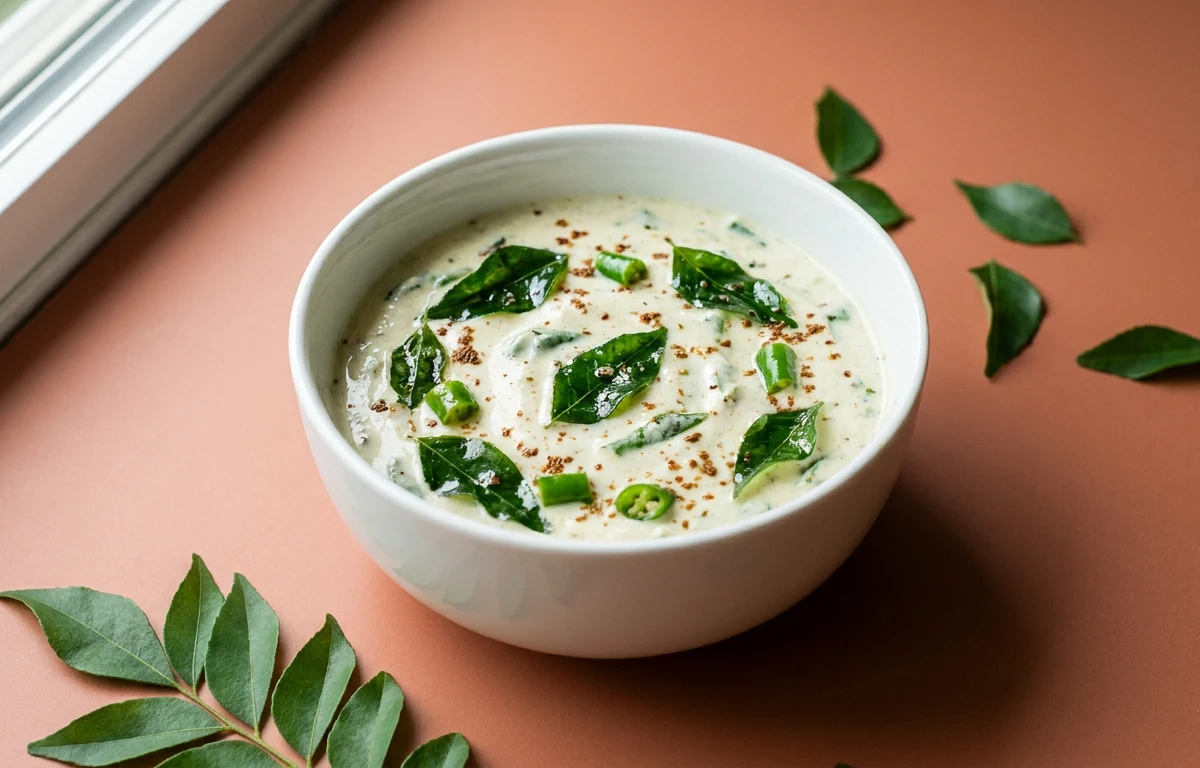
Transfer the cooked rotti to a plate. Serve immediately with coconut chutney, sambar, or a simple tomato-garlic chutney. Best eaten fresh off the tawa.
What to keep in mind.
6 tips from the recipe — small details that make a real difference to the final dish.
- 1Use freshly grated coconut for the best texture and authentic Mangalorean flavor.
- 2Knead the dough while it’s still warm from the boiling water to ensure a smooth, non-crumbly consistency.
- 3Dip your fingertips in coconut oil frequently while patting the dough on the banana leaf to prevent sticking.
- 4Cook on medium heat to achieve a crisp exterior without burning the rotti before the center is done.
- 5Serve immediately off the tawa, as Teek Rotti loses its crunch quickly once it cools.
- 6Leftover rotti can be refrigerated and re-crisped on a dry tawa for a few seconds per side.
Adapt it for your goals.
Low-oil
Skip the coconut oil drizzle during cooking and pat the dough on oiled parchment paper instead of banana leaves to reduce fat while keeping the rotti crisp.
spicySpicy
Double the green chilies or add 1 teaspoon of red chili flakes to the dough for those who crave intense heat in every bite.
herb infusedHerb-infused
Mix in 2 tablespoons of finely chopped fresh coriander leaves with the dough for a herbaceous twist that complements the coconut and curry leaves.
veganVegan
This recipe is already vegan, but ensure the coconut oil is unrefined for authentic flavor and to maintain the vegan status without any dairy substitutes.
Why this is on our healthy list.
Gluten-Free Grain Base
Made entirely from rice flour, this flatbread is naturally free of gluten, making it suitable for those with celiac disease or gluten sensitivity.
Rich in Aromatic Antioxidants
Curry leaves and cumin seeds provide antioxidants and anti-inflammatory compounds, supporting digestion and providing a subtle herbal boost.
Healthy Fats from Coconut
Fresh coconut and coconut oil contribute medium-chain triglycerides (MCTs), which are easily metabolized for quick energy and support heart health in moderate amounts.
Low in Added Sugars
Unlike many breakfast flatbreads, Teek Rotti contains no added sugar, relying solely on the natural sweetness of onion and coconut for balanced flavor.
Frequently asked questions
Yes, place the dough ball on a greased sheet of parchment paper or a clean plastic sheet, then gently pat it into a disc and flip onto the hot tawa.