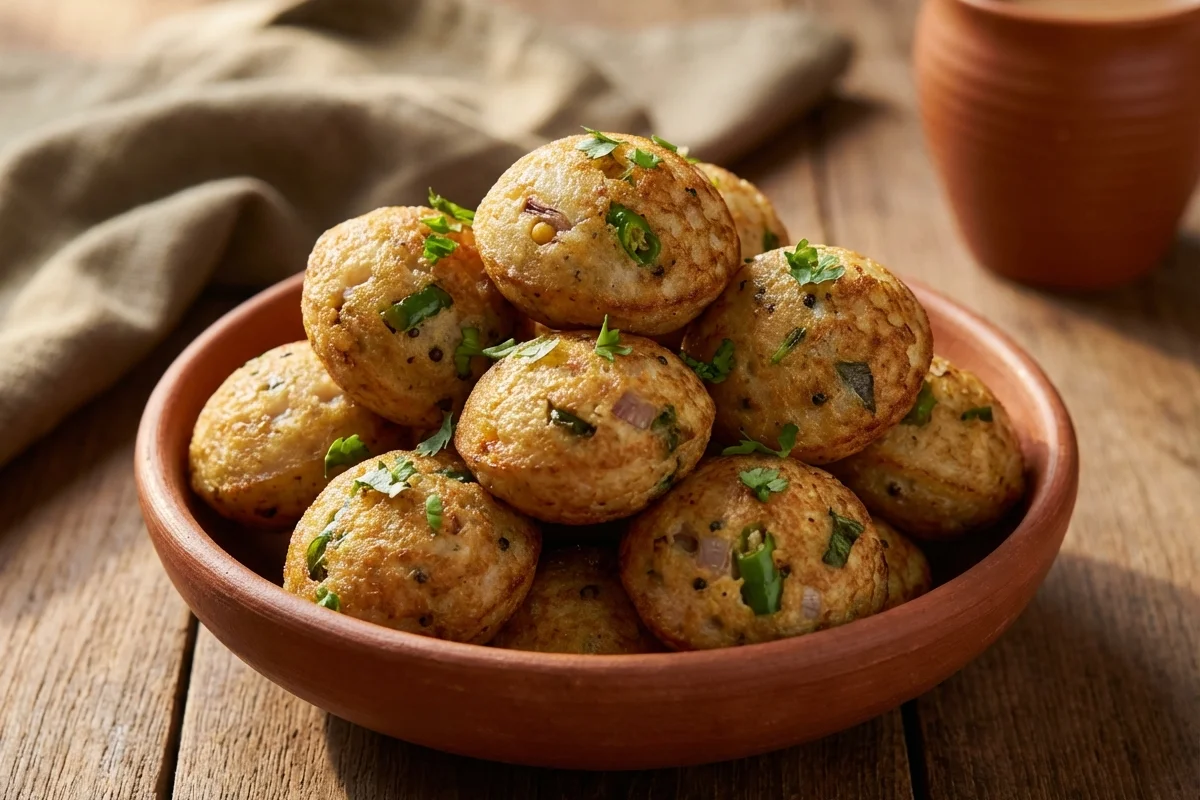
Thinai Paniyaram
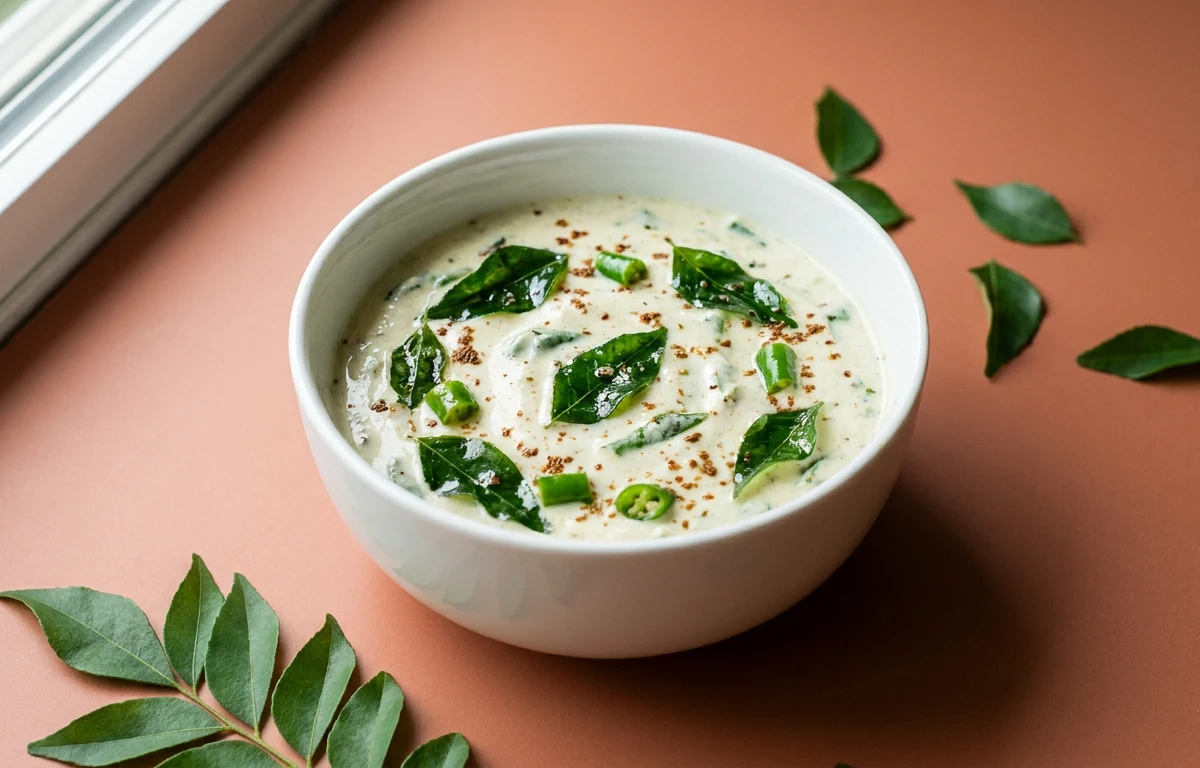
These golden little paniyarams are made with thinai, giving them a gentle nutty taste and soft center with crisp edges. They make a lovely South Indian breakfast or tiffin snack with coconut chutney on the side.
For 16 servings
- prep · ~240 min
Soak the millet, rice, dal, and fenugreek.
1.Wash thinai and idli rice well until the water runs mostly clear.2.Soak thinai and idli rice together in enough water for 4 hours.3.Wash urad dal and soak it with fenugreek seeds in enough water for 4 hours.TIPSoaking well helps the batter grind smooth and ferment evenly. - mix · ~20 min
Grind the batter.
1.Drain the soaked urad dal and fenugreek seeds.2.Grind them with a little water to a light, fluffy batter.3.Drain the soaked thinai and idli rice.4.Grind them with a little water to a slightly grainy smooth batter.5.Mix both batters together in a deep bowl and add salt. - rest · ~480 min
Ferment the batter.
Cover the bowl and let the batter ferment in a warm place for 8 hours, or until it looks slightly risen and airy.
TIPLeave enough space in the bowl because the batter expands as it ferments. - temper · ~4 min
Make the tempering.
1.Heat 1 tsp oil in a small pan over medium heat.2.Add mustard seeds and let them splutter.3.Add onion, green chili, ginger, and curry leaves.4.Cook for 2 to 3 minutes until the onion softens. - mix · ~1 min
Mix the batter for paniyaram.
Add the tempered onion mixture to the fermented batter and mix gently until evenly combined.
- fry · ~10 min
Cook the paniyarams.
1.Heat a paniyaram pan on medium heat and add a few drops of oil in each cavity.2.Pour batter into each cavity until three-fourths full.3.Cover and cook until the bottoms turn golden and the tops begin to set, 2 to 3 minutes.4.Flip each paniyaram with a skewer or spoon, add a few more drops of oil, and cook the other side until golden, 2 minutes more.TIPKeep the heat at medium so the inside cooks through before the outside gets too dark. - serve
Serve the thinai paniyaram hot.
What to keep in mind.
7 tips from the recipe — small details that make a real difference to the final dish.
- 1Grind the urad dal very fluffy; that trapped air helps the thinai batter rise and keeps the centers soft.
- 2Keep the millet-rice batter slightly grainy, not perfectly silky, so the paniyarams get better texture and crisp edges.
- 3After fermentation, mix the tempered onion mixture in gently so you do not knock out too much of the batter's air.
- 4Fill each paniyaram mould only three-fourths full; the batter expands slightly as it cooks.
- 5Covering the pan for the first side helps the center cook through before flipping.
- 6If the batter seems too thick after fermentation, loosen it with just a spoon or two of water so it pours easily into the cavities.
- 7Leftover paniyarams reheat best on a tawa or back in the paniyaram pan, not the microwave, to bring back the crisp outside.
Adapt it for your goals.
Vegetable-loaded
Add finely chopped grated carrot, cabbage, or capsicum to the tempered mixture for more texture, color, and a heartier tiffin.
spicierSpicier
Increase green chilies and add a pinch of crushed black pepper for a sharper, warmer finish that pairs well with coconut chutney.
no onionNo-onion
Skip the onion and use extra curry leaves and ginger for a simpler version suitable for no-onion cooking days.
mixed milletMixed-millet
Replace part of the thinai with kodo or little millet for a slightly different flavor profile while keeping the same paniyaram style.
Why this is on our healthy list.
Millet-Based Breakfast
Thinai brings the wholesome character of foxtail millet, making this a nice alternative to fully rice-based tiffin dishes.
Contains Fermented Batter
The fermented mix of millet, rice, urad dal, and fenugreek develops flavor and can be gentler to eat than an unfermented batter.
Plant Protein Support
Urad dal adds plant protein and makes the paniyarams more satisfying than a batter made only with grains.
Aromatic Digestive Ingredients
Ginger, curry leaves, green chili, and mustard seeds add flavor while contributing traditional digestive-friendly seasoning.
Frequently asked questions
You can cook it without fermenting, but the paniyarams will be denser and less flavorful. Fermentation gives the best softness and slight tang.