Til Diya Murgi
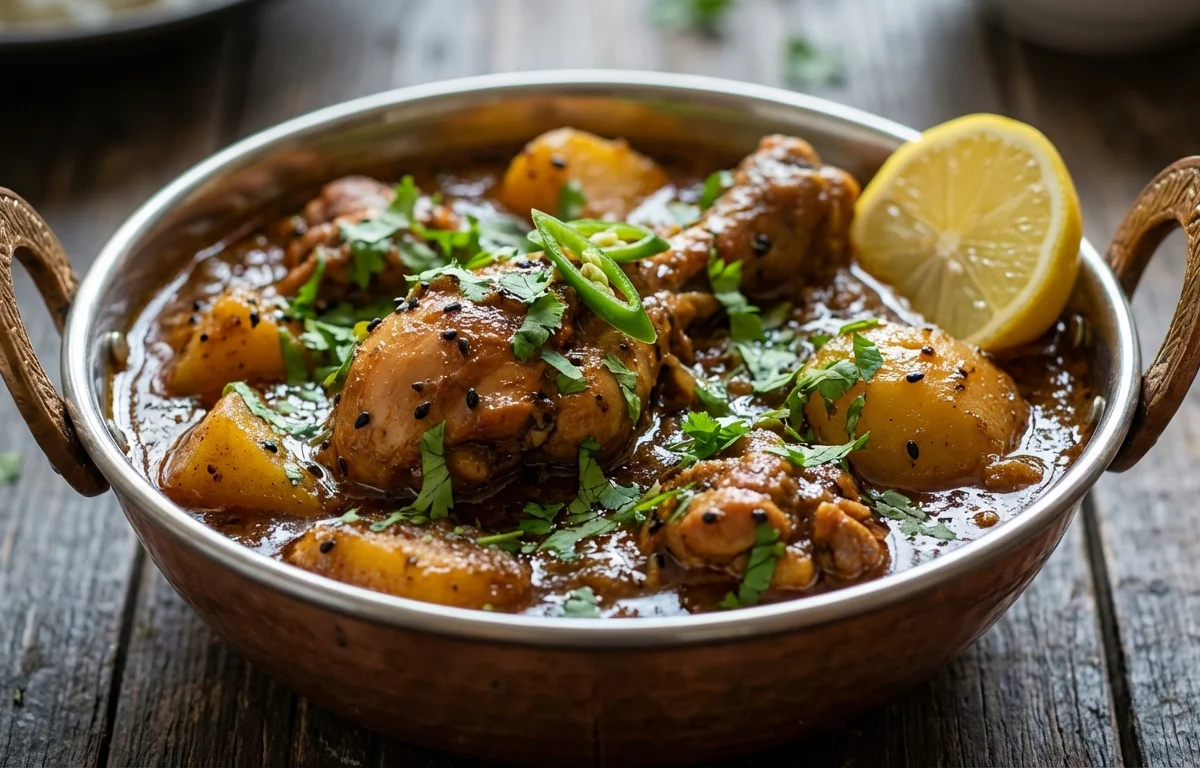
A rich, gently spiced chicken curry where toasted sesame gives the gravy a nutty depth and silky body. It is hearty without being too heavy, and pairs beautifully with roti, naan, or a small helping of rice.
For 4 servings
- roast · ~5 min
Toast the sesame seeds.
Heat a dry pan over low heat and toast the sesame seeds until lightly golden and fragrant, 2 to 3 minutes. Cool slightly, then grind with ginger and garlic to a smooth paste, adding 1 to 2 tbsp water if needed.
TIPKeep the heat low so the sesame turns nutty, not bitter. - saute · ~9 min
Cook the onions and whole spices.
1.Heat oil in a heavy pan over medium heat.2.Add cumin seeds and bay leaf and let them sizzle for 20 to 30 seconds.3.Add sliced onion and cook until soft and light golden, 6 to 8 minutes.4.Add green chili and stir for 30 seconds. - saute · ~8 min
Make the masala base.
1.Add the sesame, ginger, and garlic paste to the pan.2.Cook for 2 minutes, stirring often, until the raw smell fades.3.Add chopped tomato, turmeric powder, red chili powder, coriander powder, and salt.4.Cook until the tomatoes soften and the masala looks thick and glossy, 5 to 6 minutes. - mix · ~2 min
Stir in the yogurt.
Lower the heat and add the whisked yogurt a little at a time, stirring continuously so it blends smoothly into the masala without splitting.
TIPLow heat and steady stirring keep the yogurt silky. - saute · ~8 min
Coat the chicken in the masala.
Add the chicken pieces and mix well so every piece is covered in the sesame masala. Cook on medium heat for 6 to 8 minutes, stirring a few times, until the chicken changes color and starts releasing its juices.
- simmer · ~20 min
Simmer until the chicken is tender.
Add water, mix, and bring the curry to a gentle simmer. Cover and cook for 18 to 20 minutes, stirring once or twice, until the chicken is tender and cooked through and the gravy is thick.
TIPChicken is done when the thickest piece reaches 74°C or 165°F. - garnish · ~1 min
Finish with garam masala and cilantro.
Sprinkle in the garam masala and chopped cilantro. Cook uncovered for 1 minute more if you want a slightly thicker gravy.
- serve
Serve Til Diya Murgi hot.
What to keep in mind.
7 tips from the recipe — small details that make a real difference to the final dish.
- 1Toast the sesame only to light golden; darker seeds will make the gravy taste bitter.
- 2Grind the sesame with ginger and garlic while still slightly warm for a smoother, fuller-bodied paste.
- 3Let the onions turn light golden, not deeply browned, so the curry stays mellow and nutty rather than sweet-heavy.
- 4Add the whisked yogurt in small additions on low heat to prevent curdling in the tomato masala.
- 5After adding chicken, bhuno it until the pieces lose their raw pink color and the masala clings to them well.
- 6If the gravy thickens too much as it rests, loosen it with a splash of hot water before serving.
- 7This curry tastes even better after 30 minutes of resting, when the sesame and garam masala settle into the gravy.
Adapt it for your goals.
Boneless
Use boneless chicken thigh pieces for easier serving and slightly faster cooking while keeping the curry juicy.
spicierSpicier
Increase green chili or red chili powder for a hotter version that cuts through the rich sesame gravy.
low oilLow-oil
Reduce the oil slightly and cook the onions covered for part of the time; the curry will be lighter but still flavorful.
creamierCreamier
Add a spoonful more yogurt at the end for a softer tang and richer texture, especially if serving with naan.
Why this is on our healthy list.
Protein-Rich Main Dish
Chicken and yogurt make this curry satisfying and help turn it into a filling meal with lasting satiety.
Good Fats From Sesame
Sesame seeds contribute nourishing fats and a wholesome richness while also thickening the gravy naturally.
Aromatic Spice Support
Ginger, garlic, cumin, and coriander add layered flavor without needing excessive cream or butter.
Frequently asked questions
White sesame is better here because it gives a milder, cleaner nutty flavor and a lighter-colored gravy. Black sesame can taste stronger and darken the curry.



.webp)