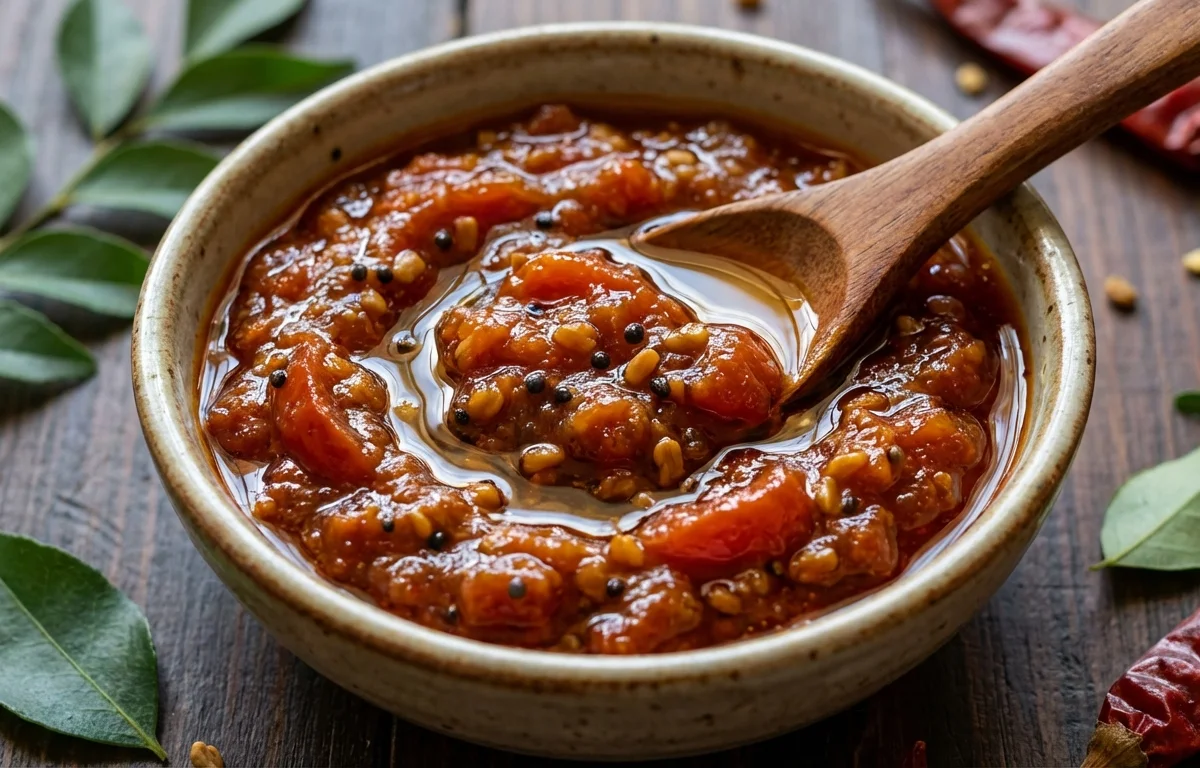
Tomato Pickle
Tangy, spicy tomato pickle with soft cooked tomatoes, mellow garlic, and a bold mustard-chili finish. This everyday Indian condiment adds a bright kick to curd rice, dal rice, roti, and simple meals.
For 8 servings
- prep · ~5 min
Prepare the tomatoes, garlic, and ginger.
Chop the tomatoes finely. Slice the garlic and chop the ginger so they cook down evenly into the pickle.
- temper · ~2 min
Make the tempering.
1.Heat sesame oil in a heavy pan over medium heat.2.Add mustard seeds and let them crackle.3.Add fenugreek seeds, asafoetida, and curry leaves.4.Stir for a few seconds until fragrant.TIPKeep the heat moderate so the fenugreek does not turn bitter. - saute · ~12 min
Cook the garlic, ginger, and tomatoes.
1.Add garlic and ginger to the pan and sauté for 1 minute.2.Add the chopped tomatoes and mix well.3.Cook over medium heat until the tomatoes soften and start breaking down.4.Stir often so the mixture does not catch at the bottom. - simmer · ~15 min
Season and cook the pickle down.
1.Add red chili powder, turmeric powder, salt, jaggery, and tamarind paste.2.Mix well until the spices coat the tomatoes evenly.3.Cook on low heat until the mixture thickens and the oil begins to separate.4.Mash lightly with the spoon for a softer pickle texture.TIPThe pickle should look thick and glossy, not watery. - rest · ~10 min
Cool the pickle completely.
Take the pan off the heat and let the pickle cool fully before storing. This helps the flavor settle and keeps the pickle fresh longer.
- serve · ~1 min
Store in a clean jar and serve.
Transfer the cooled tomato pickle to a clean, dry jar. Serve small spoonfuls with rice, roti, curd rice, or dosa.
What to keep in mind.
7 tips from the recipe — small details that make a real difference to the final dish.
- 1Use a wide, heavy pan so tomato moisture evaporates faster and the pickle thickens without scorching.
- 2Let the mustard seeds fully crackle before adding fenugreek; undercooked seeds taste raw, overbrowned fenugreek turns bitter.
- 3Cook until the oil separates at the edges and the mixture looks glossy; that is the key doneness cue for this pickle.
- 4If your tomatoes are very juicy, extend the simmer rather than increasing tamarind, or the pickle can turn too sour.
- 5Cool completely before jarring, and always use a dry spoon to keep the pickle fresher longer.
- 6For a smoother spreadable texture, mash the tomatoes lightly only after they have fully softened.
- 7This tastes even better the next day, once the chili, tamarind, garlic, and sesame oil have settled together.
Adapt it for your goals.
Low-oil
Reduce the sesame oil slightly for a lighter everyday version, but cook the tomatoes longer so the pickle still thickens properly.
extra garlickyExtra-garlicky
Increase the sliced garlic for a bolder, more pungent pickle that pairs especially well with curd rice and plain dal rice.
spicierSpicier
Add more red chili powder for a hotter Andhra-style edge if you want the pickle to taste sharper and more intense.
chunkyChunky
Chop the tomatoes a little larger and skip the final mashing for a rustic pickle with more visible tomato pieces.
Why this is on our healthy list.
Tomato-Rich Antioxidants
Tomatoes bring beneficial antioxidants and plant compounds, making this condiment more than just a spicy side.
Digestive Spice Support
Ginger, garlic, asafoetida, and fenugreek are traditional ingredients often used to support digestion in Indian cooking.
Flavor Without Heavy Richness
A small spoonful adds strong tangy-spicy flavor to plain rice or roti without needing creamy or heavy accompaniments.
Frequently asked questions
It should be thick, glossy, and no longer watery, with the tomatoes fully broken down and a little oil separating at the edges.