Tomato Thokku
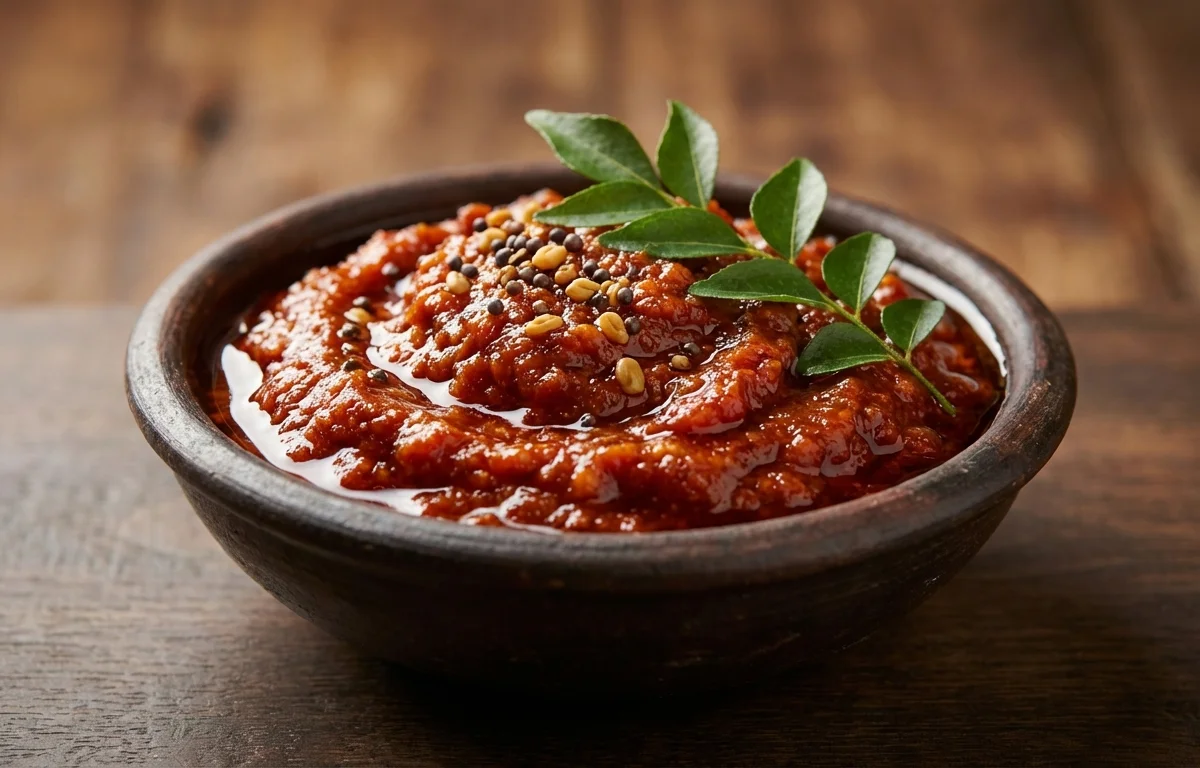
A tangy, spicy South Indian tomato relish cooked down slowly until thick and glossy. It keeps well in the fridge and adds a bold, home-style touch to idli, dosa, curd rice, or even plain chapati.
For 8 servings
- prep
Chop the tomatoes.
Finely chop the tomatoes so they break down quickly and cook into a smooth, thick thokku.
- temper · ~1 min
Make the tempering.
1.Heat sesame oil in a heavy pan over medium heat.2.Add mustard seeds and let them splutter.3.Add fenugreek seeds, asafoetida, and curry leaves.4.Cook for a few seconds until fragrant.TIPKeep the heat medium so the fenugreek does not turn bitter. - saute · ~12 min
Cook the tomatoes with spices.
1.Add the chopped tomatoes to the pan and mix well.2.Add red chili powder, turmeric powder, and salt.3.Cook on medium heat, stirring often, until the tomatoes soften and turn pulpy.4.Mash lightly with the spoon as they cook. - simmer · ~15 min
Cook down the thokku.
Add jaggery and mix well. Lower the heat and cook until the mixture thickens, the raw tomato smell disappears, and the oil begins to show at the edges.
TIPStir every couple of minutes near the end so the thokku does not catch at the bottom. - rest · ~10 min
Cool the thokku.
Take the pan off the heat and let the thokku cool completely. It will thicken a little more as it stands.
- serve
Serve or store the tomato thokku.
Serve with idli, dosa, curd rice, or chapati, or spoon it into a clean dry jar and refrigerate.
What to keep in mind.
7 tips from the recipe — small details that make a real difference to the final dish.
- 1Use a heavy kadai or thick pan so the tomato mixture reduces evenly without scorching.
- 2Do not let the fenugreek seeds darken too much in the tempering, or the thokku can taste bitter.
- 3Finely chopped tomatoes cook down faster and give a smoother relish without needing to blend.
- 4Cook until the raw tomato smell is completely gone and oil peeks out at the edges; that is the key doneness cue.
- 5Stir more frequently in the last few minutes, because the thickened thokku can catch on the bottom quickly.
- 6Cool fully before jarring, and always use a clean, dry spoon to help it keep better in the fridge.
- 7If your tomatoes are very sour, add a touch more jaggery at the end rather than increasing it early.
Adapt it for your goals.
Garlicky
Add finely chopped garlic after the tempering for a deeper, more savory thokku that pairs especially well with dosa and chapati.
spicierSpicier
Increase red chili powder or add a couple of dried red chilies in the tempering for a hotter, more robust relish.
no jaggeryNo-jaggery
Skip the jaggery if you prefer a sharper, more tangy tomato thokku with a classic sour-spicy edge.
onion tomatoOnion-tomato
Sauté finely chopped onions after the tempering before adding tomatoes for a slightly sweeter, more substantial thokku.
Why this is on our healthy list.
Tomato-Rich Antioxidants
Tomatoes provide antioxidants and plant compounds, and cooking them down in this relish makes them a concentrated part of the dish.
Digestive Spice Support
Fenugreek, asafoetida, curry leaves, and mustard seeds are traditional South Indian tempering ingredients often used to add digestive-friendly depth.
Moderate Oil Condiment
Because thokku is served in small spoonfuls alongside idli, dosa, rice, or chapati, it adds strong flavor without needing a large portion.
Frequently asked questions
It is ready when the mixture is thick, the raw tomato smell is gone, and a little oil starts showing around the edges of the pan.