
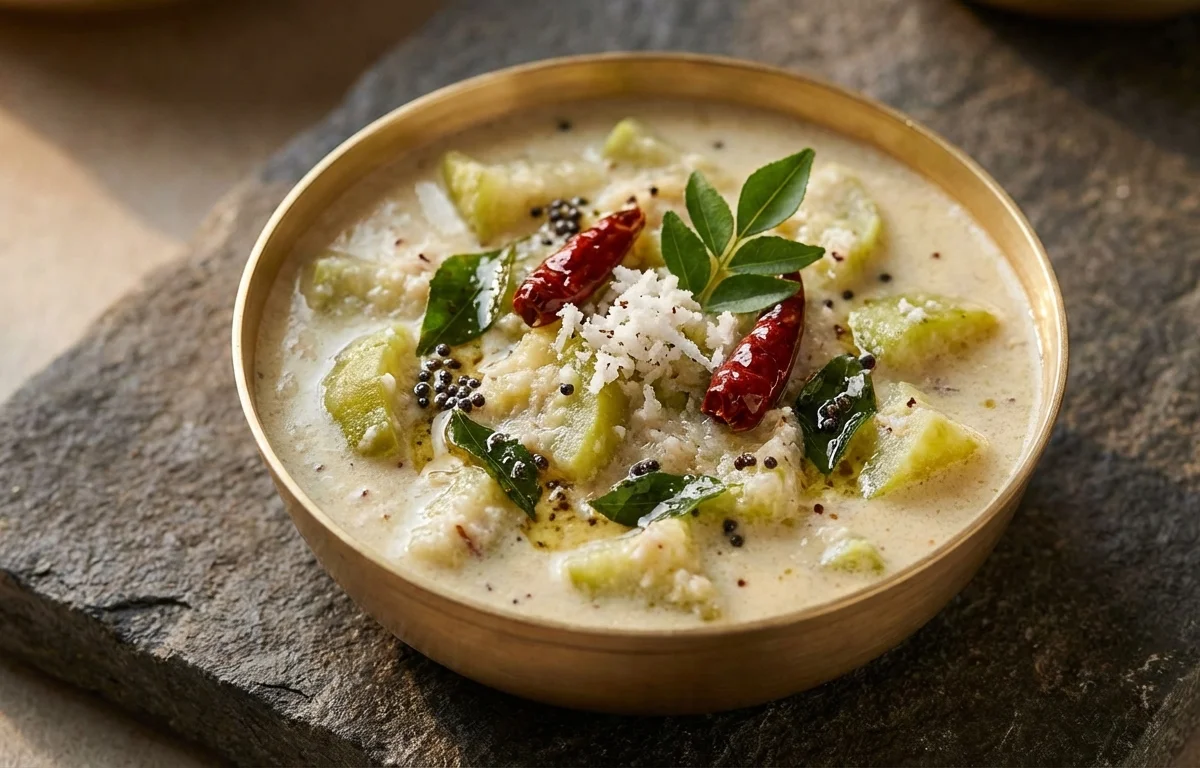
Tori Ghashi
Tender ridge gourd simmered in a roasted coconut-and-spice masala, finished with a sputter of mustard seeds and curry leaves. A light Konkani-style curry with a hint of jaggery that balances the savory depth of the coconut gravy. Pairs beautifully with steamed rice.
For 4 servings
- prep
Peel the ridge gourd and cut into cubes.
Peel the ridge gourd with a light hand — you only need to remove the sharp ridges, not all the green skin. Cut into 1-inch cubes.
TIPKeep some green skin on for texture and nutrients — it softens beautifully during cooking. - roast · ~8 min
Roast the coconut masala ingredients.
1.Heat a small pan over medium-low heat.2.Add grated coconut and roast until golden brown and fragrant (4-5 min), stirring constantly.3.Add urad dal, coriander seeds, cumin seeds, and dried red chilies. Continue roasting until the dal turns light golden and the spices are fragrant (2-3 min).TIPKeep the heat low and stir continuously — coconut burns quickly and turns bitter. - rest · ~10 min
Cool the roasted mixture completely.
Transfer the roasted mixture to a plate and let it cool down to room temperature before grinding.
- mix
Grind into a smooth masala paste.
1.Add the cooled roasted mixture to a grinder jar along with the soaked tamarind and a pinch of turmeric powder.2.Pour in about 0.5 cup water and grind into a smooth, thick paste. - simmer · ~12 min
Cook the ridge gourd with the masala.
1.Place the ridge gourd cubes in a kadhai or deep pan. Add 0.5 cup water, salt, and jaggery.2.Mix in the ground coconut masala paste and stir gently to coat all the pieces.3.Bring to a gentle simmer over medium heat. Cover and cook until the ridge gourd is tender (10-12 min), stirring once halfway.TIPRidge gourd releases its own moisture, so the gravy naturally thickens. Add only a splash of water if it looks too dry. - temper · ~2 min
Make the coconut oil tempering.
1.Heat coconut oil in a small tadka pan over medium heat until shimmering.2.Add mustard seeds and let them crackle and pop (30 sec).3.Add curry leaves and fry until crisp and fragrant (10 sec). - mix
Pour the tempering over the curry and stir gently.
Immediately pour the hot tempering over the simmered ridge gourd curry. Gently fold it in — don't over-stir or the tender gourd pieces may break.
TIPLet it sit for 2 minutes after adding the tadka so the curry absorbs the tempering flavors. - serve
Serve hot with steamed rice.
Ladle into bowls and serve as part of a Konkani meal with steamed rice and a side of fried fish or papad.
What to keep in mind.
6 tips from the recipe — small details that make a real difference to the final dish.
- 1Don't over-peel the ridge gourd—leaving some green skin adds texture and nutrients.
- 2Roast the coconut on low heat and stir constantly to avoid burning and bitterness.
- 3Let the roasted masala cool completely before grinding for a smoother paste.
- 4Ridge gourd releases water as it cooks, so add only a splash if the gravy seems dry.
- 5Pour the hot tadka over the curry and let it sit for 2 minutes to absorb the flavors.
- 6Use Byadgi or Kashmiri chilies for a mild, deep red color without excessive heat.
Adapt it for your goals.
Vegan
The recipe is already vegan as written; ensure the jaggery is plant-based (most are) and use coconut oil for tempering.
low oilLow-oil
Skip the coconut oil tadka; simply stir in a pinch of asafoetida and mustard seeds dry-roasted in a pan for a lighter version.
high proteinHigh-protein
Add 1/2 cup cooked chana dal or steamed moong dal along with the ridge gourd for a heartier, more filling curry.
spicierSpicier
Increase dried red chilies to 5-6 and add a small green chili while grinding the masala for extra heat.
Why this is on our healthy list.
Low in Calories
Ridge gourd is very low in calories and high in water content, making this curry light and hydrating.
Good Source of Dietary Fiber
Both ridge gourd and coconut provide fiber that aids digestion and promotes fullness.
Rich in Antioxidants
Coconut and spices like turmeric, cumin, and coriander seeds are packed with antioxidants that support overall health.
Frequently asked questions
Yes, bottle gourd (lauki) or chayote squash work well—adjust cooking time since they may take a few minutes longer to soften.



.webp)
.webp)
.webp)