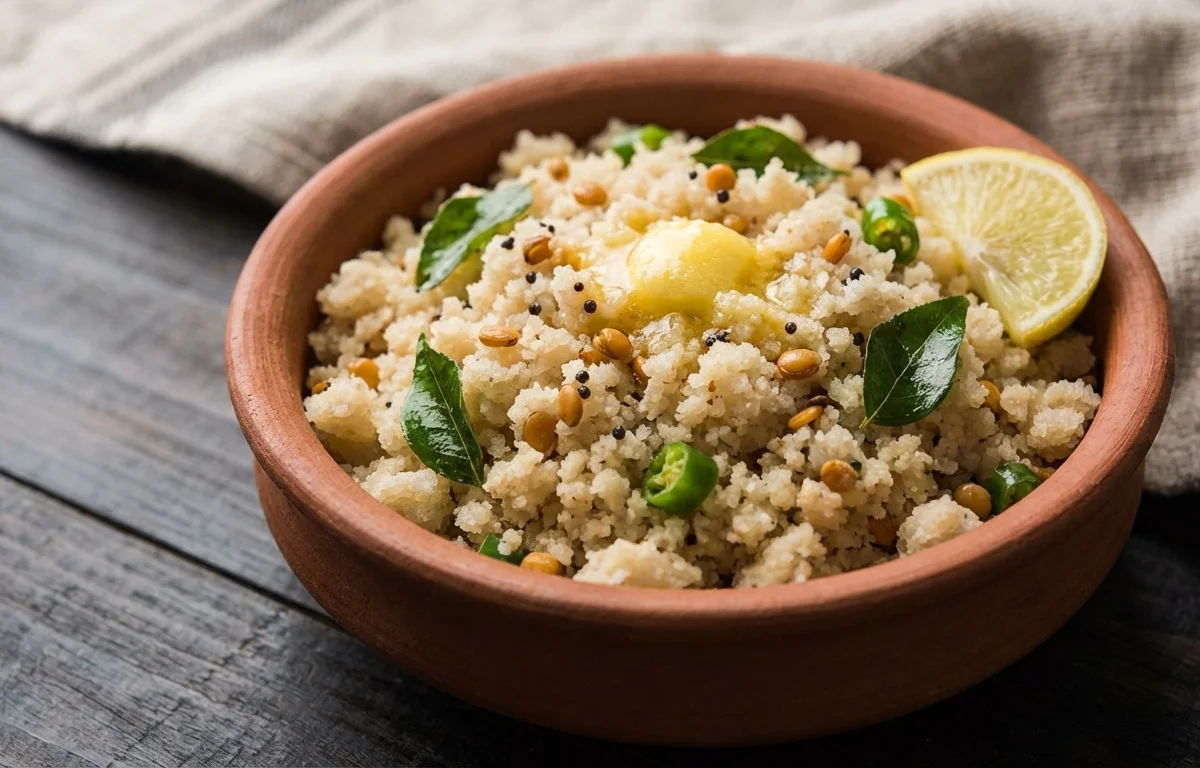
Uppindi
A warm, savory semolina porridge studded with tender vegetables, crunchy peanuts, and aromatic curry leaves. This comforting South Indian breakfast comes together in under 20 minutes and hits all the right notes—soft, fluffy, and delicately spiced.
For 4 servings
- prep · ~5 min
Dry roast the semolina.
Place a heavy-bottomed kadai over low heat. Add semolina and dry roast, stirring continuously, for 4-5 minutes until it turns aromatic and just begins to change color. Transfer to a plate and set aside.
TIPKeep the heat low and stir non-stop — semolina burns quickly and turns bitter. - boil · ~8 min
Bring water to a boil.
In a saucepan, bring 2.5 cups of water to a rolling boil. Once boiling, reduce heat to the lowest setting to keep it hot until needed.
- temper · ~3 min
Make the tempering in the same kadai.
1.Heat oil in the same kadai over medium heat.2.Add mustard seeds and let them pop.3.Add cumin seeds, urad dal, and chana dal — sauté until golden (30-40 sec).4.Add peanuts and fry until they turn crisp and lightly browned.TIPWait until the mustard finishes popping before adding other ingredients, or they may burn. - saute · ~6 min
Sauté the aromatics and vegetables.
1.Add chopped ginger, green chili, and curry leaves — sauté for 30 seconds until fragrant.2.Add chopped onion and cook until translucent (3-4 min).3.Stir in chopped carrot and green peas, and sauté for 2 minutes.TIPDon't brown the onions too much; a light golden color keeps the uppindi tasting fresh. - mix · ~1 min
Combine semolina with boiling water.
1.Pour the hot water carefully into the vegetable mixture — it will sizzle.2.Add salt and sugar, stir once.3.Immediately reduce heat to the lowest setting.TIPThe water must be boiling hot when added, otherwise the uppindi will turn lumpy. - simmer · ~3 min
Cook the uppindi until fluffy.
1.Slowly pour the roasted semolina into the pan in a steady stream, stirring vigorously and continuously with the other hand.2.Keep stirring to break any lumps. The mixture will thicken fast.3.Cover and cook on the lowest heat for 2-3 minutes. Turn off the heat.TIPStir without pausing as you add the rava — this is the key to a non-sticky, fluffy texture. - mix · ~1 min
Finish with lemon juice and garnish.
Fluff the uppindi with a fork. Drizzle lemon juice over the top and gently fold it in. Garnish with fresh coriander leaves.
TIPFluffing with a fork instead of stirring keeps the grains separate and airy. - serve
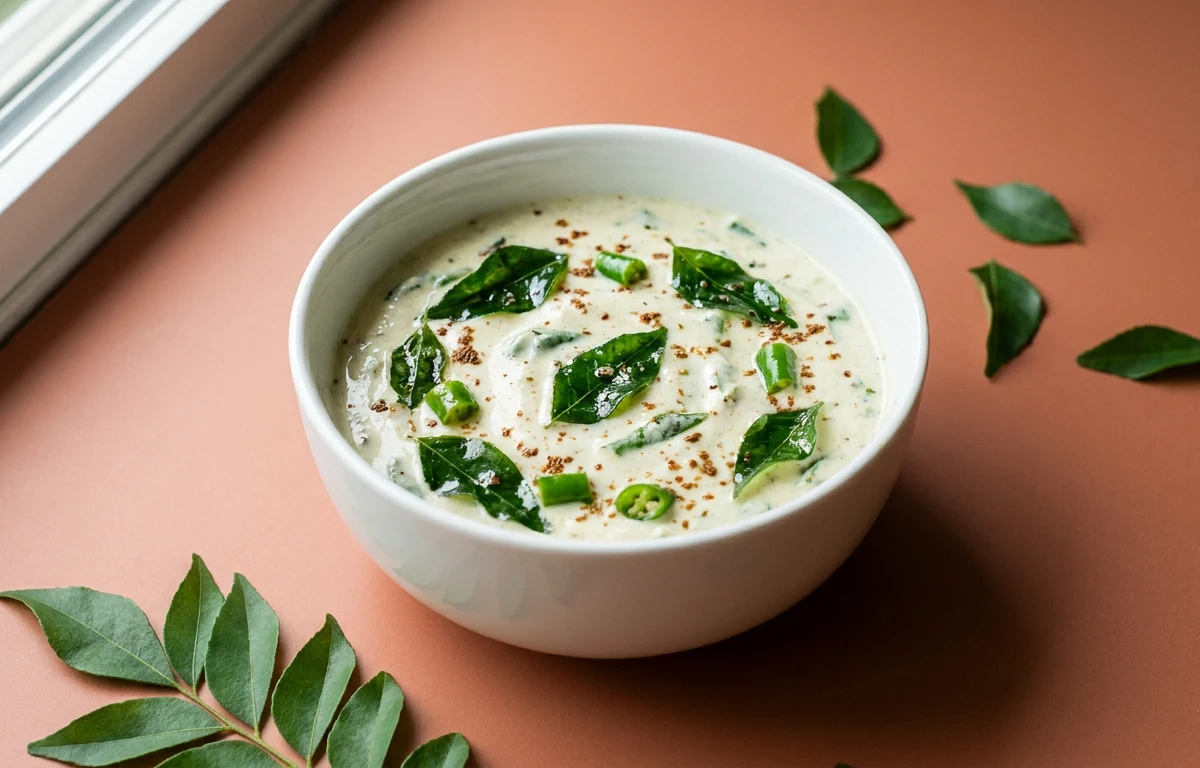
Serve hot with coconut chutney or pickle.
Spoon into serving bowls and serve immediately while the uppindi is still warm and soft.
TIPUppindi sets as it cools, so it's best eaten right away.
What to keep in mind.
6 tips from the recipe — small details that make a real difference to the final dish.
- 1Dry roast semolina on low heat until fragrant but not colored, to avoid a raw taste and ensure a fluffy texture.
- 2Add the hot water in one go and stir vigorously to prevent lumps from forming.
- 3Use coarse rava (sooji) for the best fluffy texture; fine semolina will turn gluey.
- 4Fluff the finished uppindi with a fork instead of a spoon to keep the grains separate and airy.
- 5Serve immediately; uppindi thickens as it cools and loses its soft, fluffy character.
- 6For extra crunch, roast the peanuts until deep golden before adding vegetables.
Adapt it for your goals.
Vegan
This recipe is already vegan as written — the only animal product is missing. Ensure your sugar is vegan-friendly.
high proteinHigh-protein
Add 2 tablespoons of roasted chana dal or crumbled paneer just before the lemon juice for an extra protein boost.
low oilLow-oil
Reduce oil to 1 tablespoon and dry-roast the peanuts separately, then crush them before adding, to cut oil without losing crunch.
kid friendlyKid-friendly
Skip the green chilies and use just a pinch of black pepper or mild paprika for gentle warmth.
gluten freeGluten-free
Replace semolina with an equal amount of coarse rice flour (idli rava) and follow the same method for a naturally gluten-free version.
Why this is on our healthy list.
Rich in Plant Protein
The combination of peanuts, urad dal, and chana dal provides a good plant-based protein boost in each serving.
Good Source of Dietary Fiber
Semolina and the fresh vegetables like carrots and peas contribute fiber that aids digestion and promotes satiety.
Packed with Vitamins from Veggies
Carrots and green peas add vitamin A and vitamin C, supporting immune health and vision.
Low in Saturated Fat
Using vegetable oil and minimal oil in the tempering keeps saturated fat content low, making this heart-friendly.
Frequently asked questions
Lumps form if the water isn't boiling hot when added, or if you add the semolina too slowly without stirring continuously.