
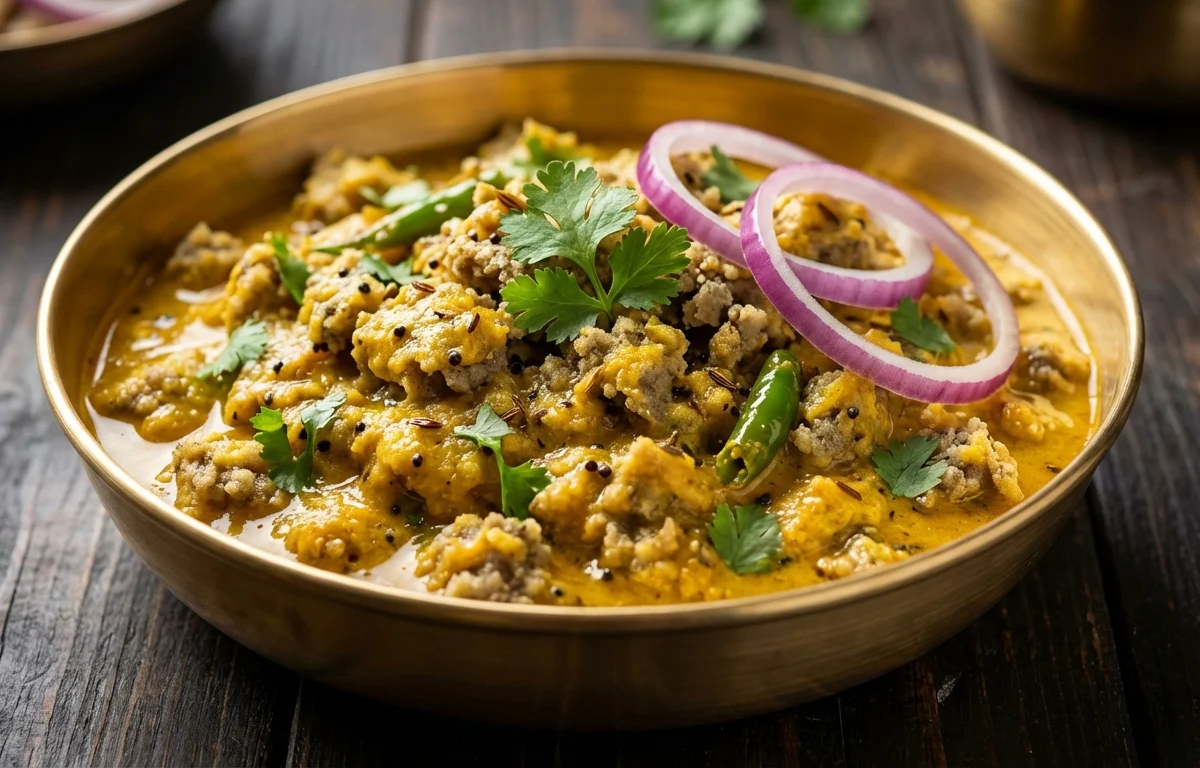
Vagharelo Rotlo
A comforting Gujarati way to give leftover bajra rotlo a second life. Crumbled millet flatbread is tossed with a simple tempering of onion, spices, and herbs until warm, savory, and lightly crisp at the edges.
For 4 servings
- prep
Crumble the rotlo.
Break the bajra rotlo into small coarse pieces with your hands. Keep a few slightly larger bits for texture.
- temper · ~2 min
Make the tempering.
1.Heat oil in a wide pan over medium heat.2.Add mustard seeds and let them splutter.3.Add cumin seeds, asafoetida, and curry leaves.4.Stir in green chili and cook for a few seconds.TIPKeep the heat medium so the spices bloom without turning bitter. - saute · ~5 min
Cook the onion.
Add the chopped onion and sauté until soft and lightly golden. Stir in turmeric powder, red chili powder, and salt.
- mix · ~4 min
Add the rotlo and toss well.
1.Add the crumbled rotlo to the pan and mix to coat it in the tempering.2.Sprinkle in the water little by little to soften the dry crumbs.3.Toss gently until everything is evenly warmed and the rotlo turns slightly crisp in spots.TIPAdd only enough water to soften the rotlo lightly; too much will make it pasty. - garnish
Finish with coriander and lemon juice.
Turn off the heat and mix in chopped coriander leaves and lemon juice for freshness.
- serve
Serve hot.
Spoon into katoris and serve right away while warm and fragrant.
What to keep in mind.
6 tips from the recipe — small details that make a real difference to the final dish.
- 1Use a wide pan so the crumbled rotlo heats evenly and develops a few crisp edges instead of steaming.
- 2Keep some larger rotlo bits while crumbling; they give the finished vagharelo rotlo better bite and rustic texture.
- 3Add the water in tiny splashes, tossing after each addition, so the bajra softens without turning mushy.
- 4Sauté the onion until lightly golden, not deeply browned, so it sweetens the dish without overpowering the millet.
- 5Add lemon juice only after switching off the heat to keep its fresh tang bright and sharp.
- 6Serve immediately after tossing; bajra absorbs moisture as it sits and loses the ideal soft-crisp texture.
Adapt it for your goals.
Low-oil
Reduce the oil slightly and use a nonstick pan; add water more carefully so the rotlo softens without needing extra fat.
spicierSpicier
Increase green chili and red chili powder for a sharper, hotter version that pairs especially well with plain curd.
no onionNo-onion
Skip onion for a simpler fasting-style or lighter variation; the vaghar, curry leaves, coriander, and lemon will carry the flavor.
jainJain
Omit onion and asafoetida if needed, then rely on mustard, cumin, curry leaves, chili, coriander, and lemon for balance.
Why this is on our healthy list.
Millet-Based Comfort Food
Bajra rotlo brings the wholesome, earthy benefits of pearl millet, making this a more traditional whole-grain option than many refined-flour snacks.
Herb and Spice Rich
Curry leaves, cumin, mustard, coriander, turmeric, and chili add aroma and plant compounds while keeping the dish flavorful without heavy sauces.
Moderate, Satisfying Meal
The mix of millet, onion, and tempered spices makes a filling use of leftovers that can be satisfying on its own or with curd.
Frequently asked questions
Yes, but let the rotlo cool first so it crumbles properly. Fresh hot rotlo can clump and turn sticky when tossed in the pan.


