
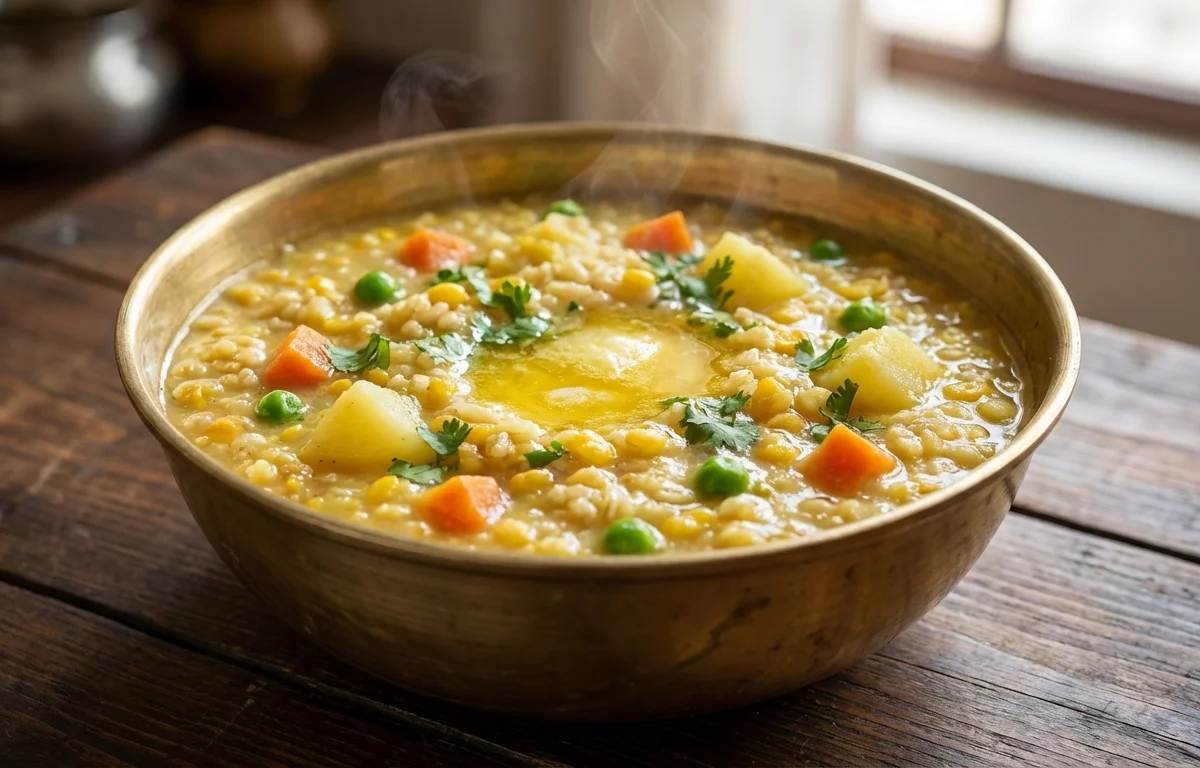
Vegetable Dalia Khichuri
A comforting one-pot khichuri made with broken wheat, moong dal, and everyday vegetables. It cooks up soft, lightly spiced, and nourishing, making it a cozy Indian meal that pairs well with yogurt, pickle, or papad.
For 4 servings
- prep · ~15 min
Wash and soak the dalia and moong dal.
Rinse the dalia and moong dal separately until the water runs fairly clear. Soak them together in water for 15 minutes, then drain well.
TIPA short soak helps the khichuri cook evenly and turn soft without becoming pasty. - saute · ~5 min
Cook the spices and aromatics in ghee.
1.Heat ghee in a pressure cooker over medium heat.2.Add cumin seeds and bay leaf and let them sizzle for 20 to 30 seconds.3.Add onion and cook until soft and light golden, about 4 minutes.4.Add ginger and green chili and cook for 30 seconds until fragrant.TIPKeep the heat medium so the cumin and bay leaf release flavor without burning. - saute · ~4 min
Add tomato, vegetables, and powdered spices.
1.Add tomato and cook until soft, about 2 minutes.2.Add carrot, potato, green peas, and beans and mix well.3.Add turmeric powder, red chili powder, garam masala, and salt.4.Cook for 2 minutes so the vegetables get lightly coated in the spices. - saute · ~3 min
Toast the dalia and dal with the vegetables.
Add the drained dalia and moong dal to the cooker and stir for 2 to 3 minutes. This light roasting gives the khichuri a deeper, nuttier flavor.
- pressure cook · ~15 min
Pressure cook the khichuri until soft.
Pour in water and stir well, scraping the bottom so nothing sticks. Close the cooker and cook on medium heat for 3 whistles, then let the pressure release naturally.
TIPFor a looser khichuri, add 1/2 cup more water before cooking. - mix · ~2 min
Open and adjust the texture.
Open the cooker and stir the khichuri gently. If it looks too thick, add a splash of hot water and mix until it loosens to a soft spoonable texture.
- garnish
Garnish with coriander leaves.
- serve
Serve the vegetable dalia khichuri hot.
What to keep in mind.
6 tips from the recipe — small details that make a real difference to the final dish.
- 1Drain the soaked dalia and moong dal well before roasting so they toast lightly instead of steaming.
- 2Cook the onion only to light golden; very dark onions can make this khichuri taste heavy.
- 3Scrape the base of the pressure cooker after adding water to prevent the dalia from catching at the bottom.
- 4Let the pressure release naturally so the broken wheat and moong dal finish softening without turning gritty.
- 5If reheating leftovers, add hot water little by little because dalia khichuri thickens a lot as it sits.
- 6Cut the carrot, potato, and beans small and evenly so all the vegetables soften in the same cooking time.
Adapt it for your goals.
Vegan
Swap the ghee for a neutral oil or coconut oil for a fully plant-based khichuri with the same one-pot comfort.
no onion no garlicNo-onion-no-garlic
Skip the onion and rely on extra ginger, cumin, and coriander leaves for a lighter sattvic-style version.
low spiceLow-spice
Omit the green chili and red chili powder for a very mild khichuri that is great for kids or light meals.
more vegetableMore-vegetable
Add cauliflower, spinach, or bottle gourd to make it bulkier and even more nourishing without changing the method much.
Why this is on our healthy list.
Balanced Grain and Lentil Meal
Broken wheat and moong dal together make this khichuri hearty, satisfying, and richer in plant protein and fiber than plain rice dishes.
Vegetable-Rich Comfort Food
Carrot, peas, beans, tomato, onion, and potato add a mix of vitamins, minerals, and texture in an easy-to-digest one-pot meal.
Gentle and Filling
The soft-cooked texture, modest spice level, and warm ginger make this a comforting option when you want something simple and nourishing.
Frequently asked questions
Yes. Cook it in a heavy pot with a lid, adding a bit more water if needed, until the dalia, dal, and vegetables are all very soft.


